
Short Answer
21 Facts About Garter Snakes
- Wide Distribution: Garter snakes are found across North and Central America, from Canada to Central America, making them one of the most widespread snake genera on the continent.
- Non-Venomous: Most garter snakes are harmless to humans as they do not possess venom that is dangerous to people.
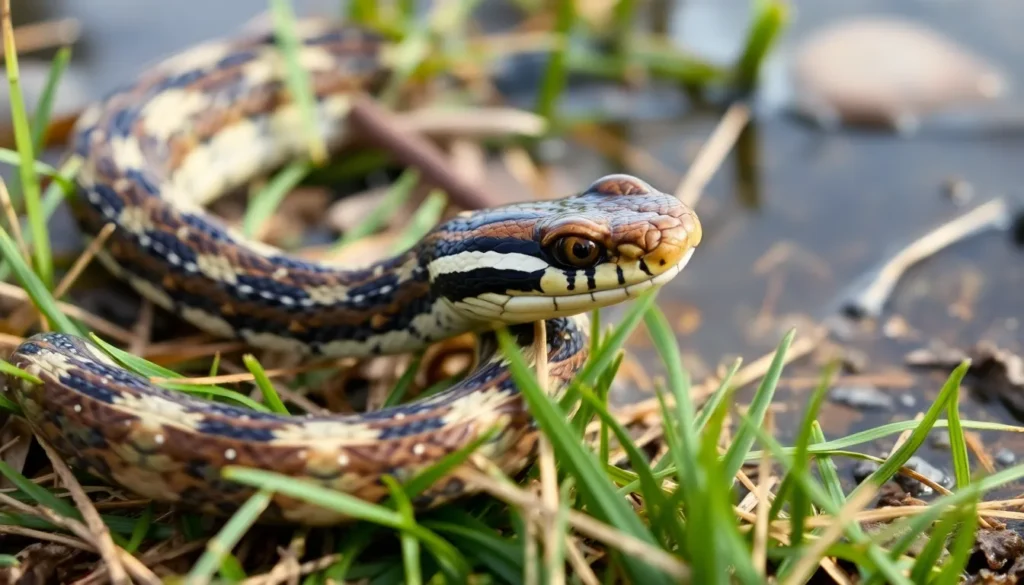
- Distinctive Stripes: They are named for their longitudinal stripes, which often run down the length of their bodies, resembling the garters once used to hold up stockings.
- Varied Coloration: While commonly green or brown with stripes, garter snakes can display a range of colors including yellow, red, and blue, depending on the species and locality.
- Diet Diversity: Their diet includes amphibians, earthworms, fish, and small rodents, showcasing their opportunistic feeding habits.
- Temperature Regulation: Garter snakes are ectothermic and rely on basking in the sun to regulate their body temperature.
- Reproduction: Unlike many snakes, garter snakes give birth to live young rather than laying eggs, a trait known as ovoviviparity.
- Mating Behavior: Mating usually occurs in spring soon after emerging from hibernation, often resulting in large mating balls where multiple males compete for a single female.
- Hibernation: In colder climates, garter snakes hibernate communally in dens, sometimes with hundreds of individuals gathering in the same location.
- Defense Mechanisms: When threatened, garter snakes may flatten their bodies, release a foul-smelling musk, or flee quickly to avoid predators.
- Predators: They are preyed upon by birds of prey, mammals, and larger snakes, making them an important link in the food chain.
- Swimming Ability: Garter snakes are proficient swimmers and often hunt near or in water sources like ponds and marshes.
- Adaptability: They thrive in a variety of habitats including forests, grasslands, wetlands, and suburban areas.
- Longevity: In the wild, garter snakes typically live up to 4-5 years, though some can live longer under ideal conditions.
- Role in Pest Control: By feeding on rodents and insects, garter snakes help control populations of these animals, benefiting human agriculture and ecosystems.
- Sight and Smell: They rely heavily on their sense of smell and vision to locate prey and navigate their environment.
- Social Behavior: While mostly solitary, garter snakes can be found in large groups during hibernation or mating seasons.
- Scientific Interest: Garter snakes are widely studied due to their abundance and ease of observation in natural settings.
- Conservation Status: Most species of garter snakes are not threatened, though habitat destruction can impact local populations.
- Interaction with Humans: They are generally non-aggressive and pose little threat to people, often going unnoticed or appreciated for their ecological role.
- Species Diversity: The genus Thamnophis includes over 30 recognized species of garter snakes, each with unique traits and adaptations.
Habitat and Behavior
Garter snakes inhabit a wide range of environments, including forests, grasslands, wetlands, urban parks, and gardens. They are known for their adaptability to different climates and terrains, which helps explain their extensive distribution. These snakes are often found near water sources such as ponds, streams, and marshes, where they hunt for amphibians and fish. Garter snakes are diurnal, being most active during the day, especially in warm weather. They are ectothermic, meaning they depend on external heat sources to regulate their body temperature, often basking in sunlight to warm up.
Behaviorally, garter snakes are generally solitary except during the breeding season and hibernation. They hibernate communally during winter months in colder regions, sometimes gathering in large numbers to conserve heat. During breeding, males may compete vigorously to mate with females, often forming mating balls. Their defense strategies include fleeing rapidly, flattening their bodies to appear larger, and releasing a foul-smelling musk to deter predators.
Why This Animal Matters
Garter snakes play a significant ecological role as both predators and prey within their ecosystems. By consuming a variety of small animals such as insects, amphibians, and rodents, they help maintain balanced populations that could otherwise become pests. This pest control function benefits agricultural areas by reducing damage caused by rodents and insects. Furthermore, garter snakes serve as a food source for many larger animals, contributing to the energy flow within food webs.
Culturally, garter snakes have been subjects of folklore and natural history studies, appreciated for their distinctive patterns and behaviors. Their widespread presence makes them accessible for scientific research, contributing knowledge about reptile biology, ecology, and evolutionary adaptations. Conservation-wise, while most garter snake species are not endangered, maintaining natural habitats is essential to preserve their populations and the biodiversity they support.
Common Misconceptions
Misconception: Garter snakes are venomous and dangerous to humans.
Correction: Garter snakes possess mild venom used to subdue prey, but it is not harmful to humans. They are generally non-aggressive and pose no significant threat.
Misconception: Garter snakes are aggressive and will attack humans.
Correction: Garter snakes typically avoid confrontation and will flee if threatened. They may display defensive behaviors but rarely bite unless provoked.
Misconception: All snakes lay eggs.
Correction: Garter snakes give birth to live young through ovoviviparity, meaning the eggs develop inside the female until hatching.
Misconception: Garter snakes are solitary and do not gather in groups.
Correction: While usually solitary, they gather in large groups during hibernation and mating seasons.
Misconception: Garter snakes are pests that harm gardens.
Correction: Garter snakes actually help control pest populations by feeding on insects and rodents, benefiting gardens and natural areas.
FAQ
Are garter snakes venomous to humans?
Garter snakes produce a mild venom used to subdue their prey, but it is not harmful to humans. They are considered non-venomous for practical purposes and pose no significant danger.
What do garter snakes eat?
They have a varied diet that includes amphibians like frogs and salamanders, earthworms, small fish, and rodents. Their diet can vary depending on their habitat.
How do garter snakes reproduce?
Garter snakes are ovoviviparous, meaning they give birth to live young. The eggs develop inside the female’s body and hatch internally before birth.


Leave a Reply