
Short Answer
21 Facts About Fire Salamanders
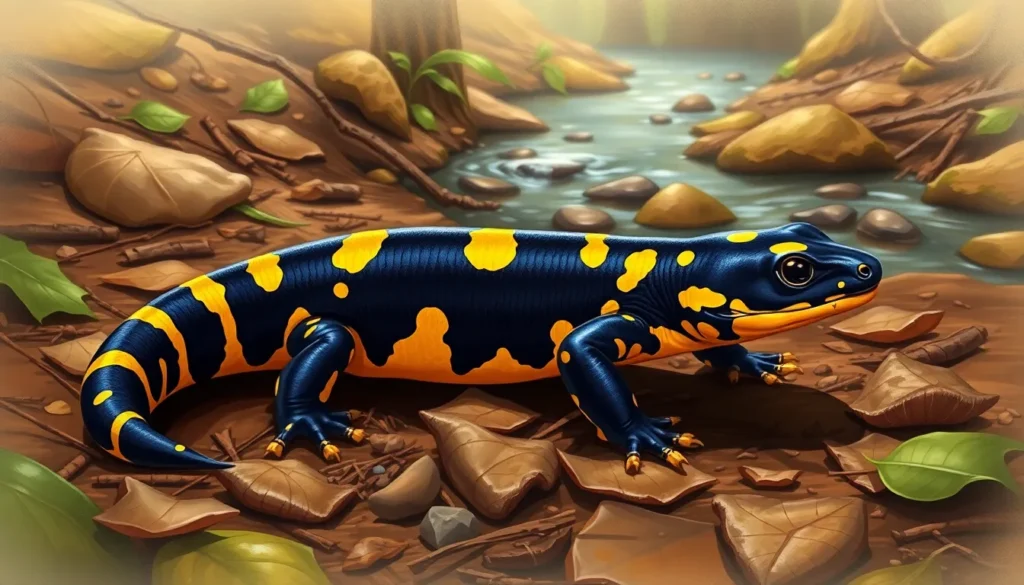
- Distinctive coloration: Fire salamanders (genus Salamandra) are easily recognizable by their vibrant black and yellow or orange patterns, which serve as a warning to predators about their toxicity.
- Species diversity: The genus Salamandra includes several species, with the fire salamander (Salamandra salamandra) being the most widespread and well-known in Europe.
- Habitat preference: They typically inhabit moist deciduous forests with abundant leaf litter and access to clean, small water bodies for breeding.
- Nocturnal lifestyle: Fire salamanders are primarily nocturnal and hide under logs, stones, or moss during the day to avoid desiccation and predators.
- Toxin production: Their skin secretes potent alkaloid toxins, mainly samandarine, which can deter or harm predators.
- Reproductive strategy: Unlike many amphibians, fire salamanders often give birth to fully formed larvae or even young salamanders, depending on the species and environment.
- Life cycle: Larvae develop in aquatic environments before metamorphosing into terrestrial adults.
- Longevity: Fire salamanders can live for over 20 years in the wild, which is relatively long for amphibians.
- Diet: They feed on a variety of invertebrates including insects, spiders, earthworms, and slugs.
- Defense mechanisms: Aside from toxins, fire salamanders may exhibit defensive postures such as raising their tail or secreting mucus to discourage predators.
- Sensory adaptations: They possess well-developed olfactory senses to detect prey and navigate their environment.
- Temperature sensitivity: Fire salamanders prefer cool, damp habitats and are sensitive to temperature and humidity changes.
- Respiration: Adults breathe primarily through lungs but can also absorb oxygen through their skin, which must remain moist.
- Territorial behavior: Some individuals exhibit territoriality, especially males during the breeding season.
- Population threats: Habitat loss, pollution, and disease (such as chytrid fungus) have caused declines in some populations.
- Conservation status: While not globally threatened, certain local populations are protected under conservation laws.
- Role in folklore: Fire salamanders have been historically associated with fire and mystical qualities in European folklore.
- Scientific research: They serve as model organisms for studies in toxinology, regeneration, and amphibian ecology.
- Regenerative ability: Like many salamanders, they can regenerate lost limbs and damaged tissues.
- Behavioral thermoregulation: They use microhabitats to regulate their body temperature.
- Indicator species: Due to their sensitivity to environmental changes, fire salamanders can indicate ecosystem health.
Habitat and Behavior
Fire salamanders inhabit temperate forests across much of Europe, favoring moist, shaded environments rich in leaf litter and decaying wood. They require clean, small bodies of freshwater such as ponds or slow-flowing streams for larval development. Primarily nocturnal, these amphibians avoid harsh daytime conditions by retreating into cool, damp shelters under stones, logs, or moss. Their diet consists predominantly of small invertebrates found within their terrestrial habitat. Fire salamanders exhibit territorial behaviors during the breeding season and use chemical cues to communicate with conspecifics. Their reliance on moist environments makes them vulnerable to habitat alteration, pollution, and climate fluctuations.
Why This Animal Matters
Fire salamanders play an important ecological role as both predator and prey within forest ecosystems. By consuming invertebrates, they help regulate populations of insects and other small creatures. Their presence indicates healthy, unpolluted environments as they are sensitive to chemical changes and habitat disruption. Culturally, fire salamanders have inspired myths and folklore, symbolizing fire and transformation. Scientifically, their toxin production provides insight into amphibian defense mechanisms, and their regenerative abilities contribute to research in biology and medicine. Conservation of fire salamanders supports broader biodiversity and forest ecosystem stability.
Common Misconceptions
Misconception: Fire salamanders can survive fires because they are associated with fire in folklore.
Correction: Despite their name and folklore associations, fire salamanders are not fire-resistant and require moist environments to survive; they do not inhabit or survive actual fires.
Misconception: Fire salamander toxins are harmful to humans through casual contact.
Correction: Their toxins can be harmful if ingested or introduced to mucous membranes, but casual handling is generally not dangerous; however, it is advisable to wash hands after contact and avoid stressing the animal.
FAQ
Are fire salamanders poisonous to humans?
Fire salamanders produce toxins in their skin that can be harmful if ingested or if they enter mucous membranes. While casual handling is generally not dangerous, it is recommended to wash hands after contact and avoid touching your face or mouth.
Where do fire salamanders live?
They live primarily in moist, temperate deciduous forests throughout much of Europe, often near small clean water bodies needed for larval development.
How do fire salamanders reproduce?
Fire salamanders typically reproduce by laying fertilized eggs in aquatic environments where larvae develop, although some species or populations give birth to live larvae or fully metamorphosed young.



Leave a Reply