
Short Answer
21 Facts About Elephants
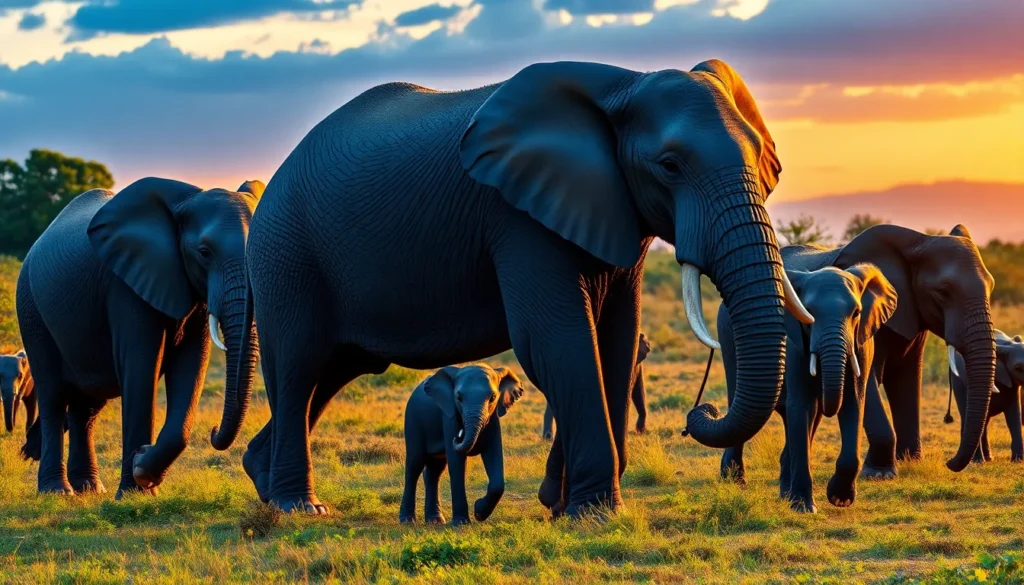
- Elephants are the largest land animals on Earth. Adult African elephants can weigh up to 6,000 kg (13,000 lbs) and stand about 3 to 4 meters tall at the shoulder.
- There are three recognized species of elephants. These include the African bush elephant, African forest elephant, and Asian elephant, each with distinct habitats and physical traits.
- Elephants have highly developed brains. Their brain weighs about 5 kg, the largest of any land animal, supporting advanced cognitive functions such as memory and problem-solving.
- They communicate using infrasound. Elephants produce sounds below the frequency of human hearing that can travel several kilometers to communicate with distant herd members.
- Elephants exhibit complex social structures. Female elephants live in matriarchal herds led by the oldest and often largest female, while males tend to live solitary or small bachelor groups.
- Elephants use their trunks for a variety of tasks. Their trunks serve as a nose, hand, and tool for drinking, breathing, touching, and picking up objects.
- Elephants have thick skin but are sensitive. Their skin can be up to 2.5 cm thick but is sensitive to touch and sunburn, which is why they often cover themselves with mud or dust.
- Elephants can live up to 60-70 years in the wild. Their lifespan is comparable to that of humans, with longevity influenced by environmental and anthropogenic factors.
- They are herbivores with diverse diets. Elephants consume grasses, fruits, bark, and leaves, requiring up to 150 kg (330 lbs) of vegetation daily to sustain their large bodies.
- Elephants are known to demonstrate empathy and mourning behaviors. They have been observed comforting distressed individuals and showing signs of grief for deceased herd members.
- Their tusks are modified incisors. Tusks continue growing throughout an elephant’s life and are used for digging, stripping bark from trees, and as weapons.
- Elephants play a vital role in their ecosystems. They shape landscapes by uprooting trees and dispersing seeds, which helps maintain savanna and forest ecological balance.
- Elephant calves are nurtured intensively. Calves depend on their mothers and the herd for protection and learning essential survival skills for several years.
- Elephants have few natural predators. Adult elephants face little threat except from humans, but calves can fall prey to lions, hyenas, and crocodiles.
- They require large home ranges to find sufficient food and water. Elephant herds can travel tens of kilometers daily to meet their nutritional needs, often following seasonal migration patterns.
- Elephants are threatened by habitat loss and poaching. Their populations have declined due to deforestation, human-wildlife conflict, and illegal ivory trade.
- Elephants have a unique way of cooling themselves. They flap their large ears to dissipate heat and spray water or dust on their bodies to regulate temperature.
- Elephants have remarkable memory abilities. They can remember locations of water sources and recognize individual humans and other elephants after years of separation.
- They are culturally significant to many human societies. Elephants appear in religious symbolism, folklore, and art, especially in Asian and African cultures.
- Conservation efforts have helped stabilize some elephant populations. Protected areas and anti-poaching measures have contributed to recovering numbers in certain regions.
- Elephants have inspired numerous scientific studies. Research on elephant cognition, social behavior, and communication continues to broaden understanding of animal intelligence.
Habitat and Behavior
Elephants inhabit diverse environments, primarily across sub-Saharan Africa and parts of South and Southeast Asia. African bush elephants prefer savannas and woodlands, while forest elephants reside in dense tropical forests. Asian elephants typically occupy forested areas and grasslands. These animals are highly social and live in close-knit matriarchal groups, which provide protection and cooperative care for young calves. Elephants are herbivorous and spend a large portion of their day feeding. Their behavior includes complex communication through vocalizations, touch, and chemical signals. Seasonal migrations help them access water and food sources, and they demonstrate intelligence through problem-solving and tool use. Despite their size, elephants exhibit gentle interactions within their groups, but males may engage in competitive behavior during mating season.
Why This Animal Matters
Elephants are keystone species, meaning their ecological activities have significant impacts on their habitats. By modifying vegetation, dispersing seeds, and creating water holes used by other animals, they maintain ecosystem health and biodiversity. Beyond ecology, elephants hold deep cultural and symbolic importance in many societies, representing strength, wisdom, and spirituality. Conservation of elephants is critical as they face threats from habitat destruction and poaching, which not only endangers their survival but also destabilizes ecosystems. Protecting elephants supports broader environmental preservation efforts and promotes sustainable coexistence between humans and wildlife.
Common Misconceptions
Misconception: Elephants are dangerous and aggressive animals.
Correction: While elephants can be defensive or aggressive if threatened, they are generally peaceful and social animals that avoid conflict and show care within their herds.
Misconception: Elephants have poor eyesight.
Correction: Elephants have relatively good eyesight, but they rely more heavily on their acute sense of smell and hearing for navigation and communication.
FAQ
How many species of elephants are there?
There are three recognized species: the African bush elephant, the African forest elephant, and the Asian elephant, each with unique characteristics and habitats.
What do elephants eat?
Elephants are herbivores that consume a variety of vegetation including grasses, leaves, bark, and fruits, requiring up to 150 kg daily.
Why are elephants important to their ecosystems?
Elephants act as ecosystem engineers by modifying vegetation, dispersing seeds, and creating water access points, which supports biodiversity and habitat health.




Leave a Reply