
Short Answer
21 Facts About Lions
- Lions are the second largest big cats. Only tigers are larger in size among the big cat species.
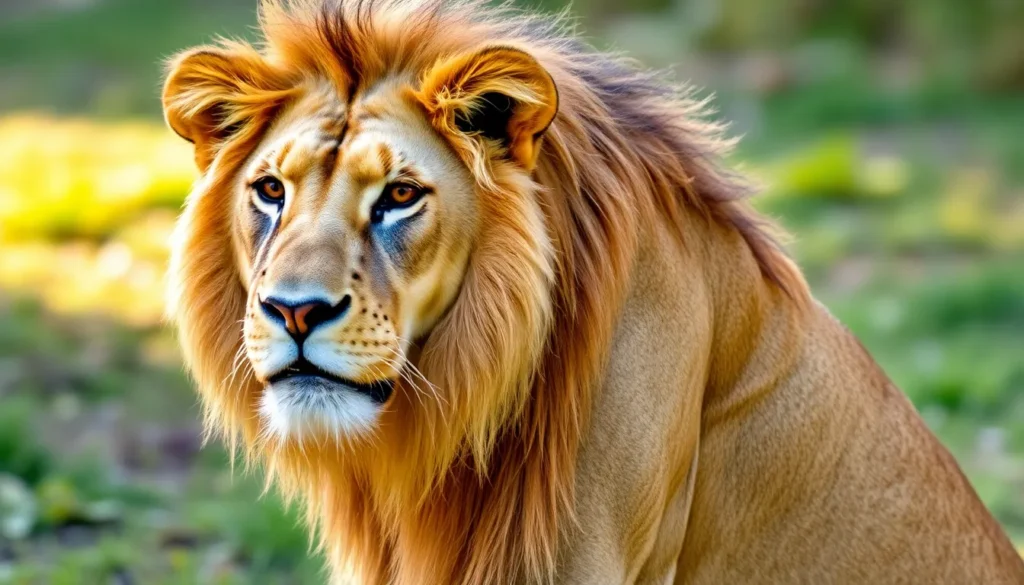
- Male lions have distinctive manes. These manes vary in color and size and serve as a signal of health and maturity.
- Lions are the only truly social cats. They live in groups called prides, unlike most big cats which are solitary.
- A lion pride consists of related females and their offspring. Males typically defend the pride’s territory.
- Adult male lions usually weigh between 150 to 250 kilograms. Females are smaller, typically weighing 120 to 182 kilograms.
- Lions communicate using roars that can be heard up to 8 kilometers away. This helps in territory defense and coordination within the pride.
- Lions primarily hunt medium to large-sized ungulates. Their prey includes zebras, wildebeests, and buffalo.
- Female lions are the main hunters in a pride. Males may participate but are more involved in protecting the pride.
- Lions can run at speeds up to 80 km/h but only in short bursts. They rely on stealth and teamwork rather than endurance.
- Young lions start hunting with the pride at about two years old. Before this, they learn by observing the adults.
- Lions rest or sleep for 16 to 20 hours a day. This conserves energy for hunting and territorial defense.
- Lions have a unique social structure that includes cooperative care of cubs. Multiple females in a pride often nurse and protect the young.
- Male lions typically take over a pride by challenging the resident males. This takeover can result in infanticide of existing cubs.
- As apex predators, lions play a crucial role in maintaining the balance of their ecosystems. They help control herbivore populations.
- The Asiatic lion is a subspecies found only in India. It is smaller and has a less developed mane compared to African lions.
- Lions have been depicted in human culture for thousands of years. They appear in art, mythology, and heraldry across many civilizations.
- Historically, lions ranged across Africa, parts of Europe, and Asia. Today, their range is significantly reduced due to habitat loss and hunting.
- Conservation status of lions is currently vulnerable. Populations are declining due to human-wildlife conflict and habitat fragmentation.
- Lionesses synchronize their reproductive cycles. This allows communal care and protection of cubs within the pride.
- Lions use scent marking and vocalizations to establish and defend their territory. This reduces direct confrontations with rival prides.
- Unlike many cats, lions have partially retractable claws. This adaptation assists them in gripping prey during hunts.
Habitat and Behavior
Lions primarily inhabit savannas, grasslands, and open woodlands across sub-Saharan Africa. They require areas with sufficient prey and water sources. Some lions, specifically the Asiatic subspecies, live in dry deciduous forests in the Gir Forest National Park of India. Lions exhibit social behavior uncommon among big cats, living in prides consisting of related females, their offspring, and a coalition of males. The pride cooperates in hunting, raising cubs, and defending territory. Lions are mostly active at night (nocturnal) or during cooler parts of the day (crepuscular). Their hunting strategy involves coordinated stalking and ambush, relying on strength and teamwork. Males defend the pride and its territory against rival males and other threats. Cubs depend on the pride’s protection during their vulnerable early months.
Why This Animal Matters
Lions are apex predators that help regulate herbivore populations, maintaining a healthy balance in their ecosystems. This control prevents overgrazing that could degrade habitats. Culturally, lions have been symbols of strength, courage, and royalty for millennia, influencing art, literature, and national emblems worldwide. Conservation-wise, lions face threats from habitat loss, human conflict, and poaching. Protecting lions involves preserving natural habitats and fostering coexistence with human communities. Their status often serves as an indicator of ecosystem health, emphasizing their importance in biodiversity conservation.
Common Misconceptions
Misconception: Lions live in jungles.
Correction: Despite the nickname “king of the jungle,” lions primarily live in savannas and grasslands, not dense forests or jungles.
Misconception: Male lions do all the hunting.
Correction: In reality, female lions do most of the hunting, while males mostly defend the pride and territory.
Misconception: Lions roar to threaten humans.
Correction: Lions roar mainly to communicate with other lions, mark territory, and coordinate pride activities rather than to intimidate humans.
FAQ
Why do male lions have manes?
Male lions have manes that serve as a visual signal of strength and maturity, helping to intimidate rivals and attract females. The mane also offers some protection during fights.
How do lions hunt cooperatively?
Lions hunt in groups, typically with females working together to stalk and ambush prey. They use coordinated strategies to surround or drive prey towards other members of the pride.
What threats do lions face in the wild?
Lions face habitat loss, human-wildlife conflict, poaching, and prey depletion. These threats have led to declining populations and make conservation efforts critical.




Leave a Reply