
Short Answer
21 Facts About Uguisu (Japanese Bush Warblers)
- Scientific Classification: The Uguisu is scientifically known as Horornis diphone, a member of the family Cettiidae.
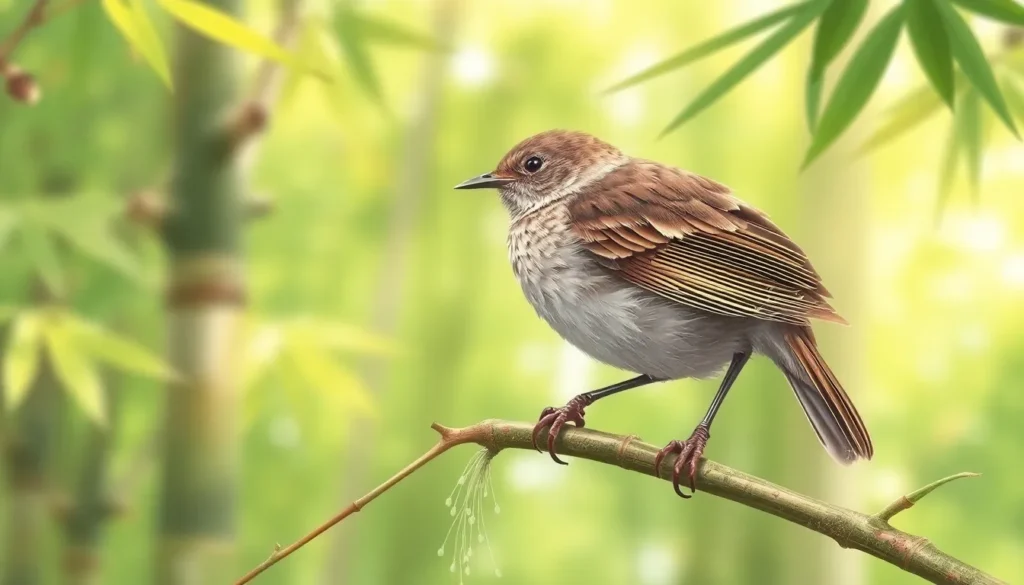
- Size and Appearance: It is a small bird, approximately 14–16 cm in length, with olive-brown plumage and a pale underside.
- Distinctive Song: The Uguisu is renowned for its clear, melodious song, often described as ‘hoohokekyo’, which is commonly associated with the arrival of spring in Japan.
- Geographic Range: It is native to East Asia, especially Japan, but also found in parts of China, Korea, and Taiwan.
- Habitat Preferences: Uguisu prefers dense undergrowth, bamboo thickets, and forest edges as its primary habitat.
- Diet: Its diet mainly consists of insects, spiders, and other small invertebrates, supplemented by berries.
- Breeding Season: The breeding season typically occurs from March to July, aligning with spring and early summer.
- Nesting: Uguisu builds cup-shaped nests low in shrubs or bamboo, using grass, leaves, and moss.
- Monogamous Behavior: They usually form monogamous pairs during the breeding season.
- Migration Patterns: Most Uguisu populations are resident, but some northern populations may migrate short distances in winter.
- Role in Japanese Culture: The Uguisu’s song is highly regarded in Japanese poetry and art, symbolizing the arrival of spring and renewal.
- Historical Use of Song: The bird’s call has been imitated in traditional Japanese music and used in poetry to evoke natural beauty.
- Common Name Meaning: The name ‘Uguisu’ is derived from the Japanese language, where it is also a term for the bird’s distinctive call.
- Conservation Status: The Uguisu is currently classified as Least Concern by the IUCN, with stable population trends.
- Predators: Predators include snakes, larger birds of prey, and some mammals, especially targeting eggs and chicks.
- Adaptability: Uguisu adapts well to suburban and rural environments, provided sufficient vegetation cover.
- Vocal Learning: Young Uguisu learn their distinctive song from adults, which is important for territorial and mating purposes.
- Seasonal Vocal Activity: Males sing mostly during early morning and late afternoon in the breeding season.
- Symbol of Good Fortune: In Japanese folklore, hearing the Uguisu’s song is considered a sign of good luck and prosperity.
- Scientific Research: The Uguisu is often studied in ornithology for its complex vocalizations and seasonal behaviors.
- Longevity: In the wild, Uguisu typically lives up to 3–5 years, though exact lifespan data is limited.
Habitat and Behavior
The Uguisu primarily inhabits dense forests, bamboo groves, and shrubby undergrowth across East Asia, with a strong presence in Japan. It prefers areas with thick vegetation that provides ample cover from predators and suitable nesting sites. The species is generally territorial during the breeding season, with males singing to defend their territory and attract mates. They are insectivorous, using their slender bills to forage for insects and spiders among leaves and branches. While mostly resident, some populations may exhibit local movements in response to seasonal changes in food availability. The Uguisu is known for its elusive behavior, often remaining hidden within dense foliage despite its loud and distinctive song.
Why This Animal Matters
Ecologically, the Uguisu plays a role in controlling insect populations, contributing to the balance of the forest ecosystems it inhabits. Culturally, the Uguisu holds a significant place in Japanese tradition, literature, and art, symbolizing the beauty of spring and renewal. Its song is celebrated in poetry and has inspired various forms of artistic expression over centuries. From a conservation perspective, the Uguisu serves as an indicator species for healthy forest environments in Japan and surrounding regions. Its stable population also reflects the relative preservation of its natural habitats, although ongoing urbanization poses localized threats.
Common Misconceptions
Misconception: The Uguisu is the same bird whose song is often heard in Japan’s traditional music recordings.
Correction: While the Uguisu’s song is iconic, many traditional music recordings actually feature the call of the common nightingale or other songbirds, sometimes mimicked by humans or instruments.
Misconception: The Uguisu is a migratory bird that leaves Japan every winter.
Correction: Most Uguisu populations in Japan are resident year-round, though some northern populations may move short distances to avoid harsh winter conditions.
Misconception: Uguisu’s song can only be heard in the early morning.
Correction: Although most vocal activity occurs during dawn, males may also sing in the late afternoon and occasionally at other times during the breeding season.
FAQ
What does the Uguisu's song sound like?
The Uguisu's song is a clear, melodious series of notes often transcribed as ‘hoohokekyo’. It is considered a symbol of spring in Japan and is known for its distinct, pleasant tone.
Where can I see Uguisu birds?
Uguisu are commonly found in dense forests, bamboo thickets, and shrubby areas across Japan and parts of East Asia. They are more often heard than seen due to their secretive nature.
Are Uguisu birds endangered?
No, the Uguisu is currently classified as Least Concern by the IUCN, with stable population numbers across its natural range.





Leave a Reply