
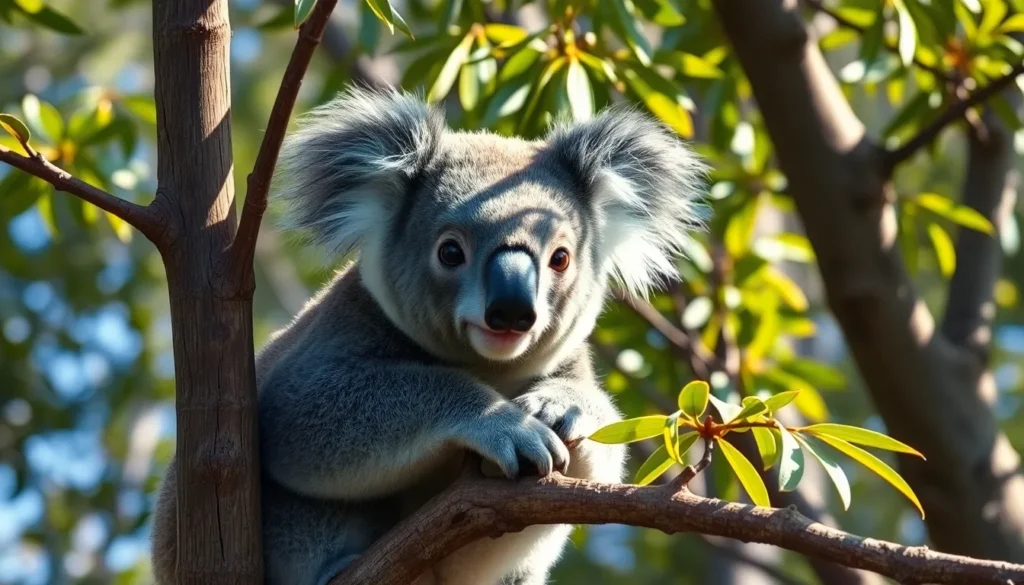
Short Answer
21 Facts About Koalas
- Koalas Are Marsupials. Koalas belong to the marsupial family, meaning females carry and nurse their young in pouches after birth.
- Native to Australia. Koalas are found naturally only in the eastern and southeastern regions of Australia, including Queensland, New South Wales, Victoria, and South Australia.
- Specialized Diet. Koalas primarily eat eucalyptus leaves, which are toxic to most animals but provide them with necessary nutrients and moisture.
- Low Energy Lifestyle. Due to their low-calorie diet, koalas sleep or rest up to 18-22 hours a day to conserve energy.
- Unique Fingerprints. Koalas have fingerprints very similar to humans, which is rare among non-primates.
- Strong Climbing Adaptations. Their sharp claws and rough pads help them grip and climb eucalyptus trees efficiently.
- Distinct Vocalizations. Koalas communicate using a range of sounds including grunts, snores, and bellows, particularly during mating season.
- Solitary Animals. Koalas are generally solitary, maintaining individual home ranges that may overlap with others.
- Slow Reproduction Rate. Female koalas typically give birth to one joey per year after a gestation of about 35 days.
- Joeys Develop in the Pouch. Newborn joeys are tiny and undeveloped at birth and spend several months growing inside their mother’s pouch.
- Temperature Regulation. Koalas regulate body temperature by changing their posture, seeking shade, or hugging tree trunks to stay cool.
- Fur Provides Insulation. Their thick fur helps them withstand temperature extremes and repel moisture.
- Threatened by Habitat Loss. Urbanization, agriculture, and bushfires have reduced koala habitats, impacting population numbers.
- Koalas Are Listed as Vulnerable. The IUCN classifies koalas as vulnerable due to habitat fragmentation and other environmental pressures.
- Role in Ecosystem. By feeding on eucalyptus leaves, koalas help maintain forest health and nutrient cycling.
- Low Water Intake. Koalas rarely drink water, obtaining most hydration from eucalyptus leaves, but will drink when necessary.
- Koalas Have a Specialized Digestive System. Their long cecum houses bacteria that break down tough eucalyptus fibers and detoxify chemicals.
- Predators and Threats. Natural predators include large birds of prey and snakes, but human-related threats like vehicle collisions are significant.
- Distinctive Nose. Koalas have a large, leathery nose that helps them detect the scent and quality of eucalyptus leaves.
- Population Estimates Vary. Koala population estimates vary widely, with some studies indicating significant declines in certain regions.
- Conservation Efforts Are Ongoing. Various government and community programs focus on habitat protection, rehabilitation, and research to support koala survival.
Habitat and Behavior
Koalas inhabit eucalyptus forests and woodlands primarily along the east coast of Australia. They spend most of their lives in trees, rarely descending to the ground except to move between trees or find water. Their behavior is largely solitary and territorial, with males often vocalizing to establish dominance and attract mates. Koalas have adapted to a low-energy lifestyle due to their nutrient-poor diet of eucalyptus leaves, which contain toxins that few other animals can digest. Their specialized digestive system and slow metabolism enable them to extract sufficient nutrients while minimizing energy expenditure. Typically nocturnal or crepuscular, koalas are most active at night when they feed.
Why This Animal Matters
Koalas play an important role in their ecosystem by influencing the health and regeneration of eucalyptus forests. As selective feeders, they help control the growth of certain eucalyptus species, contributing to forest diversity. Culturally, koalas are icons of Australian wildlife and serve as symbols of conservation and natural heritage. Due to their vulnerability, koalas have become a focus for conservation programs aimed at preserving native habitats and educating the public about the impact of human activities. Protecting koalas also benefits other species sharing the same environment, promoting broader biodiversity conservation.
Common Misconceptions
Misconception: Koalas are bears.
Correction: Koalas are marsupials, not bears. They are often called “koala bears” due to their bear-like appearance, but they are unrelated to true bears.
Misconception: Koalas drink water regularly.
Correction: Koalas rarely drink water as they obtain most moisture from eucalyptus leaves, though they will drink during droughts or extreme heat.
Misconception: Koalas are aggressive animals.
Correction: Koalas are generally shy and solitary; aggression mainly occurs during mating season or territorial disputes.
Misconception: Koalas eat any type of eucalyptus leaf.
Correction: Koalas are selective feeders and prefer certain eucalyptus species over others due to leaf toxicity and nutritional content.
FAQ
What do koalas eat?
Koalas primarily eat eucalyptus leaves, selecting specific species and leaves that provide the necessary nutrients and moisture while avoiding toxicity.
Why do koalas sleep so much?
Koalas have a low-energy diet and sleep between 18 to 22 hours daily to conserve energy and aid digestion of tough eucalyptus leaves.
Are koalas endangered?
Koalas are currently classified as vulnerable due to habitat loss, disease, and environmental pressures, although their conservation status may vary regionally.



Leave a Reply