
Short Answer
21 Facts About Animals as National Symbols
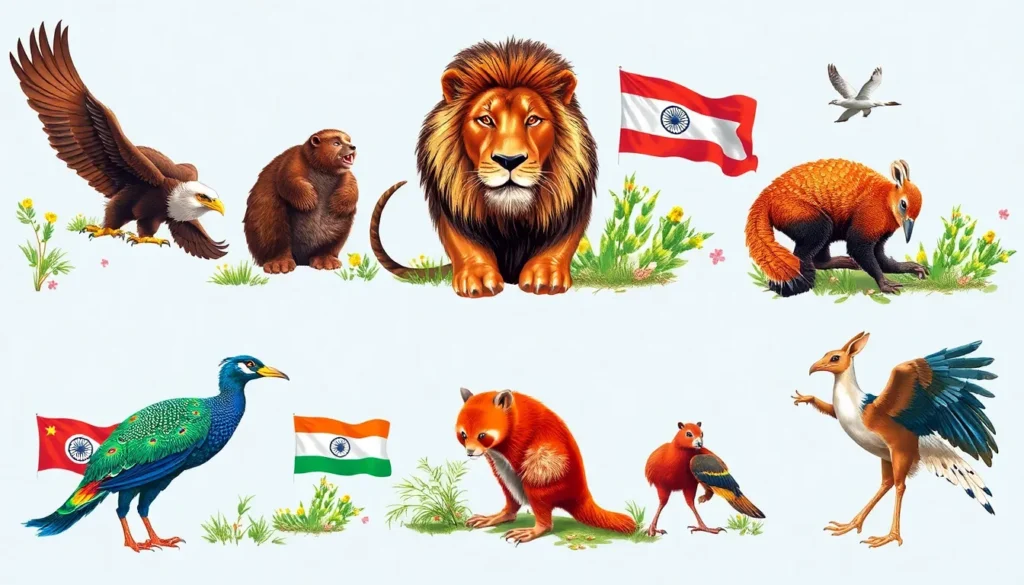
- The Bald Eagle is the national bird of the United States. It was chosen in 1782 for its majestic appearance and association with freedom and strength.
- The Beaver represents Canada. It symbolizes industriousness and played a key role in the country’s early economy through the fur trade.
- The Lion is a common symbol in many national emblems, including England and Sri Lanka. It often signifies courage, nobility, and royalty.
- The Kiwi is a national symbol of New Zealand. This flightless bird is unique to the country and represents its distinct wildlife.
- The Indian Peacock is India’s national bird. It is celebrated for its vibrant colors and cultural importance in Indian mythology and art.
- The Giant Panda is a national symbol of China. It represents peace and friendship, and is also an important conservation icon.
- The Red Kangaroo is an emblem of Australia. It is one of the country’s most recognizable native animals and appears on the Australian coat of arms.
- The Harpy Eagle is the national bird of Panama. Known for its impressive size and strength, it symbolizes power and freedom.
- The Golden Eagle is a national symbol for several countries including Germany and Mexico. It stands for strength, courage, and vision.
- The African Elephant is a symbol of Botswana. It represents wisdom and environmental importance.
- The Gallic Rooster is an unofficial symbol of France. It is often used to represent French identity and resilience.
- The Black Rhinoceros is a national symbol of Zimbabwe. It highlights the country’s commitment to wildlife conservation.
- The Arabian Oryx is the national animal of Qatar. It is a desert antelope symbolizing survival and heritage.
- The Harp Seal is associated with Greenland. It appears on Greenlandic coats of arms symbolizing the Arctic environment.
- The Snow Leopard is emblematic of Kazakhstan. It represents agility and elusive beauty in mountainous regions.
- The Atlantic Puffin is a symbol of Iceland. It reflects the island’s rich seabird population and natural heritage.
- The Jaguar is a national symbol of Belize. It signifies strength and the country’s rich biodiversity.
- The Eurasian Lynx is a symbol of Finland. It embodies wilderness and the natural landscape of the country.
- The Andean Condor represents several South American countries, including Colombia and Bolivia. It is revered for its soaring flight and cultural mythology.
- The Philippine Eagle is the national bird of the Philippines. It is one of the largest eagles in the world and symbolizes strength and freedom.
- The Dodo, although extinct, remains a symbolic animal for Mauritius. It represents uniqueness and the importance of conservation.
Habitat and Behavior
Animals chosen as national symbols typically inhabit regions associated with the respective countries. For example, the Bald Eagle thrives in North American forests near water bodies, while the Indian Peacock inhabits the forests and grasslands of the Indian subcontinent. Many of these animals display behaviors that resonate with the qualities nations wish to project, such as the industrious nature of the Beaver or the solitary strength of the Snow Leopard. Their survival strategies range from social cooperation, as seen in elephants, to camouflage and stealth, as in lynxes and jaguars. The habitats of these animals vary widely—from deserts and mountains to forests and coastal areas—reflecting the ecological diversity of their countries.
Why This Animal Matters
Animals chosen as national symbols often hold ecological, cultural, and conservation significance. Ecologically, they may be keystone species vital for their ecosystems. Culturally, they embody national identity, heritage, and values, appearing in folklore, art, and official emblems. Conservation-wise, many such animals are endangered or vulnerable, and their status as symbols raises awareness and support for their protection. For example, the Giant Panda’s role as a symbol has helped galvanize international conservation efforts. Similarly, the Philippine Eagle’s status highlights the need to preserve forest habitats. These animals also contribute to tourism and national pride.
Common Misconceptions
Misconception: The Bald Eagle was chosen because it is the most common bird in the United States.
Correction: The Bald Eagle was selected for its majestic appearance and symbolic qualities rather than population prevalence; in fact, it was once endangered.
Misconception: National animals are always native and abundant in their countries.
Correction: While many national animals are native, some may be rare or endangered, and their symbolic value often aims to promote conservation.
Misconception: All animals on national emblems are real animals.
Correction: Some countries use mythical creatures or stylized animals in their symbols; however, this article focuses only on real animals officially recognized as national symbols.
Misconception: The Dodo is still found in Mauritius since it is a national symbol.
Correction: The Dodo is extinct; it symbolizes uniqueness and the importance of protecting endangered species.
Misconception: Animals on national symbols always represent aggression or warlike qualities.
Correction: While some animals symbolize strength or courage, many also represent peace, wisdom, and cultural heritage.
FAQ
Why are animals chosen as national symbols?
Animals are chosen as national symbols because they often embody qualities or traits that resonate with a nation's identity, history, or natural heritage. They can represent strength, freedom, resilience, or cultural significance.
Are all national animals native to their countries?
Most national animals are native to their countries, but some may be rare or endangered within those regions. Their selection often aims to promote awareness and conservation efforts.
Can national animals help in conservation efforts?
Yes, national animals can raise public awareness and pride, which can translate into support for conservation policies and funding to protect these species and their habitats.


Leave a Reply