
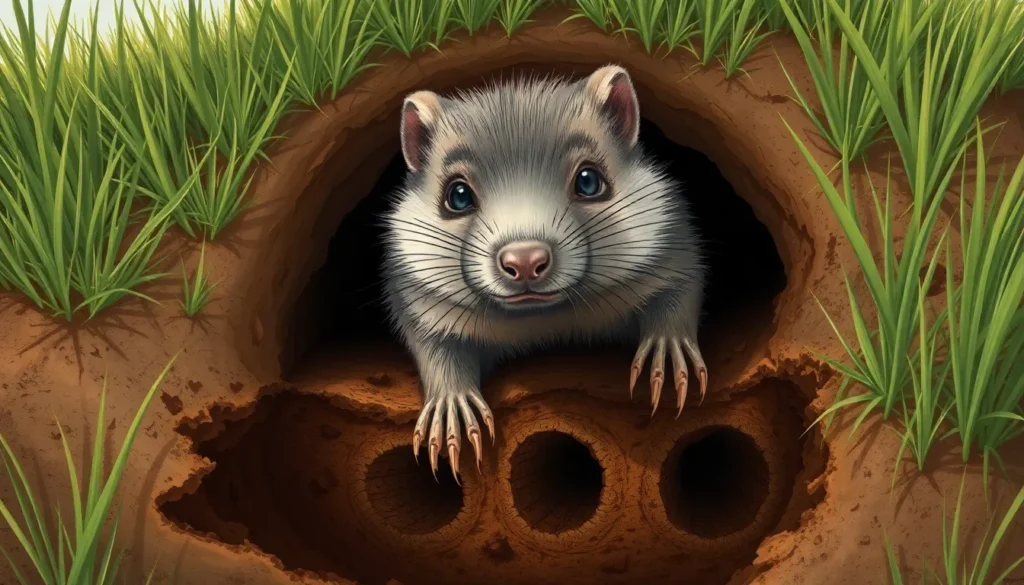
Short Answer
21 Facts About Zokors (Rodents)
- Taxonomy: Zokors belong to the family Spalacidae, which includes other subterranean rodents like blind mole rats. They are classified under the genus Myospalax and related genera.
- Geographic range: Zokors are primarily found in Central and East Asia, including parts of China, Mongolia, and Russia.
- Habitat preference: They inhabit grasslands, steppes, and mountainous regions where they can dig extensive burrow systems.
- Fossorial lifestyle: Zokors spend most of their lives underground, avoiding surface exposure except occasionally.
- Adapted limbs: Their forelimbs are strong and equipped with large claws for efficient digging.
- Reduced eyesight: Due to their subterranean habits, zokors have small, often underdeveloped eyes, relying more on tactile and olfactory senses.
- Teeth specialization: Like other rodents, zokors have ever-growing incisors that they use to gnaw through roots and soil.
- Diet: They primarily feed on roots, tubers, and underground plant parts, which they find by digging.
- Burrow complexity: Their tunnel systems can be extensive, with separate chambers for nesting, food storage, and waste.
- Solitary behavior: Zokors tend to be solitary except during mating periods.
- Reproduction: Females typically give birth to small litters after a gestation period of about one month.
- Activity patterns: They are mostly active underground and may have peak activity during dusk or dawn when foraging near the surface.
- Communication: Zokors use vocalizations and vibrations to communicate within tunnels.
- Predation: Predators include birds of prey, foxes, and snakes that can access their burrows or catch them during surface excursions.
- Ecological role: By aerating soil and influencing plant root dynamics, zokors contribute to ecosystem health.
- Adaptations to low oxygen: Living underground, zokors have physiological adaptations to tolerate hypoxic conditions in their burrows.
- Conservation status: Most zokor species are not considered endangered, but habitat loss and human activities can threaten local populations.
- Scientific interest: Zokors are studied for their unique adaptations to subterranean life and evolutionary relationships with other rodents.
- Locomotion: They use both their teeth and claws to dig, a behavior known as chisel-tooth digging.
- Seasonal behavior: In colder regions, zokors may reduce activity during winter or remain in deeper burrows.
- Human interactions: Occasionally considered pests due to burrowing damaging crops, but they also play a role in soil turnover beneficial to agriculture.
Habitat and Behavior
Zokors inhabit grasslands, steppes, and mountainous terrains across parts of Central and East Asia. Their underground lifestyle is supported by powerful forelimbs with large claws, allowing them to excavate complex burrow systems where they live, store food, and raise young. These rodents are primarily solitary and spend most of their time beneath the surface, emerging rarely. Their diet consists mostly of roots and tubers, which they access through their digging activities. Zokors possess small eyes adapted for a low-light environment and rely heavily on tactile and olfactory cues. They communicate using vocalizations and vibrations, especially within their tunnel networks. Seasonal changes influence their activity levels, with some reduction during cold periods.
Why This Animal Matters
Ecologically, zokors play a significant role in soil aeration and nutrient cycling through their burrowing habits. Their digging helps to mix soil layers, promoting plant growth and affecting root dynamics. This activity benefits overall ecosystem health, particularly in grassland environments. Though sometimes viewed as agricultural pests, their impact can be balanced by the positive effects on soil quality. Zokors also hold scientific value for understanding evolutionary adaptations to subterranean life, such as specialized physiology for hypoxic conditions and unique locomotion methods. Conservation attention is warranted in regions where habitat alteration threatens local zokor populations.
Common Misconceptions
Misconception: Zokors are moles.
Correction: While zokors share a subterranean lifestyle with moles, they are rodents, not insectivores, and belong to a different family with distinct anatomical features.
Misconception: Zokors are blind.
Correction: Though their eyes are reduced and not well-developed, zokors are not completely blind; they have limited vision suited for their underground environment.
Misconception: Zokors are harmful pests everywhere.
Correction: While zokors can damage crops locally, their ecological role in soil health often balances or outweighs their negative impacts.
FAQ
What are zokors?
Zokors are burrowing rodents native to parts of Asia, adapted to a subterranean lifestyle with specialized digging limbs and reduced eyesight.
Where do zokors live?
They primarily inhabit grasslands, steppes, and mountainous areas of Central and East Asia, living mostly underground in complex burrows.
Are zokors harmful to agriculture?
Zokors can sometimes damage crops by their burrowing and feeding on roots, but they also contribute positively to soil health and ecosystem processes.




Leave a Reply