
Short Answer
21 Facts About Ducks
- Ducks belong to the family Anatidae. This family also includes swans and geese, and ducks are one of the most widespread groups within it.
- There are over 120 species of ducks worldwide. These species vary greatly in size, coloring, and habitat preferences.
- Ducks have waterproof feathers. They produce oil from a gland near their tails that helps keep their feathers water-resistant.
- Most ducks are omnivorous. They eat a varied diet including aquatic plants, insects, small fish, and crustaceans.
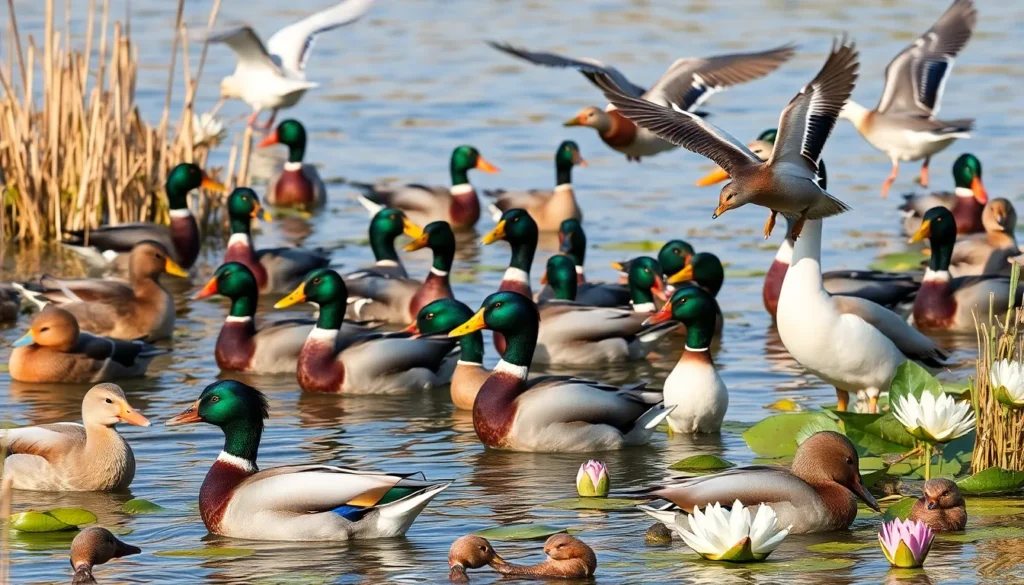
- Male ducks are often more colorful than females. This sexual dimorphism helps males attract mates while females remain camouflaged during nesting.
- Ducks have webbed feet. These feet act like paddles to aid in swimming and diving.
- Ducks communicate using a variety of vocalizations. The familiar quack is common among females, but many species produce other sounds as well.
- Ducks migrate seasonally. Many species travel long distances between breeding and wintering grounds to find suitable habitats.
- Ducklings are precocial. They are relatively mature and mobile shortly after hatching, able to follow their mother to water quickly.
- Ducks have a unique courtship display. Males perform elaborate visual and vocal displays to attract females.
- Ducks play a role in seed dispersal. By eating plants and moving between habitats, they help spread aquatic and wetland plant seeds.
- Some species of ducks dive underwater for food. Others mainly dabble at the surface or tip forward in shallow water.
- Ducks have been domesticated for thousands of years. Domesticated breeds are raised for meat, eggs, and feathers.
- The mallard is one of the most common and widely recognized duck species. It is the ancestor of most domestic duck breeds.
- Ducks have a distinctive preening behavior. They use their beaks to spread oil and align their feathers for insulation and waterproofing.
- Some male ducks have evolved elaborate and sometimes spiky genitalia. This is thought to be related to sexual selection and mating competition.
- Ducks’ eyes are positioned to allow good vision underwater and in the air. This helps them detect predators and find food.
- Ducks can sleep with one eye open. This unihemispheric sleep helps them stay alert to danger while resting.
- Many duck populations are affected by habitat loss. Wetland drainage and pollution threaten their breeding and feeding environments.
- Ducks contribute to ecosystem health. They help control insect populations and maintain aquatic plant communities.
- Duck feathers have been used historically for insulation and writing quills. Their down is especially valued for warmth.
Habitat and Behavior
Ducks inhabit a wide range of environments including freshwater lakes, rivers, marshes, coastal bays, and even urban parks. They are highly adaptable birds and can be found on every continent except Antarctica. Depending on the species, ducks may be migratory or resident year-round in certain areas. Behavioral adaptations such as migratory flight allow ducks to exploit seasonal resources and avoid harsh climates. They generally forage by dabbling on the water surface or diving underwater to access food. Social behaviors include flocking outside the breeding season and complex courtship rituals during mating periods. Ducks build nests near water, often concealed in vegetation, and the female typically incubates the eggs alone.
Why This Animal Matters
Ducks are integral components of wetland ecosystems. Their feeding habits help regulate aquatic insect populations and contribute to nutrient cycling. By dispersing seeds, ducks promote plant diversity and wetland regeneration. They also serve as prey for various predators, maintaining balanced food webs. Culturally, ducks have been featured in folklore, art, and literature worldwide. Economically, ducks support hunting and birdwatching industries and provide resources such as meat, eggs, and feathers. Conservation efforts for ducks and their habitats help preserve biodiversity and maintain healthy water systems, which benefit broader ecological communities.
Common Misconceptions
Misconception: All ducks quack loudly.
Correction: While many female ducks quack, not all species produce loud quacking sounds. Some ducks are relatively quiet or have different vocalizations.
Misconception: Ducks can only live in freshwater.
Correction: Ducks live in a variety of aquatic environments, including freshwater, brackish, and saltwater habitats such as coastal lagoons and estuaries.
Misconception: Male ducks are always more colorful.
Correction: While sexual dimorphism is common, some duck species have males and females with similar plumage, especially outside the breeding season.
Misconception: Ducks eat only plants.
Correction: Ducks are omnivores and eat a wide range of food including insects, small fish, and other invertebrates along with plant material.
Misconception: Ducks are not important to ecosystems.
Correction: Ducks play multiple ecological roles such as seed dispersal, pest control, and serving as prey for other animals, making them important to ecosystem function.
FAQ
Why do male ducks have brighter feathers than females?
Male ducks often have brighter feathers to attract females during the mating season, while females have duller colors to provide camouflage when nesting.
Can ducks live in saltwater?
Yes, some duck species are adapted to live in saltwater or brackish environments such as coastal bays and estuaries.
What do ducks eat?
Ducks have an omnivorous diet that includes aquatic plants, insects, small fish, and other invertebrates, varying by species and habitat.


Leave a Reply