
Short Answer
21 Facts About Galapagos Tortoises
- Largest Tortoise Species: Galapagos tortoises are the largest tortoise species in the world, with some individuals weighing over 400 kg (880 lbs).
- Longevity: They are known for their impressive lifespan, often living over 100 years in the wild and sometimes exceeding 150 years in captivity.
- Endemic to Galapagos Islands: These tortoises are native exclusively to the Galapagos Islands, an archipelago in the Pacific Ocean.
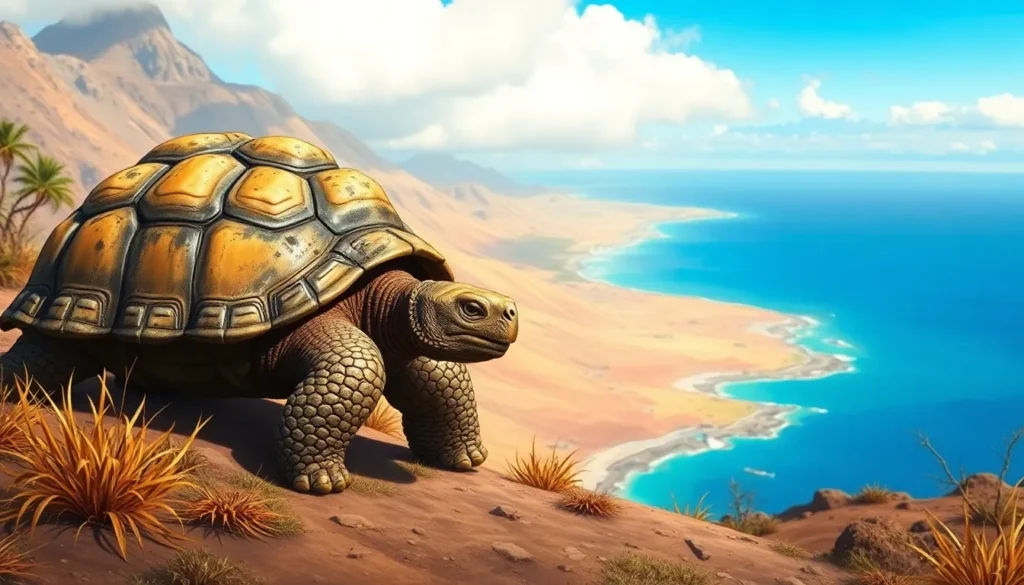
- Distinct Shell Shapes: Different populations have varied shell shapes, such as saddle-backed and domed shells, adaptations linked to their specific island habitats and food sources.
- Slow Metabolism: Their slow metabolism allows them to survive long periods without food or water, sometimes up to a year.
- Herbivorous Diet: Galapagos tortoises primarily feed on grasses, leaves, cactus pads, and fruit.
- Hibernation Absence: Unlike some reptiles, they do not hibernate but can become dormant during droughts.
- Sexual Dimorphism: Males are generally larger than females and have concave plastrons (undersides) to aid mating.
- Slow Reproduction: Females lay about 10-16 eggs per clutch, with incubation lasting around 4-8 months depending on temperature.
- Evolutionary Significance: Their variation played a key role in Charles Darwin’s formulation of the theory of evolution by natural selection.
- Conservation Status: Several subspecies are classified as vulnerable, endangered, or critically endangered due to habitat loss and introduced predators.
- Historical Exploitation: Whalers and sailors hunted them extensively in the 18th and 19th centuries for fresh meat, nearly driving some populations to extinction.
- Giant Tortoise Breeding Programs: Captive breeding programs and habitat restoration efforts have helped recover some populations.
- Temperature-Dependent Sex Determination: The incubation temperature of eggs influences the sex of hatchlings.
- Slow Movement: Despite their large size, they move slowly but can cover several kilometers when searching for food or water.
- Water Storage: They can store water in their bodies for long periods, an adaptation to arid island conditions.
- Communication: Galapagos tortoises use low-frequency sounds, hissing, and body movements to communicate.
- Role in Ecosystem: They play a crucial role in seed dispersal and vegetation management on the islands.
- Shell as a Protective Adaptation: Their hard shells protect them from predators and environmental hazards.
- Genetic Studies: Modern genetic research has helped clarify relationships among subspecies and inform conservation strategies.
- Icon of Conservation: The Galapagos tortoise is a symbol of wildlife conservation and the unique biodiversity of the Galapagos Islands.
Habitat and Behavior
Galapagos tortoises inhabit the Galapagos Islands, a volcanic archipelago located about 1,000 kilometers off the coast of Ecuador. They are mainly found in grasslands, dry lowlands, and humid highlands depending on the island and subspecies. These tortoises are terrestrial and prefer open, arid environments but can move between different elevations to find food and water. Their behavior is characterized by slow movement and long periods of inactivity to conserve energy. They are mostly solitary creatures but sometimes gather at watering holes or feeding sites. Feeding primarily occurs during cooler parts of the day, and they consume a variety of vegetation, including cacti and fallen fruit. Their ability to store water and fat in their bodies helps them survive drought periods. Reproduction is seasonal, with mating often coinciding with the wet season to ensure better survival rates for eggs and hatchlings.
Why This Animal Matters
Galapagos tortoises are ecologically significant as key herbivores that influence plant communities and contribute to seed dispersal, which helps maintain the island ecosystems. Their evolutionary variations inspired Charles Darwin’s theory of natural selection, making them important to scientific understanding of evolution. Culturally, they are emblematic of the Galapagos Islands and Ecuador’s natural heritage. From a conservation perspective, they highlight the challenges of protecting isolated island species from human activity and invasive species. Ongoing conservation and breeding efforts demonstrate the potential for recovery even of species once pushed to the brink of extinction. Their presence supports eco-tourism and educational initiatives focused on biodiversity and environmental stewardship.
Common Misconceptions
Misconception: Galapagos tortoises can live forever.
Correction: While these tortoises have exceptionally long lifespans, often exceeding 100 years, they do not live indefinitely and face natural mortality and threats from human impacts.
Misconception: All Galapagos tortoises look the same.
Correction: There are distinct subspecies with varied shell shapes and sizes adapted to specific island environments, reflecting evolutionary diversity.
Misconception: Galapagos tortoises are aggressive.
Correction: They are generally docile and slow-moving, using their hard shells for protection rather than aggression.
FAQ
How long do Galapagos tortoises live?
Galapagos tortoises typically live over 100 years, with some individuals recorded to live more than 150 years, making them one of the longest-lived vertebrates.
Why do Galapagos tortoises have different shell shapes?
Different shell shapes such as saddle-backed and domed forms have evolved in response to the varying environments and food availability on different islands, aiding in feeding and mobility.
What threats do Galapagos tortoises face today?
They face threats from habitat destruction, introduced predators like rats and goats, poaching in the past, and climate change, although conservation efforts have improved their status.


Leave a Reply