
Short Answer
21 Facts About Tarantulas
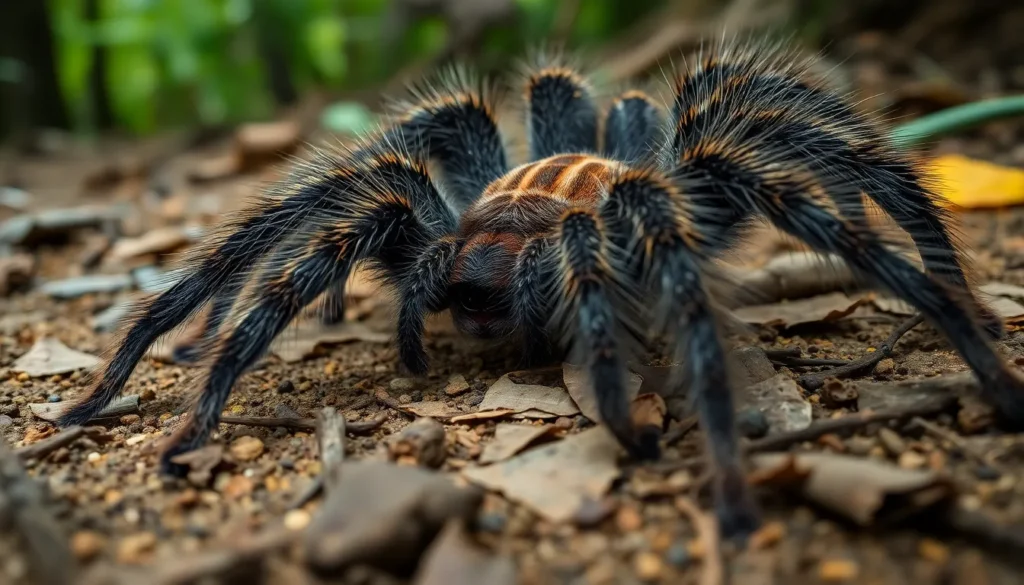
- Tarantulas belong to the family Theraphosidae. They are a group of large and often hairy spiders found worldwide, primarily in tropical, subtropical, and arid regions.
- Tarantulas are generally nocturnal hunters. They rely on stealth and ambush tactics rather than webs to catch prey.
- They have urticating hairs. Many New World tarantulas possess specialized barbed hairs on their abdomen used as a defense mechanism against predators.
- Tarantulas grow slowly and can live for many years. Females commonly live 10 to 30 years, while males usually have shorter lifespans.
- They have eight eyes but poor vision. Tarantulas primarily use vibrations and tactile senses to detect prey and threats.
- Tarantulas inject venom to subdue prey. While venom is generally mild to humans, it is effective in immobilizing insects and small animals.
- They molt periodically. Like other spiders, tarantulas shed their exoskeleton to grow, a process that can take several hours to days.
- Some species exhibit sexual dimorphism. Males are often smaller and have specialized mating structures compared to females.
- Tarantulas are terrestrial or arboreal. Some species live on the ground in burrows, while others inhabit trees or shrubs.
- They play a critical role in controlling insect populations. As predators, tarantulas help maintain ecological balance.
- The largest tarantula species can have leg spans up to 30 cm (12 inches). The Goliath birdeater is among the largest known.
- Tarantulas do not spin capture webs. Instead, they use silk to line burrows or create molting mats.
- They rely on vibrations to detect prey and danger. Sensitive hairs on their legs pick up environmental cues.
- Tarantulas are found on every continent except Antarctica. They thrive in diverse habitats including deserts, rainforests, and scrublands.
- Some species can run surprisingly fast. Despite their bulky appearance, tarantulas can sprint short distances to capture prey or escape threats.
- They are mostly solitary animals. Tarantulas typically only come together to mate.
- Molting is a vulnerable time for tarantulas. They are soft and defenseless until their new exoskeleton hardens.
- Tarantulas have been kept as pets. Their docile nature in captivity and striking appearance make them popular among arachnid enthusiasts.
- They use their fangs to inject venom and crush prey. Tarantulas have large chelicerae adapted for hunting and defense.
- Some tarantulas produce sounds. Certain species can stridulate, creating noise as a warning signal.
- Tarantulas are important in scientific research. Studies of their venom, silk, and behavior contribute to biology and medicine.
Habitat and Behavior
Tarantulas inhabit a wide range of environments, including tropical rainforests, deserts, grasslands, and scrublands. They predominantly live in burrows underground or under logs and rocks, or in arboreal settings such as tree hollows and crevices. Tarantulas are mostly nocturnal hunters, relying on stealth and the ability to sense vibrations to detect prey such as insects, small reptiles, and amphibians. They do not spin webs to trap prey but use silk primarily for lining their burrows and for molting protection. Tarantulas are solitary creatures that spend most of their lives alone, coming together only briefly during mating seasons. They defend themselves through physical displays, the release of urticating hairs, or biting with venomous fangs when threatened.
Why This Animal Matters
Tarantulas play a crucial ecological role as predators, regulating populations of insects and small animals, which helps maintain ecological balance. They are also indicators of environmental health, as their presence reflects habitat quality. Culturally, tarantulas have been featured in folklore and traditional medicine in various regions. Scientifically, tarantulas are valuable for research in venom composition, silk production, and arachnid behavior. Conservation-wise, while many tarantula species are not endangered, habitat destruction poses risks to some localized populations, highlighting the need for habitat preservation and responsible pet trade practices.
Common Misconceptions
Misconception: Tarantulas are deadly to humans.
Correction: While tarantula bites can be painful, their venom is generally not dangerous to humans and is comparable to a bee sting in toxicity.
Misconception: Tarantulas aggressively chase humans.
Correction: Tarantulas are shy and tend to avoid humans, only biting when provoked or threatened.
Misconception: All tarantulas live in trees.
Correction: Many tarantulas live on the ground in burrows, although some species are arboreal.
Misconception: Tarantulas are insects.
Correction: Tarantulas are arachnids, a class distinct from insects, characterized by having eight legs and two main body segments.
Misconception: Tarantulas spin webs to catch prey like other spiders.
Correction: Tarantulas do not use webs to capture prey but use silk for other purposes such as lining burrows and molting.
FAQ
Are tarantula bites dangerous to humans?
Tarantula bites can be painful but are generally not dangerous to humans. Their venom is usually mild and less potent than that of many other spiders or insects.
Do tarantulas spin webs to catch prey?
Unlike many spiders, tarantulas do not spin webs to capture prey. They rely on ambush and hunting techniques, using silk primarily for burrow lining and molting protection.
How long do tarantulas live?
Female tarantulas can live from 10 to 30 years, depending on the species, while males typically have shorter lifespans, often living only a few years after reaching maturity.




Leave a Reply