
Short Answer
21 Facts About Dingoes
- Dingoes are native to Australia. They are considered the continent’s largest terrestrial predator and have been present for thousands of years.
- They are not true wild dogs but a type of feral dog. Dingoes are descendants of domestic dogs brought to Australia by humans around 4,000 years ago, which subsequently became wild.
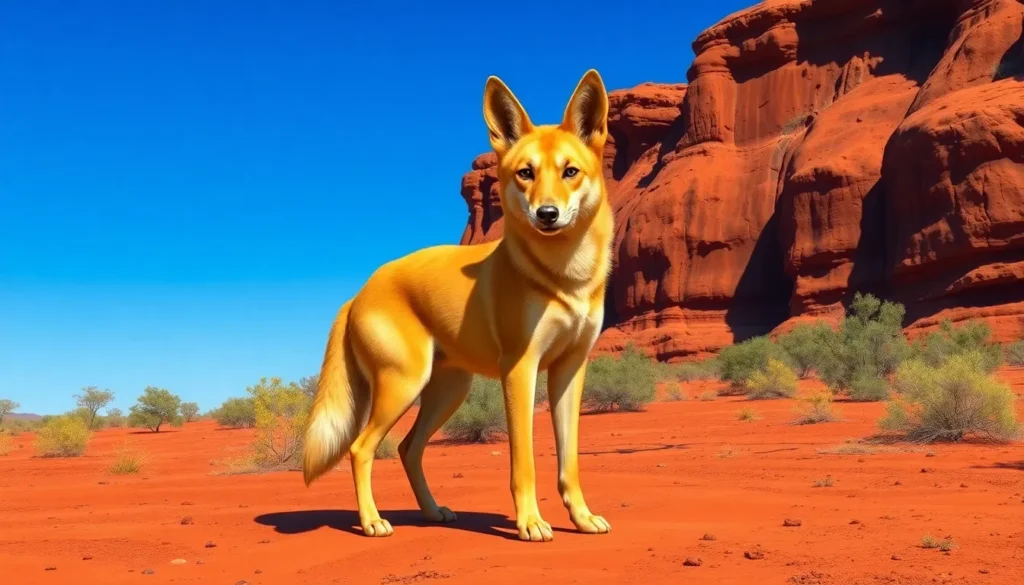
- Dingoes have a distinctive sandy or reddish coat. Their fur color varies, but they typically exhibit a tan to reddish-brown coat, sometimes with white markings.
- They are medium-sized canids. Adult dingoes weigh between 13 and 20 kilograms (29 to 44 pounds) and measure about 117 to 130 centimeters (46 to 51 inches) in length, including the tail.
- Dingoes are highly adaptable predators. Their diet includes mammals, birds, reptiles, and occasionally fruits, allowing them to survive in diverse habitats.
- They live in various environments. Dingoes inhabit deserts, grasslands, forests, and coastal regions across Australia.
- Dingoes hunt both alone and in packs. Their hunting strategy depends on the prey and environment, with pack hunting used for larger animals.
- Their social structure is flexible. Dingoes may live in family groups or be solitary, depending on food availability and territory.
- Dingoes communicate using howls, growls, and body language. Howling assists in long-distance communication and territory marking.
- They are primarily nocturnal but can be active during the day. Activity patterns vary according to climate and human disturbance.
- Dingoes play a crucial role in controlling invasive species. By preying on feral cats and foxes, they help protect native wildlife.
- They are culturally significant to Indigenous Australians. Dingoes feature in many Aboriginal stories, art, and traditions.
- Hybridization with domestic dogs is a conservation concern. Crossbreeding threatens the genetic integrity of pure dingoes.
- Their scientific classification is debated. Some taxonomists classify dingoes as Canis lupus dingo, a subspecies of the gray wolf, while others consider them Canis familiaris, a domestic dog variant.
- Dingoes have a lifespan of about 5 to 10 years in the wild. Survival depends on factors such as food availability and human impact.
- Dingoes were once widespread across mainland Australia. However, their populations have declined in some regions due to persecution and habitat loss.
- They exhibit seasonal breeding patterns. Dingoes typically breed once a year, with pups born after approximately 63 days of gestation.
- Dingo pups are born blind and helpless. They rely on parental care during the first weeks of life.
- Dingoes have been known to interbreed with domestic dogs. This has led to hybrid populations, complicating conservation efforts.
- They can survive without water for extended periods. Dingoes obtain moisture from their prey and can tolerate arid environments.
- Some Australian laws protect dingoes. Protection levels vary by state, reflecting their ecological importance and conflicts with livestock farming.
Habitat and Behavior
Dingoes inhabit a wide range of environments across Australia, including deserts, savannas, woodlands, and coastal areas. Their adaptability to different habitats is supported by a versatile diet and flexible social structures. Some dingoes live in family packs with defined territories, while others are solitary or form loose associations. They are primarily nocturnal but can be active during the day, especially in cooler weather. Dingoes communicate through howling, growling, and body postures to maintain social bonds and mark territory. Their hunting techniques vary, with solitary hunts targeting smaller prey and coordinated pack hunting used for larger animals like kangaroos or livestock.
Why This Animal Matters
Dingoes play a vital ecological role as top predators in Australia’s ecosystems. They help control populations of invasive species such as feral cats and red foxes, which threaten native wildlife. By regulating herbivore numbers, dingoes also contribute to vegetation balance and ecosystem health. Culturally, dingoes hold significance for Indigenous Australian communities, appearing in traditional stories and artworks. Conservation of pure dingoes is important due to their genetic distinctiveness and the ecological services they provide. However, they often come into conflict with livestock farmers, leading to management challenges. Understanding and preserving dingoes is critical for maintaining biodiversity and cultural heritage in Australia.
Common Misconceptions
Misconception: Dingoes are just wild dogs and not a distinct species. Correction: While dingoes descended from domestic dogs introduced thousands of years ago, they have developed unique adaptations and genetic traits that distinguish them from typical domestic dogs, leading some scientists to classify them as a distinct subspecies.
Misconception: Dingoes are major livestock killers everywhere in Australia. Correction: Although dingoes can prey on livestock, the extent of predation varies regionally, and many dingoes primarily hunt native wildlife. Management efforts aim to balance conservation with agricultural interests.
Misconception: All dingoes are pure and genetically identical. Correction: Hybridization with domestic dogs is widespread, especially near human settlements, making it difficult to find genetically pure dingoes in some areas.
Misconception: Dingoes are dangerous to humans. Correction: Dingoes generally avoid human contact and attacks on people are extremely rare, usually occurring only when dingoes are habituated to humans or food sources.
Misconception: Dingoes do not howl like wolves. Correction: Dingoes do howl, but their vocalizations are distinct from wolves and serve similar functions in communication and territory marking.
FAQ
Are dingoes considered a native species in Australia?
Yes, dingoes are considered native to Australia, having arrived approximately 4,000 years ago and established as a wild population long before European settlement.
How do dingoes affect livestock farming?
Dingoes can prey on livestock such as sheep and cattle, which has led to conflict with farmers. Management strategies attempt to reduce predation while conserving dingo populations.
Can dingoes interbreed with domestic dogs?
Yes, dingoes can and do interbreed with domestic dogs, producing hybrids. This hybridization is a significant concern for the conservation of genetically pure dingoes.



Leave a Reply