
Short Answer
21 Facts About Ocean Animals
- Bioluminescence is common in deep-sea creatures. Many ocean animals, such as certain species of jellyfish, squid, and fish, produce their own light through chemical reactions to attract prey or mates and to evade predators.
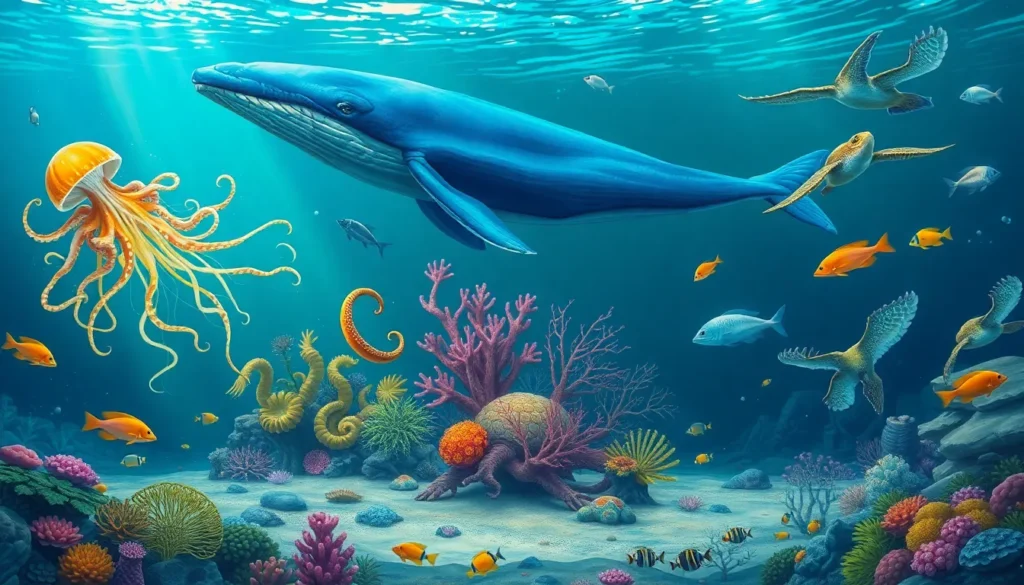
- The blue whale is the largest animal on Earth. Reaching lengths of up to 100 feet and weights of 200 tons, blue whales are the biggest animals to have ever existed.
- Octopuses have three hearts. Two hearts pump blood to the gills, while the third pumps it to the rest of the body. When an octopus swims, the heart that delivers blood to the body stops beating temporarily.
- Sharks have been around longer than dinosaurs. Sharks appeared roughly 400 million years ago, predating dinosaurs by about 200 million years.
- Some fish can change sex during their lifetime. Species like clownfish and wrasses have the ability to switch from male to female or vice versa depending on environmental or social factors.
- Coral is a living animal, not a plant. Coral polyps are tiny animals that build calcium carbonate structures, forming coral reefs which are critical marine habitats.
- Seahorses are unique for their reproductive role reversal. Male seahorses carry and give birth to the offspring after females deposit eggs in their brood pouch.
- Marine mammals like dolphins and whales use echolocation. They emit sound waves and listen to echoes to navigate, hunt, and communicate underwater.
- Sea turtles have existed for over 100 million years. They have survived mass extinctions and continue to play key roles in marine ecosystems.
- Some jellyfish are effectively immortal. The species Turritopsis dohrnii can revert to its juvenile form after reaching maturity, potentially avoiding natural death.
- Krill are a foundational species in many ocean food webs. These small shrimp-like creatures are a primary food source for whales, seals, penguins, and fish.
- Many ocean animals exhibit camouflage. Creatures like cuttlefish and flatfish can change their color and texture to blend with their surroundings and avoid predators.
- Deep-sea anglerfish use a bioluminescent lure to attract prey. The light-emitting organ on their heads acts like a fishing rod in the darkness of the deep ocean.
- Some fish can survive out of water for extended periods. Mudskippers and lungfish have adaptations that allow them to breathe air and move on land temporarily.
- Whale sharks are the largest fish species. Despite their size, they are filter feeders and consume plankton and small fish.
- Ocean animals contribute to global oxygen production. Phytoplankton, microscopic ocean plants, produce about half of the world’s oxygen through photosynthesis.
- Many marine species migrate thousands of miles annually. Examples include humpback whales, sea turtles, and certain types of salmon, which undertake long journeys for breeding or feeding.
- Some ocean animals have remarkable lifespans. The Greenland shark is estimated to live up to 400 years, making it one of the longest-living vertebrates.
- Octopuses are highly intelligent. They demonstrate problem-solving skills, use tools, and have complex nervous systems compared to other invertebrates.
- Marine sponges filter vast amounts of water. They play a key role in maintaining water quality by filtering bacteria and organic matter from seawater.
- Sea otters use tools to open shellfish. They are one of the few animal species known to use rocks and other objects for feeding.
Habitat and Behavior
Ocean animals inhabit a wide range of marine environments, from sunlit coastal shallows to the inky depths of the abyssal plains. Their behaviors vary greatly; some are solitary hunters like the great white shark, while others form complex social groups, such as dolphins and orcas. Many species have evolved unique adaptations to survive in their specific habitats, including pressure resistance in deep-sea creatures and the ability to tolerate extreme temperatures near hydrothermal vents. Feeding strategies range from filter feeding and scavenging to active predation. Reproductive methods are equally diverse, with some species laying vast numbers of eggs, and others giving birth to live young or even exhibiting brood care. Migration is a common behavior among marine animals, allowing them to access food resources and breeding grounds across vast distances.
Why This Animal Matters
Ocean animals play essential roles in marine ecosystems and global ecological processes. They contribute to nutrient cycling, maintain the balance of food webs, and support commercial fisheries that millions of people rely on for food and livelihoods. Many species, like coral and krill, form the foundation of complex ecosystems that sustain biodiversity. Additionally, marine animals have cultural significance in many human societies, symbolizing spiritual connections, and inspiring art and folklore. Conservation of ocean animals is critical due to threats such as overfishing, habitat destruction, pollution, and climate change. Protecting these species helps preserve ocean health and the benefits it provides to humanity.
Common Misconceptions
Misconception: Sharks are mindless killers that frequently attack humans.
Correction: Shark attacks on humans are extremely rare, and sharks generally avoid people. Most species are not dangerous to humans and play vital roles in marine ecosystems as apex predators.
Misconception: All jellyfish sting humans and are dangerous.
Correction: While some jellyfish species have painful or even harmful stings, many are harmless to humans or have stings too weak to penetrate human skin.
FAQ
Why do some ocean animals produce light?
Bioluminescence in ocean animals serves various purposes including attracting mates, luring prey, and deterring predators. It is especially common in deep-sea species where sunlight does not penetrate.
How do marine animals survive in deep ocean pressure?
Deep-sea animals have adaptations such as flexible cell membranes and specialized proteins that prevent damage from high pressure. Their bodies are often soft and lack air-filled cavities that could be crushed.
Are all sharks dangerous to humans?
No, most shark species are harmless to humans. Only a few species have been involved in unprovoked attacks, and sharks generally avoid human contact.




Leave a Reply