
Short Answer
21 Facts About Indochinese Tigers
- Subspecies Status: The Indochinese tiger (Panthera tigris corbetti) is a recognized subspecies of tiger native to Southeast Asia, distinct from other tiger subspecies based on genetic and morphological differences.
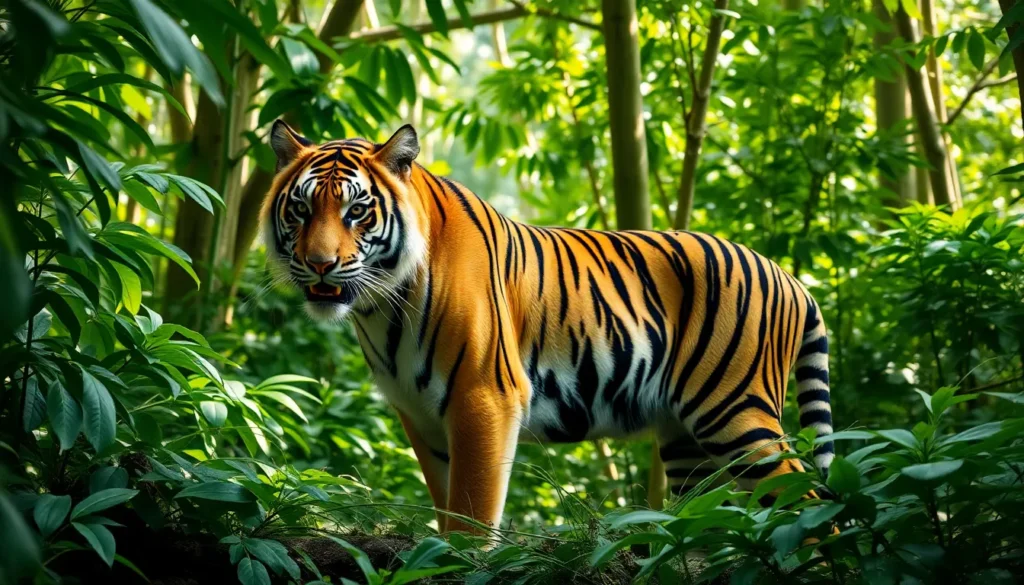
- Appearance: Indochinese tigers generally have darker, shorter stripes compared to other tiger subspecies, with a relatively smaller body size.
- Geographic Range: They are primarily found in parts of Thailand, Myanmar, Laos, Cambodia, and Vietnam.
- Habitat Preferences: These tigers inhabit tropical and subtropical moist broadleaf forests, including mountainous and hilly regions.
- Diet: Their diet mainly consists of ungulates such as deer, wild boar, and occasionally smaller mammals and birds.
- Territorial Behavior: Males have large territories that may overlap with several females, which they defend from other males.
- Reproduction: Females typically give birth to litters of two to four cubs after a gestation period of around 3.5 months.
- Population Status: The Indochinese tiger is listed as Endangered on the IUCN Red List due to habitat loss and poaching.
- Poaching Threat: Illegal hunting for their skins, bones, and other body parts for traditional medicine is a significant threat.
- Conservation Efforts: Various protected areas and anti-poaching measures have been established to help conserve the subspecies.
- Behavioral Adaptations: Indochinese tigers are primarily nocturnal and solitary animals, adapting their activity patterns to avoid human encounters.
- Swimming Ability: Like other tigers, they are strong swimmers and often bathe in water to cool off.
- Communication: They communicate through scent markings, vocalizations, and visual signals to establish territories and attract mates.
- Lifespan: In the wild, they typically live around 10 to 15 years, though they can live longer in captivity.
- Conservation Genetics: Genetic studies help differentiate Indochinese tigers from other subspecies and assist in managing breeding programs.
- Ecological Role: As apex predators, they play a vital role in maintaining the balance of their ecosystems by controlling prey populations.
- Human Conflict: Encroachment on tiger habitats has led to increased human-wildlife conflicts, sometimes resulting in retaliatory killings.
- Protected Reserves: Notable reserves include Thailand’s Huai Kha Khaeng Wildlife Sanctuary and Cambodia’s Cardamom Mountains.
- Scientific Research: Camera trapping and radio collaring are commonly used methods to study these elusive cats in the wild.
- Population Estimates: Recent estimates suggest fewer than 400 Indochinese tigers remain in the wild, though exact numbers are difficult to confirm.
- Cultural Significance: In some Southeast Asian cultures, tigers are symbols of strength and bravery, though superstitions have also fueled poaching.
Habitat and Behavior
The Indochinese tiger inhabits dense tropical forests, often in rugged terrain such as hills and mountains across Southeast Asia. It prefers habitats with ample cover to stalk prey and access to water sources. Being solitary and territorial, each tiger maintains a defined range marked by scent markings and scratch marks. They are crepuscular to nocturnal hunters, relying on stealth and strength to hunt large ungulates like deer and wild boar. Their ability to swim and climb allows them to exploit diverse landscapes. Seasonal changes and human activity influence their movement and hunting patterns, with tigers generally avoiding human settlements where possible.
Why This Animal Matters
Indochinese tigers play a crucial ecological role as apex predators, helping control herbivore populations and thus maintaining the health and diversity of their forest ecosystems. Their presence indicates a relatively intact environment, making them important indicators of ecosystem health. Culturally, tigers have been revered in many Southeast Asian traditions as symbols of power and protection. Conservation of the Indochinese tiger also benefits other species sharing their habitat by preserving large tracts of forest and biodiversity. Given their endangered status, efforts to protect this subspecies are vital for preventing extinction and maintaining ecological balance.
Common Misconceptions
Misconception: Indochinese tigers are just smaller versions of Bengal tigers.
Correction: While Indochinese tigers are generally smaller than Bengal tigers, they are a distinct subspecies with unique genetic, morphological, and behavioral traits.
Misconception: Tigers only live in open grasslands.
Correction: Indochinese tigers primarily inhabit dense forests and mountainous regions rather than open grasslands.
Misconception: Tigers are always aggressive towards humans.
Correction: Tigers generally avoid humans and attacks are rare, typically occurring when tigers are threatened, injured, or unable to hunt natural prey.
FAQ
Where are Indochinese tigers found?
Indochinese tigers are found primarily in forested regions of Southeast Asia, including Thailand, Myanmar, Laos, Cambodia, and Vietnam.
How many Indochinese tigers are left in the wild?
Current estimates suggest that fewer than 400 Indochinese tigers remain in the wild, although exact numbers are difficult to confirm due to their elusive nature.
What are the main threats to Indochinese tigers?
The primary threats include habitat loss due to deforestation and agriculture, poaching for traditional medicine and illegal wildlife trade, and human-wildlife conflicts.




Leave a Reply