
Short Answer
21 Facts About Deathstalker Scorpion
- Highly Venomous Sting
The Deathstalker scorpion possesses one of the most potent venoms among scorpions, containing a complex mixture of neurotoxins. - Scientific Name
Its scientific name is Leiurus quinquestriatus, with “Leiurus” meaning “smooth tail” and “quinquestriatus” referring to five stripes on its back. - Common Name Origin
The name “Deathstalker” reflects the scorpion’s feared reputation due to its venom’s potency. - Size
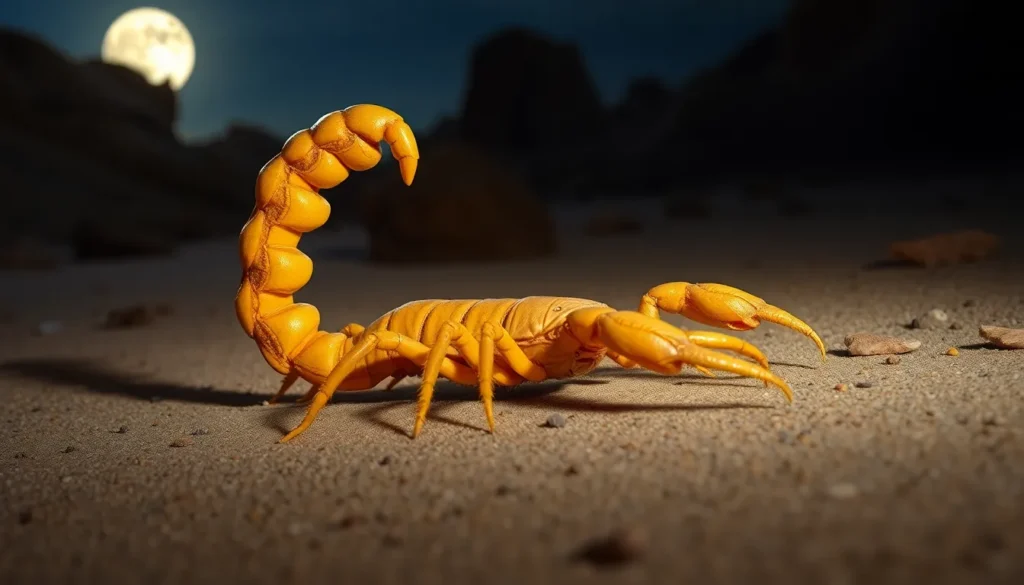
Adult Deathstalkers typically measure between 5 to 8 centimeters in length. - Coloration
They usually have a yellow to greenish-yellow exoskeleton, aiding camouflage in desert environments. - Habitat Range
They are native to arid regions including parts of North Africa and the Middle East. - Desert Adaptation
The Deathstalker is well-adapted to survive extreme desert conditions, including high temperatures and scarce water. - Nocturnal Behavior
It is primarily nocturnal, hunting at night to avoid daytime heat and predators. - Diet
Its diet mainly consists of insects and other small arthropods. - Venom Composition
The venom includes chlorotoxin, which has been researched for medical applications. - Medical Research Interest
Components of Deathstalker venom are studied for potential use in cancer treatment and neurological therapies. - Predators
Despite its venom, it has natural predators including birds, larger arachnids, and mammals. - Reproductive Behavior
Females give birth to live young, which stay on the mother’s back until their first molt. - Defensive Posture
When threatened, it raises its pincers and curves its tail over its body in a defensive stance. - Venom Delivery
The scorpion injects venom through its stinger located at the tail’s tip. - Life Expectancy
Deathstalkers typically live 4 to 8 years in the wild. - Behavioral Traits
They are solitary creatures except during mating or mother-offspring interactions. - Importance in Ecosystem
As predators, they help control insect populations, maintaining ecological balance. - Human Interaction
While dangerous, fatalities from Deathstalker stings are rare due to availability of antivenoms. - Antivenom Availability
Medical treatments exist and are crucial for managing severe envenomation cases. - Conservation Status
The Deathstalker is not currently listed as endangered but faces habitat pressures from human activity.
Habitat and Behavior
The Deathstalker scorpion inhabits arid and semi-arid environments primarily across North Africa and the Middle East. It thrives in deserts, scrublands, and rocky terrains where it can easily find shelter under rocks, in crevices, and burrows. Adapted to extreme heat and dry conditions, it remains inactive during the hottest parts of the day and emerges at night to hunt. The Deathstalker uses its keen sensory hairs and pincers to detect and capture prey, mainly insects and other small invertebrates. Its nocturnal and solitary nature helps it avoid predators and conserve moisture. During reproduction, the female carries the young on her back until they are mature enough to fend for themselves.
Why This Animal Matters
The Deathstalker scorpion plays a significant role in its ecosystem by controlling populations of insects and other arthropods, thus contributing to ecological balance. Its venom is of great scientific interest due to components like chlorotoxin, which have potential applications in medical research, including cancer treatment and neurological disease therapies. Although dangerous to humans, Deathstalkers are not aggressive and generally sting only in self-defense. Conservation of their natural habitat is important to maintain biodiversity and allow continued scientific study of their unique biological compounds.
Common Misconceptions
Misconception: The Deathstalker scorpion is always deadly to humans.
Correction: While its venom is extremely potent, fatalities are rare due to the availability of antivenom and prompt medical treatment.
Misconception: Deathstalkers actively hunt humans.
Correction: This scorpion is not aggressive toward humans and typically stings only when threatened or provoked.
FAQ
Is the Deathstalker scorpion deadly to humans?
While the Deathstalker’s venom is highly potent and can cause severe symptoms, fatalities are rare due to effective antivenoms and medical care.
Where can Deathstalker scorpions be found?
They are native to arid regions of North Africa and the Middle East, particularly deserts and rocky environments.
What makes Deathstalker venom medically important?
The venom contains chlorotoxin and other peptides that are being researched for their potential use in cancer treatments and neurological disease therapies.



Leave a Reply