
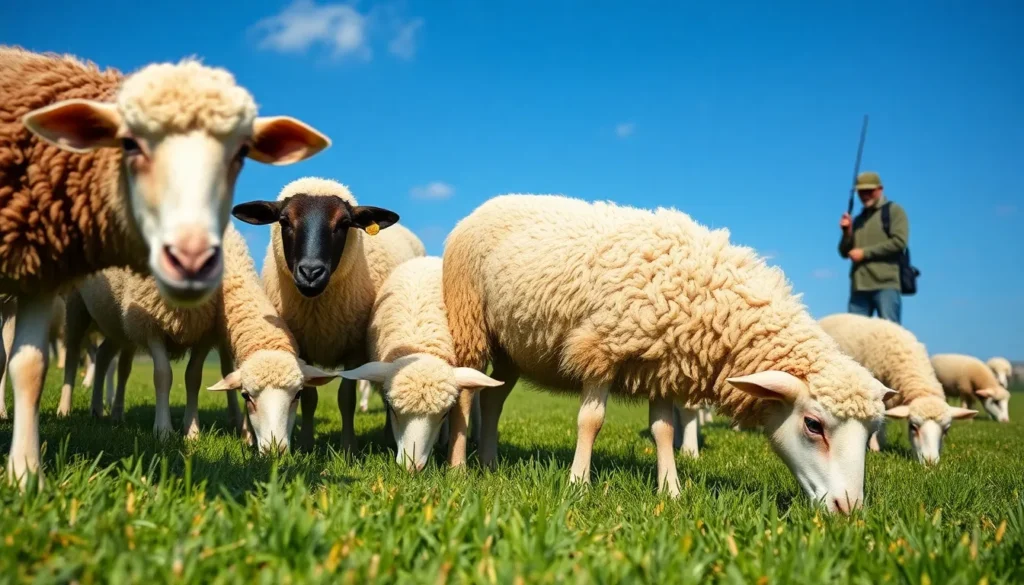
Short Answer
21 Facts About Sheep
- Sheep were among the first animals domesticated by humans. Evidence suggests sheep were domesticated around 10,000 years ago in the Fertile Crescent region, making them one of the earliest livestock species.
- Sheep have excellent memories. They can recognize and remember faces of up to 50 other sheep and humans for several years.
- Sheep wool is highly insulating. The wool fibers trap air, providing warmth, which is why sheep are sheared annually to prevent overheating.
- There are over 1,000 breeds of sheep worldwide. These breeds vary in size, wool type, and purpose, such as meat, wool, or milk production.
- Sheep have rectangular pupils. This unique eye shape gives them a wide field of vision, allowing them to detect predators more effectively.
- Sheep are social animals. They prefer to stay in flocks and exhibit strong flocking behavior as a defense mechanism against predators.
- Sheep can vocalize in several ways. Different bleats communicate various states such as distress, recognition, or contentment.
- Sheep’s milk is used to produce specialty cheeses. Examples include Roquefort, Pecorino, and Manchego, which are valued for their distinct flavors.
- Sheep wool can vary in quality. Fine wool breeds such as Merino produce soft wool used for high-end textiles, while coarser wool is used for carpets and insulation.
- Sheep have a strong homing instinct. They tend to return to familiar locations, which helps shepherds manage flocks more easily.
- Sheep communicate using body language. Ear position, tail movement, and posture convey information to other sheep.
- Sheep have a four-chambered stomach. This allows them to digest tough plant materials like grass through fermentation.
- Sheep are herbivores. Their diet mainly consists of grasses, clover, and other pasture plants.
- Sheep play an important role in agriculture. They help manage vegetation and can prevent wildfires by grazing on dry grasses.
- Sheep wool is naturally water-resistant. Lanolin, a waxy substance in wool, repels water and protects the animal from the elements.
- Some sheep breeds are hair sheep. These breeds shed their wool seasonally and do not require shearing.
- Sheep have been symbols in various cultures. They often represent innocence, fertility, and sacrifice in religious and literary contexts.
- Sheep are prey to various predators. Wolves, coyotes, and domestic dogs are common threats that shepherds must manage.
- Sheep wool is biodegradable. Unlike many synthetic fibers, wool decomposes naturally, making it an environmentally friendly textile option.
- Selective breeding has greatly diversified sheep. Humans have bred sheep for traits such as wool quality, meat yield, and adaptability to different environments.
- Sheep exhibit a strong flocking instinct to reduce stress and enhance survival. Being part of a group helps protect individuals from predators and environmental hazards.
Habitat and Behavior
Sheep are found worldwide, primarily on farms and ranches where conditions support grazing. They thrive in temperate climates but can adapt to various environments from mountainous regions to grasslands. As grazers, sheep consume a diet mainly composed of grasses and other low-lying plants. Their four-chambered stomach allows them to efficiently digest cellulose found in fibrous plants. Behaviorally, sheep are highly social and prefer to remain in flocks for protection and companionship. They communicate through vocalizations and body language and exhibit a strong homing instinct, often returning to familiar areas. Sheep also display vigilance through their wide field of vision, thanks to their horizontal, rectangular pupils that enable them to spot predators effectively.
Why This Animal Matters
Sheep have played a vital role in human history as one of the earliest domesticated animals, contributing wool, meat, and milk for thousands of years. Ecologically, grazing by sheep helps maintain grassland ecosystems, preventing overgrowth and reducing wildfire risks. Culturally, sheep hold symbolic meanings in many societies, appearing in religious texts, folklore, and art. Economically, they remain important livestock around the world, supporting rural livelihoods. Conservation-wise, while many sheep breeds are abundant, some heritage breeds are rare and require preservation efforts to maintain genetic diversity. Wool production also supports sustainable textile industries due to its biodegradability and renewable nature.
Common Misconceptions
Misconception: Sheep are unintelligent and have poor memories.
Correction: Research shows sheep have excellent long-term memory and can recognize faces of other sheep and humans for several years.
Misconception: All sheep have wool that needs shearing.
Correction: Some sheep breeds are hair sheep and naturally shed their coats, eliminating the need for shearing.
Misconception: Sheep are solitary animals.
Correction: Sheep are highly social and prefer to live in flocks, relying on group behavior for survival and stress reduction.
Misconception: Sheep have poor eyesight.
Correction: Sheep have a wide field of vision with their rectangular pupils, allowing them to detect predators effectively.
Misconception: Wool is waterproof.
Correction: Wool is water-resistant due to lanolin but not fully waterproof; it can absorb moisture while still insulating the animal.
FAQ
How long have sheep been domesticated?
Sheep were first domesticated approximately 10,000 years ago in the Fertile Crescent region, making them one of the earliest animals to be kept by humans for agricultural purposes.
Do all sheep produce wool?
Not all sheep produce wool. While most sheep breeds grow wool that requires shearing, some breeds called hair sheep naturally shed their coats and do not require shearing.
What is the purpose of sheep's rectangular pupils?
Sheep have rectangular pupils that provide a wide field of vision—nearly 270 degrees—allowing them to better detect predators approaching from various directions.





Leave a Reply