
Short Answer
21 Facts About Copepods
- Copepods are tiny crustaceans. Most species range from 1 to 2 millimeters in length, making them some of the smallest multicellular animals in aquatic environments.
- They belong to the subclass Copepoda. This subclass is part of the larger class Maxillopoda within the phylum Arthropoda.
- Copepods are found worldwide. They inhabit nearly every aquatic environment, from freshwater lakes to deep ocean trenches.
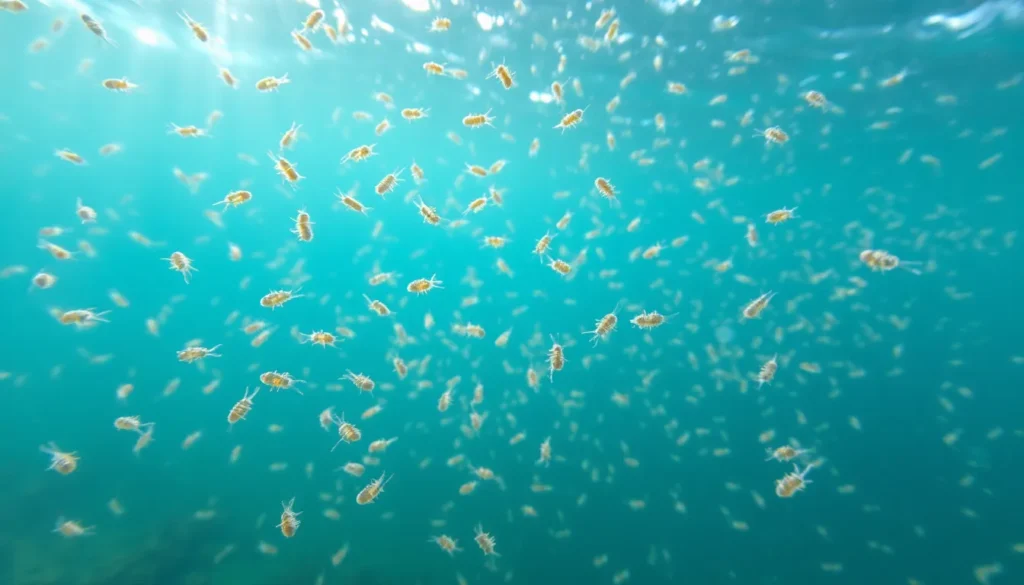
- They are a critical component of plankton. Copepods constitute a large percentage of zooplankton biomass in marine and freshwater systems.
- Copepods have a diverse diet. Many species feed on phytoplankton, bacteria, and detritus, while some are carnivorous or parasitic.
- They serve as a major food source. Numerous fish, whales, and other marine animals rely on copepods as a primary food source.
- Copepods exhibit complex life cycles. Their development includes multiple larval stages called nauplii before reaching adulthood.
- Some copepods are parasitic. Certain species live on or inside fish and other marine animals, sometimes impacting host health.
- Copepods contribute to the biological carbon pump. By feeding on phytoplankton and producing fecal pellets, they help transport carbon from surface waters to the deep ocean.
- They have a simple body structure. Typically, copepods possess a head, thorax, and abdomen, with a single median eye in many species.
- Copepods reproduce sexually. Males transfer spermatophores to females, which then produce eggs that hatch into free-swimming larvae.
- Some species exhibit diel vertical migration. They move toward surface waters at night to feed and descend to deeper waters during the day to avoid predators.
- Copepods can survive in extreme environments. They are found in polar regions, hot springs, and deep-sea habitats with high pressure and low temperatures.
- They have various modes of locomotion. Copepods use their antennae and thoracic legs to swim in a jerky, hopping motion.
- Copepod populations fluctuate seasonally. Their abundance often peaks during phytoplankton blooms in spring and summer.
- They play a role in nutrient cycling. By consuming organic matter and releasing waste, copepods help recycle nutrients in aquatic ecosystems.
- Copepods have been studied extensively in marine biology. Their abundance and ecological importance make them key subjects in oceanographic research.
- They are indicators of environmental change. Changes in copepod communities can reflect shifts in water quality, temperature, and ecosystem health.
- Copepods contribute to the diet of commercially important fish. Species such as herring and salmon depend on them during their larval stages.
- Fossil evidence shows copepods have existed for millions of years. They have a long evolutionary history dating back at least to the Paleozoic era.
- Copepods exhibit considerable species diversity. Over 13,000 species have been described, with many more likely undiscovered.
Habitat and Behavior
Copepods are found in nearly all aquatic habitats worldwide, including oceans, seas, rivers, lakes, and even temporary ponds. They thrive from surface waters down to the deep sea, and some species inhabit extreme environments such as polar ice and hydrothermal vents. Behaviorally, many copepods are free-swimming planktonic organisms that drift with water currents while actively feeding on microscopic algae and organic particles. Some species engage in diel vertical migration, rising to surface waters at night to feed and descending during the day to avoid predators. In contrast, parasitic copepods attach to or burrow into host animals, often fish, feeding on their blood or tissues. Copepods use their antennae and thoracic appendages to swim in quick, jerky movements. Their life cycles involve several larval stages before reaching adulthood, and reproduction typically involves internal fertilization with females producing eggs that hatch into free-living nauplius larvae.
Why This Animal Matters
Copepods are vital components of aquatic ecosystems. As one of the most abundant metazoans on Earth, they form a crucial link between primary producers, such as phytoplankton, and larger predators including fish and whales. By grazing on phytoplankton, copepods help regulate algal populations and contribute to nutrient cycling. Their fecal pellets facilitate the biological carbon pump by transporting carbon from the ocean surface to deep waters, influencing global carbon cycling and potentially impacting climate regulation. Copepods also serve as important indicators of environmental change, with shifts in their populations signaling alterations in water quality, temperature, and pollution levels. Additionally, copepods have economic significance due to their role in supporting fisheries that rely on copepod-consuming fish species. Understanding copepod ecology aids in marine resource management and conservation efforts.
Common Misconceptions
Misconception: Copepods are large and visible to the naked eye.
Correction: Most copepods are very small, typically only 1 to 2 millimeters long, making them difficult to see without magnification.
Misconception: All copepods are harmful parasites.
Correction: While some copepod species are parasitic, the majority are free-living planktonic organisms that play beneficial ecological roles.
Misconception: Copepods are insignificant in aquatic food webs.
Correction: Copepods are among the most abundant animals in aquatic environments and form a critical food source for many marine species.
Misconception: Copepods only live in saltwater environments.
Correction: Copepods inhabit both marine and freshwater ecosystems worldwide.
Misconception: Copepods are insects.
Correction: Copepods are crustaceans, related to crabs and shrimp, not insects.
FAQ
What are copepods?
Copepods are small crustaceans that form a major part of zooplankton in both marine and freshwater environments worldwide.
Why are copepods important to marine ecosystems?
They are essential as a food source for many aquatic animals and play a critical role in nutrient cycling and the ocean's carbon cycle.
Do all copepods live freely in water?
No, while most copepods are free-living planktonic organisms, some species are parasitic and live on or inside other marine animals.



Leave a Reply