
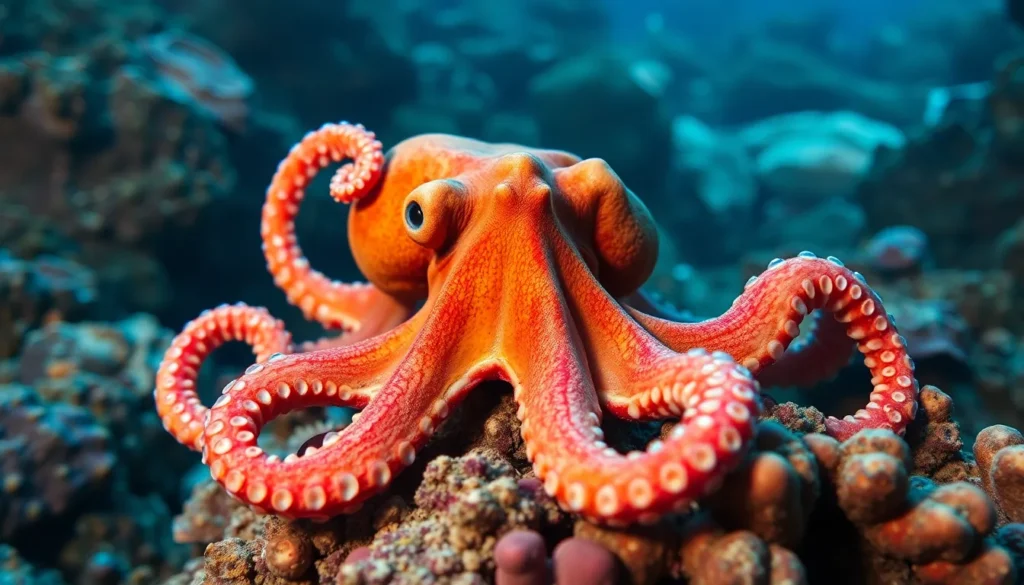
Short Answer
21 Facts About Blue-ringed Octopus
- Small Size: Blue-ringed octopuses are typically only 12 to 20 centimeters in length, making them relatively small compared to other octopus species.
- Distinctive Blue Rings: They display bright blue and black rings on their bodies, which become more vivid when the animal feels threatened.
- Venomous Defense: Their venom contains tetrodotoxin, a potent neurotoxin that can cause paralysis and is potentially fatal to humans.
- Multiple Species: The blue-ringed octopus comprises several species, including Hapalochlaena lunulata, Hapalochlaena maculosa, and Hapalochlaena fasciata.
- Camouflage Ability: Besides their blue rings, they can change their skin color and texture to blend into their surroundings effectively.
- Habitat Range: They are native to the coastal waters of the Pacific and Indian Oceans, particularly around Australia, Japan, and Southeast Asia.
- Venom Source: The neurotoxin tetrodotoxin is produced by bacteria living symbiotically within the octopus’s salivary glands.
- Diet: Their diet mainly consists of small crustaceans, crabs, and shrimp, which they immobilize with their venom.
- Reproduction: Females lay eggs and guard them until they hatch, after which the female typically dies.
- Behavior: They are generally shy and avoid human contact but will display their blue rings as a warning when provoked.
- Warning Signal: The flashing blue rings serve as an aposematic signal to potential predators, indicating toxicity.
- Not Aggressive: Despite their venom, blue-ringed octopuses do not initiate attacks on humans and bite only in self-defense.
- Life Span: They have a relatively short lifespan of about two years.
- Intelligence: Like other octopuses, they exhibit problem-solving skills and complex behaviors.
- Venom Effects: The venom blocks nerve signals to muscles, causing paralysis and respiratory failure if untreated.
- No Antivenom: There is currently no antivenom for blue-ringed octopus bites; medical treatment focuses on respiratory support.
- Predators: Few animals prey on them due to their potent venom and warning coloration.
- Scientific Interest: Their venom has been studied for potential medical applications, including pain management.
- Conservation Status: They are not currently listed as endangered but face threats from habitat destruction and pollution.
- Human Interaction: Most bites occur when the animal is handled or accidentally stepped on by divers.
- Cultural Impact: The blue-ringed octopus has appeared in media and folklore due to its striking appearance and dangerous nature.
Habitat and Behavior
The blue-ringed octopus inhabits shallow, coastal waters, often residing in coral reefs, tide pools, and rocky crevices in the Pacific and Indian Oceans. It prefers temperate to tropical marine environments where it can find ample shelter and prey. This octopus is primarily nocturnal, hunting at night and hiding during the day. It uses its excellent camouflage skills to avoid predators and to ambush prey. When threatened, it flashes its bright blue rings as a warning signal to potential predators or threats. Despite possessing a lethal venom, the blue-ringed octopus is generally reclusive and avoids confrontation with humans and other large animals.
Why This Animal Matters
The blue-ringed octopus plays an important role in marine ecosystems as both predator and prey, helping to maintain the balance of small crustacean populations. Its venom has attracted scientific interest for potential pharmaceutical applications, such as developing new painkillers or nerve-blocking drugs. Culturally, it serves as a symbol of nature’s complexity and the importance of respecting wildlife due to its potent defense mechanisms. Conservation-wise, the blue-ringed octopus highlights the need to protect marine habitats from pollution and human disturbance to preserve biodiversity.
Common Misconceptions
Misconception: The blue-ringed octopus is aggressive and actively attacks humans.
Correction: The blue-ringed octopus is shy and only bites in self-defense, generally avoiding human contact.
Misconception: The venom of the blue-ringed octopus is a deadly poison that always causes death.
Correction: While the venom is potent and can be fatal without treatment, prompt medical intervention can prevent death, and fatalities are rare.
Misconception: All octopuses have blue rings and are venomous.
Correction: The blue-ringed octopus is unique among octopuses for its distinctive blue rings and highly toxic venom; most octopuses lack these features.
FAQ
Are blue-ringed octopus bites fatal to humans?
While bites from blue-ringed octopuses can be fatal due to their potent tetrodotoxin venom, fatalities are rare when prompt medical treatment, including respiratory support, is administered.
What causes the blue rings to appear?
The blue rings become more vivid and flash as a warning signal when the octopus feels threatened, serving as an aposematic display to potential predators.
Can blue-ringed octopuses change color?
Yes, they can change their skin color and texture to blend into their environment, using specialized cells called chromatophores for camouflage.




Leave a Reply