
Short Answer
21 Facts About Animal Flight
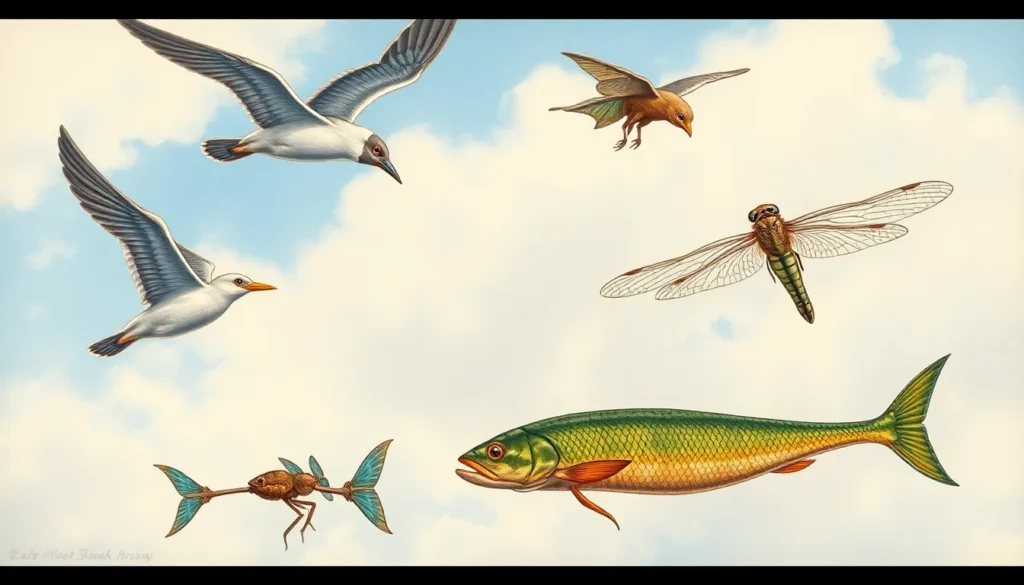
- Flight has evolved independently multiple times. Different animal groups such as insects, birds, and bats developed flight separately through convergent evolution.
- Insects were the first animals to achieve powered flight. The earliest flying insects appeared around 350 million years ago during the Carboniferous period.
- Birds are descendants of theropod dinosaurs. Their ability to fly evolved from feathered ancestors with gliding or flapping capabilities.
- Bats are the only mammals capable of sustained powered flight. Their wings are modified forelimbs with a membrane stretched between elongated fingers.
- Some animals glide rather than fly. Examples include flying squirrels and flying fish, which use extended skin or fins to glide through the air or water.
- Flight requires specialized anatomy. Wings, lightweight bones, strong muscles, and efficient respiratory systems are typical adaptations for flight.
- Birds have hollow bones to reduce weight. This adaptation helps decrease body mass without sacrificing strength.
- Insect wings are made of chitin and lack muscles. Instead, wing movement is controlled by muscles in the thorax that deform the wing bases.
- Flight speeds vary widely among animals. The peregrine falcon can dive at speeds over 300 km/h, while smaller insects may only fly at a few kilometers per hour.
- Migration in flying animals can cover thousands of kilometers. Some bird species, like the Arctic tern, migrate between polar regions annually.
- Flight enhances survival by aiding in predator avoidance and resource acquisition. Flying animals can escape threats and access food sources inaccessible to non-flying species.
- Some animals use flight for courtship displays. Birds of paradise and certain insects perform complex aerial maneuvers to attract mates.
- Flight is energetically demanding. Animals have evolved efficient metabolic and respiratory systems to meet the high energy costs.
- Wing shapes differ according to flight style. Soaring birds have long, narrow wings for gliding, while hummingbirds have short, rounded wings for hovering.
- Some extinct animals besides birds had flight capabilities. Pterosaurs, now extinct reptiles, were the first vertebrates to evolve powered flight.
- Flight can involve passive or active modes. Gliding animals rely on gravity and air currents, while powered fliers use muscle-driven wingbeats.
- Flight adaptations also impact sensory systems. Many flying animals have highly developed vision to navigate and detect prey or predators in the air.
- Flight has influenced animal diversity and ecosystems. Flying species occupy a wide range of ecological niches and contribute to pollination, seed dispersal, and food webs.
- Some flightless birds retain wings but have lost flight ability. Examples include ostriches and penguins, which adapted wings for running or swimming instead.
- Flight has fascinated humans for millennia. Observations of flying animals inspired early myths, art, and eventually human flight technologies.
- Climate change and habitat loss threaten many flying species. Conservation efforts focus on protecting migratory routes, breeding areas, and food availability.
Habitat and Behavior
Flying animals inhabit nearly every terrestrial and aquatic environment worldwide, from tropical rainforests and deserts to polar regions and open oceans. Their behavior varies according to species and ecological niche but generally includes foraging, migration, mating displays, and predator avoidance. Many birds and insects migrate seasonally to exploit favorable climates and resources. Flight enables animals to access diverse habitats and escape terrestrial limitations. Nesting and roosting sites often provide shelter and protection during rest periods. Some flying animals, such as bats, are nocturnal and rely on echolocation for navigation, while others depend primarily on keen eyesight.
Why This Animal Matters
Flying animals play critical ecological roles including pollination, seed dispersal, and pest control. Birds and insects contribute to plant reproduction and ecosystem health. Predator-prey dynamics involving flying species influence biodiversity and population balance. Culturally, flying animals have symbolic significance in many societies and have inspired art, literature, and technology. Their conservation is important because habitat destruction, climate change, and pollution threaten many flying species worldwide. Protecting these animals helps maintain ecological balance and biodiversity, ensuring the continued functioning of ecosystems on which humans and other organisms depend.
Common Misconceptions
Misconception: Bats are blind.
Correction: Bats are not blind; many species have good eyesight and also use echolocation to navigate in darkness.
Misconception: All flying animals can fly long distances.
Correction: Some flying animals, like certain insects, only fly short distances and primarily use flight for local movement rather than migration.
Misconception: Flightless birds cannot move efficiently.
Correction: Many flightless birds, such as ostriches and penguins, are highly adapted for running or swimming, making them efficient movers in their respective environments.
FAQ
How did flight evolve in animals?
Flight evolved independently in different animal groups such as insects, birds, and bats through gradual adaptations like wing development, muscle strengthening, and changes in bone structure.
What are the main types of flight in animals?
The main types of flight include powered flight, where animals actively flap their wings, and gliding, where animals use air currents and gravity to move through the air without flapping.
Why can't all birds fly?
Not all birds can fly because some species, like ostriches and penguins, have evolved other adaptations such as strong legs for running or flippers for swimming, making flight unnecessary or inefficient for their environment.



Leave a Reply