
Short Answer
The term “Dark Ages” often evokes images of gloom, barbarism, and a stagnation of knowledge—a time when civilization seemingly regressed into an abyss of ignorance. Yet, to dismiss this era as an unrelenting void is to overlook a rich tapestry of transformative events, cultural flourishings, and intellectual pursuits. The centuries labeled as the Dark Ages, spanning roughly from the fall of the Western Roman Empire in the 5th century to the dawn of the Renaissance in the 15th century, were marked by profound shifts that laid the groundwork for modern Europe. Let us embark on an exploration of this fascinating era, illuminating its nuances and dispelling some of the myths surrounding its supposed darkness.
**1. The Fall of the Roman Empire: A Prelude to Change**
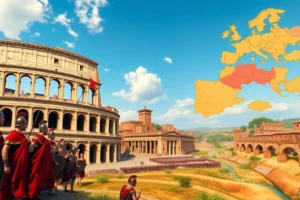
In 476 AD, the curtain fell on the Western Roman Empire, but instead of a dismal void emerging from its ashes, one could argue that a new chapter in history was beginning. The dissolution of a centralized authoritarian regime freed up regional powers. As many fragmented states rose from the rubble, local leaders harnessed their influence, fostering a mosaic of cultures and identities. This led to the establishment of kingdoms, each marked by its unique traditions and governance structures, paving the way for the emergence of nation-states and fostering a sense of local identity.
**2. The Cultural Continuum: Preservation Amidst Turmoil**
While narratives of barbaric invasions dominate the landscape of the Dark Ages, it is critical to remember the diligent preservation of knowledge during this epoch. Monasteries became sanctuaries of scholarship, where monks meticulously copied ancient manuscripts, thus safeguarding classical works of philosophy, science, and literature. The efforts of these monastic scribes can be likened to the nurturing of fragile seeds in a storm, ensuring that the wisdom of the ancients would germinate anew in the fertile soil of a future age.
**3. The Rise of Feudalism: Structure from Chaos**
In the vacuum left by the Roman Empire, a new societal structure emerged: feudalism. This hierarchical system, characterized by the exchange of land for loyalty and military service, engendered stability amidst the chaos. Lords and vassals formed bonds that were both strategic and personal, establishing a sense of order. While the term “Dark Ages” may imply a feral existence, feudalism sowed the seeds of community and collaboration—a rudimentary framework of governance that would evolve throughout the Middle Ages.
**4. Art and Architecture: Illuminating the Shadows**
Art and architecture during the Dark Ages, far from being an artistic desolation, can be appreciated as an intriguing interplay of styles. The ascendancy of the Romanesque architecture, with its massive structures and intricate stone carvings, symbolized a renaissance of creativity influenced by the intertwining of cultures. The beauty of illuminated manuscripts flourished, with artisans painting narratives that breathed life into script and story. These artistic endeavors acted as both religious expression and cultural identity, forging connections between communities across Europe.
**5. Advancements in Agriculture: Cultivating Prosperity**
Even as warfare and strife marked the landscape, significant advancements were made in agriculture, buttressing societies against famine and hardship. The introduction of the heavy plow, crop rotation, and new farming techniques heralded an era of surplus, leading to population growth and urbanization. This newfound prosperity allowed towns to flourish, becoming bustling centers of trade and cultural exchange. The agrarian innovations serve as a testament to human resilience and adaptability, shedding light on the dynamic progress of the period.
**6. Intellectual Movements: The Seeds of Enlightenment**
Perhaps the most fascinating paradox of the Dark Ages is that it laid the groundwork for the Enlightenment and the Renaissance that would follow. The translation of Arabic texts and the reintroduction of Aristotle’s philosophy into European thought sparked a new wave of intellectual curiosity. Scholars began to question established norms, laying the foundations for scientific inquiry and advancing our understanding of the natural world. The quest for knowledge flourished, driven by the insatiable desire to illuminate the obscured truths that lay in the shadows of history.
**7. The Role of Religion: A Guiding Light**
During the Dark Ages, the Catholic Church evolved into a powerful institution, shaping not just spiritual life but also political dynamics. The Church served as a unifying force, providing stability and a sense of purpose amid societal upheavals. It facilitated education and the establishment of universities, which became bastions of learning. The ecclesiastical influence can be likened to a lighthouse, guiding lost ships back to safe shores, showcasing that even within the shadows, there was a persistent quest for enlightenment and understanding.
**8. A Legacy Reconsidered**
As one peers into the annals of the Dark Ages, it becomes increasingly clear that this era was not one solely defined by its bleakness. It was an intermediate zone of evolution, a fertile ground from which the complexities of modern Europe sprouted. Historians have begun to reconceptualize the term “Dark Ages,” recognizing the vibrancy and innovations that thrived under the surface of societal upheaval.
In conclusion, the notion of the Dark Ages as an unequivocal period of stagnation is a misleading simplification. Rather, this era, replete with contradictions, was a time of profound transformation. As we unravel the intricate threads of history, we find a complex narrative rich in resilience, creativity, and an enduring quest for knowledge. The shadows of the past illuminate the vibrant legacy we inherit today, reminding us that even in times of darkness, there exists an untold potential waiting to be explored. The Dark Ages were indeed a twilight of uncertainty—but they also heralded the first light of a new dawn.
FAQ
What are the Dark Ages?
The Dark Ages refer to a period in European history from the 5th to the 15th century, often characterized by a perceived decline in culture and knowledge following the fall of the Western Roman Empire.
Why are they called the Dark Ages?
They are termed ‘Dark Ages’ due to the lack of historical records and the belief that this era was marked by cultural stagnation and barbarism.
Did anything positive happen during the Dark Ages?
Yes, the Dark Ages saw the preservation of knowledge by monasteries, the rise of feudalism, and advancements in agriculture and architecture.
Leave a Reply