
Short Answer
21 Facts About Puffins
- Puffins are seabirds belonging to the auk family. They are part of the Alcidae family, which includes other diving birds like guillemots and murres.
- There are three species of puffins. These are the Atlantic puffin (Fratercula arctica), the tufted puffin (Fratercula cirrhata), and the horned puffin (Fratercula corniculata).
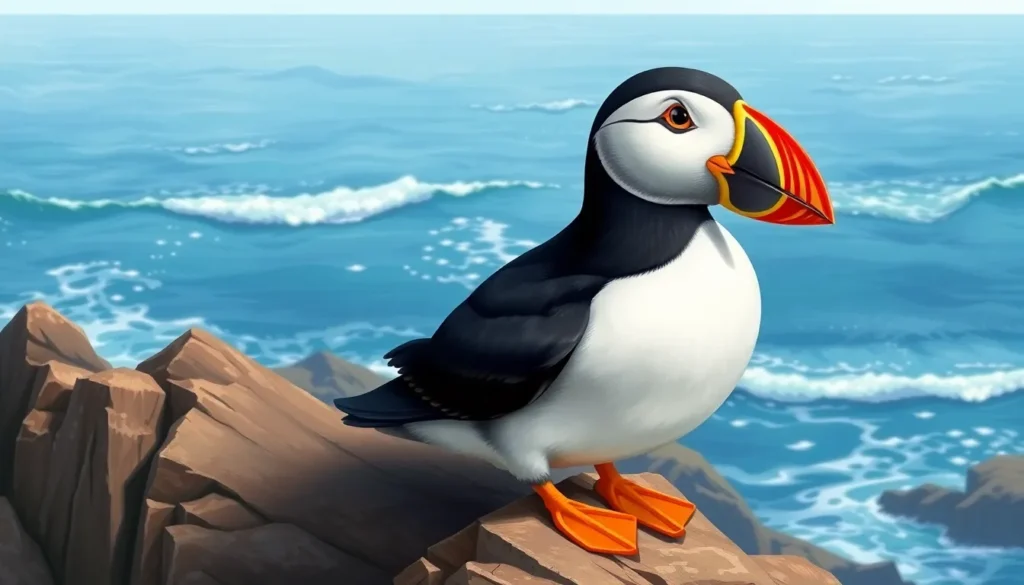
- Puffins are easily recognized by their colorful beaks. Their large, triangular beaks become brightly colored during the breeding season, aiding in mate attraction.
- They are excellent swimmers and divers. Puffins use their wings to ‘fly’ underwater while chasing fish, diving to depths of up to 60 meters (200 feet).
- Puffins primarily feed on small fish. Their diet consists mainly of sand eels, herring, and capelin, which they catch by diving underwater.
- Puffins nest in burrows or crevices. They dig burrows in soil or occupy natural crevices on rocky cliffs for breeding and raising their young.
- They are monogamous birds. Puffins typically form long-term pair bonds, often returning to the same mate and nesting site each year.
- Puffins lay a single egg per breeding season. Both parents share incubation duties, which last about 39 to 45 days.
- Chicks are called “pufflings.” Once hatched, pufflings remain in the burrow for approximately 6 weeks before fledging.
- Atlantic puffins are found in the North Atlantic Ocean. Their breeding colonies are located mainly in Iceland, Norway, Greenland, and parts of eastern Canada.
- Tufted and horned puffins inhabit the North Pacific Ocean. They breed along the coasts of Alaska, Russia, and parts of the western United States.
- Puffins migrate to open ocean after breeding. Outside the breeding season, they spend months at sea, often far from land.
- The colorful beak of puffins changes seasonally. The bright colors fade after the breeding season, and the beak appears duller in winter.
- Puffins use their beak to carry multiple fish simultaneously. Their specialized tongue and beak structure allow them to hold several fish crosswise while continuing to hunt.
- Puffins are social birds. They often form large colonies during breeding, which can number in the tens of thousands.
- They communicate with various vocalizations and displays. Puffins produce growls, grunts, and other sounds, especially during courtship and territorial interactions.
- Predators of puffins include gulls and large birds of prey. Eggs and chicks are vulnerable to predation, especially from gulls and skuas.
- Climate change and overfishing threaten puffin populations. Changes in sea temperature affect fish availability, impacting puffin feeding success.
- Some puffin species are considered vulnerable or declining. Conservation efforts focus on habitat protection and mitigating human impacts.
- Puffins have cultural significance in some regions. They appear in folklore, art, and as symbols of coastal communities, particularly in Iceland and Newfoundland.
- Puffins are popular subjects for wildlife tourism and birdwatching. Their charismatic appearance attracts visitors to breeding colonies during the summer months.
Habitat and Behavior
Puffins inhabit cold coastal regions of the North Atlantic and North Pacific Oceans. They breed on rocky cliffs or islands with suitable burrowing soil or natural crevices, forming large colonies that can number in the thousands. Puffins are adapted for both flight and swimming; they have strong wings used for flying and underwater propulsion. Their diet primarily consists of small schooling fish, which they catch by diving underwater through flapping their wings. Outside the breeding season, puffins spend most of their time at sea, often in offshore waters. They are mostly solitary during this time until they return to colonies to breed. Puffins exhibit monogamous pair bonds, with both parents sharing incubation and chick-rearing responsibilities. Their distinctive colorful beaks, used in courtship displays, fade in appearance once the breeding season ends.
Why This Animal Matters
Puffins play an important ecological role as mid-level predators in marine ecosystems, helping regulate populations of small fish species. Their breeding colonies contribute nutrients to island ecosystems via guano, supporting plant growth and other wildlife. Puffins are also indicators of ocean health, as their feeding success reflects the availability of fish and changes in marine environments. Culturally, puffins hold significance in coastal communities, featuring in local folklore and attracting eco-tourism, which supports conservation and local economies. Given their vulnerability to climate change and human impacts such as overfishing and habitat disturbance, puffins have become a focus of conservation efforts aimed at preserving marine biodiversity and coastal environments.
Common Misconceptions
Misconception: Puffins store fish in their beaks because they have extra compartments.
Correction: Puffins do not have compartments in their beaks; instead, their specialized tongue and serrated beak edges allow them to hold multiple fish crosswise while continuing to hunt.
Misconception: Puffins only live in cold Arctic regions year-round.
Correction: While puffins breed in cold northern regions, they spend much of the year at sea in marine environments, sometimes traveling to milder offshore waters.
Misconception: Puffins are clumsy on land.
Correction: Although puffins appear awkward on land due to their short legs set far back, they are capable walkers and can navigate their nesting sites effectively.
FAQ
How do puffins carry multiple fish in their beaks?
Puffins have a specialized tongue and serrated edges on their beaks that allow them to hold several fish crosswise at once while continuing to hunt for more.
Where do puffins spend the winter?
After the breeding season, puffins migrate to offshore ocean waters where they spend the winter months at sea, often far from land.
Are puffins endangered?
While puffins are not globally endangered, some species or populations are considered vulnerable or declining due to threats like climate change, overfishing, and habitat disturbance.
Leave a Reply