
Short Answer
21 Facts About Quolls
- Quolls are carnivorous marsupials. They belong to the family Dasyuridae, which also includes the Tasmanian devil and quokkas.
- There are six species of quolls. Four species are found in Australia, and two species are native to New Guinea.
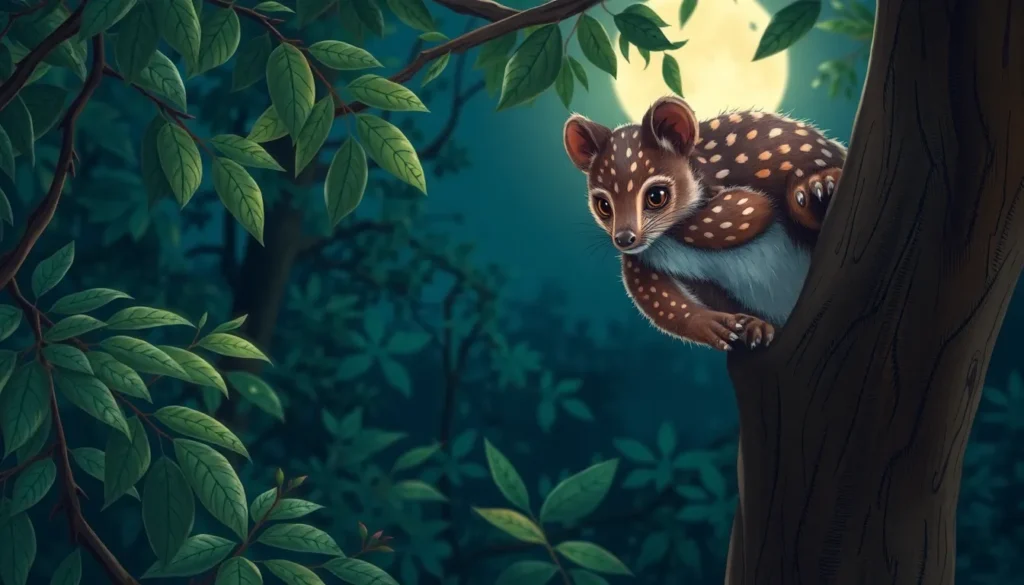
- Quolls have distinctive spotted fur. Their fur patterns vary between species but typically feature white spots on a brown or reddish background.
- They are mostly nocturnal. Quolls primarily hunt and are active during the night to avoid predators and competition.
- Quolls are solitary animals. Except during breeding season, they tend to live and hunt alone.
- They have sharp teeth and strong jaws. These adaptations help them catch and consume prey, including insects, birds, and small mammals.
- Quolls are excellent climbers. They can scale trees to hunt birds or avoid threats.
- The largest quoll species is the spotted-tail quoll. It can grow up to 75 cm in body length, excluding the tail.
- Quolls use scent marking. They mark their territory with secretions from glands to communicate with other quolls.
- Female quolls have a pouch. Like other marsupials, females carry and nurse their young in a pouch for several weeks after birth.
- Quolls have relatively short lifespans. In the wild, they typically live between two to five years.
- They play an important role as predators. Quolls help control populations of insects and small vertebrates, maintaining ecological balance.
- Quolls face threats from habitat loss. Deforestation and land clearing reduce their natural habitats.
- Introduced species impact quoll populations. Predators such as foxes and feral cats compete for food or prey on quolls.
- Quolls are affected by the invasive cane toad. Eating toxic cane toads can be fatal to quolls, which have no natural resistance to their poison.
- Quolls use vocalizations. They communicate with growls, hisses, and screams, especially during conflicts or mating.
- Breeding seasons vary among species. Most quolls breed once a year, with litters ranging from two to six young.
- Quolls have a varied diet. Besides small mammals and insects, they may consume fruit and carrion depending on availability.
- Quolls contribute to indigenous cultures. Some Aboriginal groups recognize quolls in their traditional stories and ecological knowledge.
- Conservation efforts exist for quolls. Programs aim to protect habitats, control invasive species, and monitor populations to prevent decline.
- Quolls are sometimes called ‘native cats.’ This nickname reflects their cat-like appearance and predatory behavior, although they are marsupials, not felines.
Habitat and Behavior
Quolls inhabit a range of environments including forests, woodlands, and grasslands across Australia and New Guinea. They are adaptable but generally prefer areas with dense cover and abundant prey. As nocturnal predators, quolls hunt primarily at night, using their keen senses of smell and hearing to locate insects, birds, reptiles, and small mammals. They are solitary creatures, maintaining individual territories that they mark with scent. Climbing skills allow them to access arboreal prey and evade threats. Reproduction involves a brief mating period once a year, with females raising their young in pouches until the juveniles develop sufficient independence.
Why This Animal Matters
Quolls play a vital role in their ecosystems as mesopredators, helping regulate populations of smaller animals and insects. Their predation contributes to maintaining healthy and balanced environments. They also hold cultural significance for some Indigenous Australian communities, featuring in traditional stories and ecological knowledge. Conservation of quolls is important due to threats from habitat destruction, competition and predation by introduced species, and poisoning from invasive cane toads. Protecting quoll populations supports biodiversity and the overall health of Australian and New Guinean ecosystems.
Common Misconceptions
Misconception: Quolls are related to cats because they are sometimes called “native cats.”
Correction: Despite their nickname and appearance, quolls are marsupials, not felines. They belong to the Dasyuridae family, distinct from the cat family.
Misconception: Quolls are aggressive toward humans.
Correction: Quolls are shy and generally avoid humans. They may defend themselves if threatened but are not naturally aggressive toward people.
Misconception: Quolls only eat meat.
Correction: While primarily carnivorous, quolls may occasionally consume fruits and carrion, showing dietary flexibility.
Misconception: All quoll species are endangered.
Correction: Conservation status varies. Some species like the eastern quoll have become rare on the mainland but persist in Tasmania. Others face different levels of threat, requiring species-specific conservation attention.
FAQ
What do quolls eat?
Quolls are carnivorous and primarily eat insects, small mammals, birds, reptiles, and occasionally fruit and carrion depending on availability.
Are quolls dangerous to humans?
Quolls are generally shy and avoid humans. They may defend themselves if threatened but are not considered dangerous to people.
Why are quolls important to the ecosystem?
Quolls act as mesopredators, helping control populations of smaller animals and insects, which maintains ecological balance and biodiversity.

Leave a Reply