
Short Answer
21 Facts About Conch
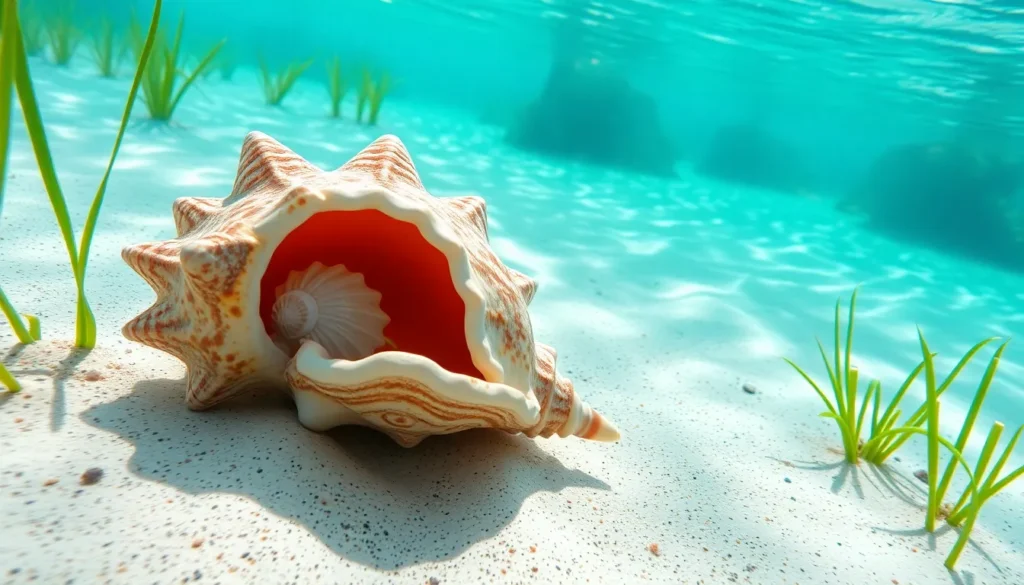
- Conchs are marine gastropod mollusks. They belong to the family Strombidae and are characterized by their large, often colorful spiral shells.
- The queen conch (Lobatus gigas) is one of the most well-known species. It is native to the Caribbean Sea and is prized for its meat and shell.
- Conchs have a distinctive foot used for movement. Unlike many snails, conchs use a leaping motion to move along the sea floor.
- The shell of a conch grows throughout its life. Layers are added as the animal grows, creating the large spiral shape.
- Conch shells have been used as musical instruments. When the tip is cut off, the shell can be blown like a horn, producing a loud, trumpet-like sound.
- Conchs are herbivores. They primarily feed on algae and detritus found on the sea bed.
- Conch shells exhibit a variety of colors and patterns. These patterns may help with camouflage in their natural environment.
- Conchs play an important role in the marine ecosystem. By grazing on algae, they help maintain the health of seagrass beds and coral reefs.
- Queen conchs can grow up to 12 inches in shell length. They typically live up to 15-20 years in the wild.
- Conchs have eyes on stalks. These eyes provide a wide field of view to detect predators.
- Reproduction involves internal fertilization. Female conchs lay eggs in gelatinous masses attached to seagrass or other substrates.
- Conchs have a larval stage called veliger. This planktonic stage allows larvae to disperse before settling to the sea floor.
- Conch populations are threatened by overfishing. Their meat and shells are commercially valuable, leading to declines in some areas.
- Conch shells are used in jewelry and decoration. Their durable and aesthetically appealing shells make them popular for crafts.
- Conch meat is a traditional food in many Caribbean cultures. It is often used in salads, fritters, and chowders.
- Conch shells have symbolic meanings in various cultures. They are often associated with the sea, fertility, and spiritual rituals.
- Conchs can detect changes in light and motion. Their eyes and sensory organs help them avoid predators.
- The operculum is a hard plate that closes the shell’s opening. It protects the soft body inside when the conch retracts.
- Conchs are slow-moving but can quickly leap to escape threats. This unique locomotion distinguishes them from many other snails.
- Some species of conch are protected by law. Conservation efforts aim to prevent population collapse due to overharvesting.
- Conchs contribute to the carbonate cycle. Their shells, made of calcium carbonate, help form sandy marine sediments after they die.
Habitat and Behavior
Conchs typically inhabit warm, shallow waters of tropical and subtropical regions, particularly in the Caribbean, Atlantic Ocean, and parts of the Indian and Pacific Oceans. They favor sandy or seagrass-covered sea floors where they can graze on algae and detritus. Conchs are primarily benthic, meaning they live on or near the sea floor. Their unique locomotion involves a series of muscular contractions and a distinctive leaping motion, which aids in avoiding predators. They are mostly solitary creatures but may be found in aggregations during breeding seasons. Conchs use their eyes on stalks to monitor their surroundings and the operculum to seal themselves inside their shells for protection.
Why This Animal Matters
Conchs play a vital ecological role by grazing on algae, which helps maintain healthy seagrass beds and coral reef ecosystems. Their feeding prevents algal overgrowth that can suffocate these habitats. Additionally, conchs contribute to the marine carbonate cycle through their shells, which become part of the sediment after they die. Culturally, conchs have significance in various coastal communities, especially in the Caribbean, where they are a source of food, materials for crafts, and musical instruments. Conservation of conch populations is important due to their ecological and economic value, as overfishing has led to declines in some regions, prompting legal protections and sustainable harvesting initiatives.
Common Misconceptions
Misconception: All conchs are edible and safe to eat.
Correction: While many conch species are eaten, some may accumulate toxins or be protected by law. Proper identification and local regulations should be followed.
Misconception: Conch shells are always pink on the inside.
Correction: The color of the shell interior varies by species, with some having white, orange, or other hues, not exclusively pink.
Misconception: Conchs are fast-moving animals.
Correction: Conchs move slowly but can leap to evade predators; their movement is unique but not generally fast.
FAQ
What is a conch?
A conch is a type of large marine snail with a distinctive spiral shell, belonging to the family Strombidae.
Where do conchs live?
Conchs inhabit warm, shallow waters in tropical and subtropical regions, often found in sandy or seagrass environments.
Are conchs endangered?
Some conch species, such as the queen conch, face population declines due to overfishing, leading to protective regulations in parts of their range.

Leave a Reply