
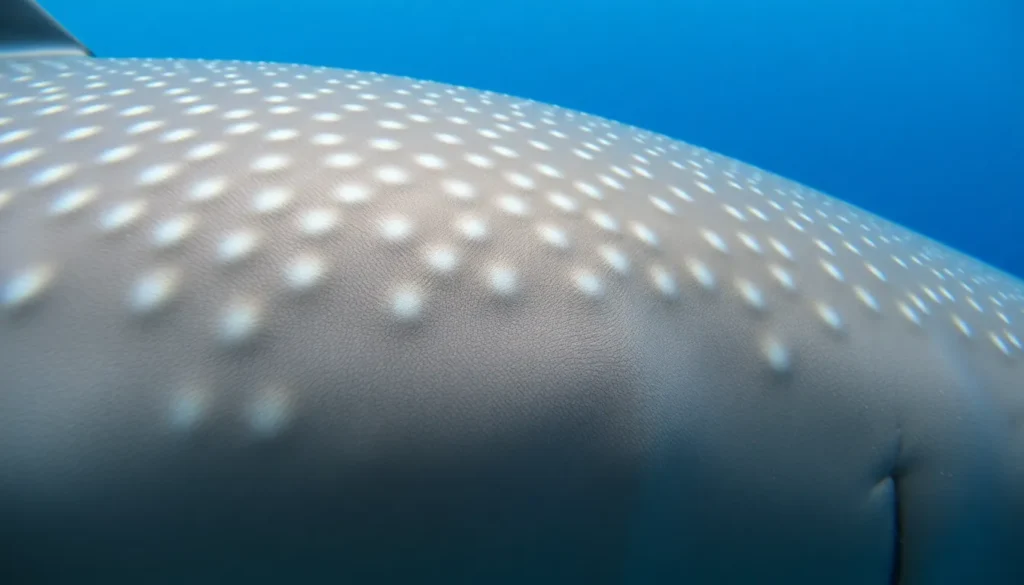
Short Answer
21 Facts About Shark Scales
- Structure: Shark scales, or dermal denticles, are tiny, tooth-like structures that cover the skin of sharks, providing protection and reducing drag in water.
- Size Variation: The size and shape of dermal denticles can vary significantly among species, adapting to their specific environments and lifestyles.
- Hydrodynamics: The unique surface structure of shark scales helps to create a smooth flow of water, minimizing turbulence and improving swimming efficiency.
- Protective Function: Dermal denticles serve as a protective barrier against parasites and injuries from predators or environmental hazards.
- Regenerative Ability: Sharks can regenerate their dermal denticles throughout their lives, allowing them to maintain skin integrity and functionality.
- Evolutionary Significance: Dermal denticles are believed to have evolved from the same tissue that forms teeth in other vertebrates, showcasing evolutionary links.
- Coloration: The coloration of shark scales varies and can serve as camouflage, helping sharks blend into their environments.
- Comparison to Fish Scales: Unlike bony fish scales, which are flat and overlapping, shark scales are embedded in the skin and more akin to teeth.
- Impact on Ecosystems: Sharks, through their dermal denticles, play a vital role in marine ecosystems by maintaining the balance of species populations.
- Skin Texture: The texture of shark skin is often compared to sandpaper due to the presence of dermal denticles, which can be used for various applications by humans.
- Research Applications: Scientists study shark scales to understand their properties and potential applications in biomimicry, particularly in creating materials that reduce drag.
- Health Benefits: Research has shown that shark skin has antimicrobial properties, which can offer insights into developing new medical materials.
- Species Variation: Different shark species exhibit distinct patterns and arrangements of dermal denticles, often used for species identification.
- Fossil Evidence: Fossils of dermal denticles have been found dating back millions of years, providing insights into the evolution of sharks.
- Skin Care Industry: Shark skin-derived products are sometimes used in cosmetics, capitalizing on their unique properties.
- Conservation Importance: Understanding the role of dermal denticles can help in shark conservation efforts, as it highlights their adaptations and ecological significance.
- Educational Value: Shark scales are often featured in educational materials to teach about marine biology and the importance of sharks in ocean ecosystems.
- Adaptation to Environment: The morphology of dermal denticles can reflect the habitats in which sharks live, indicating their adaptations to specific ecological niches.
- Community Misunderstandings: Some people mistakenly believe that all sharks are dangerous due to their appearance, including their scales. Understanding their biology helps demystify these creatures.
- Unique to Elasmobranchs: Dermal denticles are unique to elasmobranchs (sharks, rays, and skates), distinguishing them from other fish.
Each denticle is made of a hard material called dentin, similar to human teeth, and features a central pulp cavity surrounded by enamel-like tissue.
For instance, faster species like the great white shark have smaller, more streamlined denticles to reduce resistance.
This hydrodynamic advantage is crucial for sharks, which rely on speed and agility to capture prey and evade predators.
The rough texture of the scales discourages other marine animals from making contact with the shark’s skin.
This regenerative ability is part of their overall adaptation to a life in the ocean.
This evolutionary trait highlights the adaptability of sharks over millions of years.
This ability to camouflage is vital for hunting and avoiding detection by both prey and predators.
This distinction contributes to the unique physiology of sharks compared to bony fish.
As apex predators, they help regulate prey populations, thus supporting the health of marine environments.
Some cultures have utilized shark skin for making tools and accessories.
This research may lead to innovations in various fields, including engineering and design.
This aspect of shark biology highlights their potential contributions to human health and technology.
This characteristic aids researchers in studying shark biodiversity and distribution.
These fossils help reconstruct past marine ecosystems and shark lineages.
This has raised ethical concerns regarding shark conservation and the sustainability of such practices.
Conservationists aim to protect sharks not just for their ecological roles but for their unique biological traits.
This educational focus can promote awareness and support for shark conservation initiatives.
This adaptability is essential for their survival in diverse marine environments.
Education on shark behavior can lead to better coexistence between humans and sharks.
This uniqueness underscores the distinct evolutionary path of these marine animals.
Habitat and Behavior
Sharks inhabit a variety of marine environments, ranging from shallow coastal waters to deep oceanic regions. They are typically found in all the world’s oceans, with some species preferring warmer tropical waters, while others thrive in colder regions. Sharks exhibit diverse behaviors, including solitary hunting and social interactions in certain species. They are primarily carnivorous, feeding on fish, squid, and marine mammals, using their keen senses to locate prey.
Why This Animal Matters
Sharks play a crucial ecological role as apex predators, helping to maintain the balance of marine ecosystems. Their presence influences the population dynamics of other marine species, contributing to the overall health of ocean environments. Additionally, sharks hold cultural significance in various societies, often symbolizing strength and resilience. Conservation of sharks is vital due to their vulnerability to overfishing and habitat loss, which threatens marine biodiversity.
Common Misconceptions
Misconception: All sharks are dangerous to humans. Correction: While some shark species can pose a risk, most are not harmful and prefer to avoid human interaction.
Misconception: Shark scales are similar to fish scales. Correction: Shark scales, or dermal denticles, are structurally different from fish scales, being more akin to teeth in composition and function.
FAQ
What are dermal denticles?
Dermal denticles are small, tooth-like structures that cover a shark's skin, providing protection and reducing drag.
How do shark scales differ from fish scales?
Shark scales are embedded in the skin and are more similar to teeth than the flat, overlapping scales of bony fish.
Why are sharks important to marine ecosystems?
As apex predators, sharks help maintain the balance of marine life by regulating prey populations.





Leave a Reply