
Short Answer
21 Facts About Fangtooth Fish
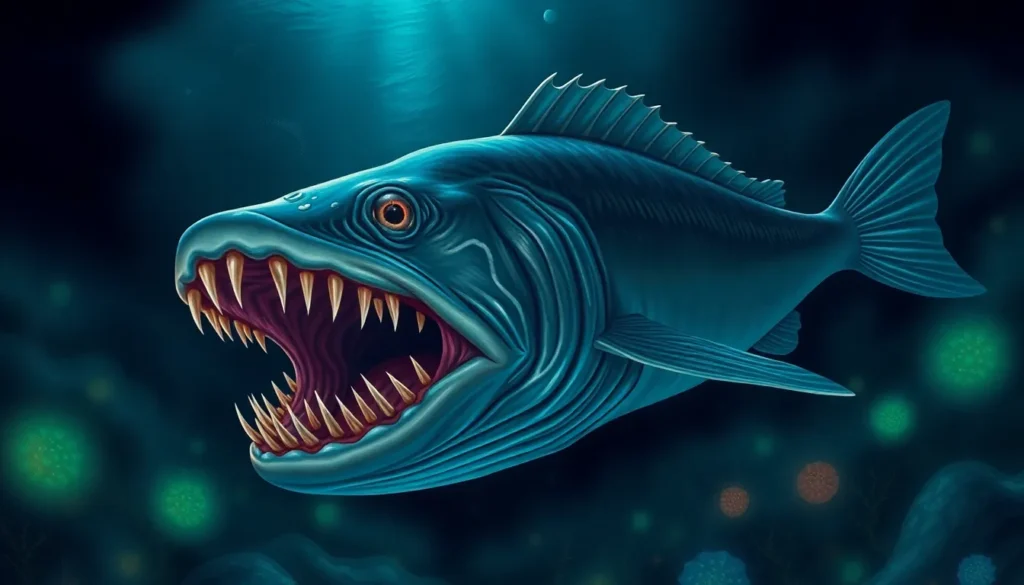
1. The fangtooth fish is known for its exceptionally large teeth, which are disproportionately large compared to its body size.
This adaptation serves to help the fangtooth catch and hold onto prey in the dark depths of the ocean where it resides.
2. Fangtooth fish belong to the family Anoplogasteridae.
There are two recognized species: the common fangtooth (Anoplogaster cornuta) and the black fangtooth (Anoplogaster brachycera).
3. They inhabit deep ocean waters, typically found at depths of 2,000 to 5,000 feet (600 to 1,500 meters).
This deep-sea environment is characterized by high pressure, low temperatures, and complete darkness.
4. The fangtooth fish can grow up to 6 inches (15 cm) in length.
Despite their small size, they are among the most fearsome predators in their habitat due to their large teeth.
5. Their bodies are dark brown or black, providing camouflage against the dark ocean waters.
This coloration helps them avoid predators and ambush their prey.
6. Fangtooth fish have a unique ability to expand their mouths to engulf prey that is larger than themselves.
This adaptation allows them to consume a wide variety of prey, including smaller fish and crustaceans.
7. They possess bioluminescent organs that may help attract prey or communicate with other fangtooths.
This feature is common among deep-sea creatures and plays a crucial role in their survival.
8. The fangtooth fish’s teeth are so large that they cannot close their mouths completely.
This anatomical feature highlights the evolutionary adaptations of the fangtooth to its predatory lifestyle.
9. Fangtooth fish are known to have a relatively short lifespan, typically living up to 10 years.
Short lifespans are common in deep-sea species due to harsh environmental conditions.
10. They are rarely seen by humans, making them one of the elusive deep-sea species.
Most of what is known about them comes from specimens caught in deep-sea fishing nets.
11. Fangtooth fish are predominantly solitary creatures.
They tend to live and hunt alone rather than in schools, which is typical for many fish species.
12. They have a relatively low reproductive rate, producing fewer offspring than many other fish species.
This low reproductive rate can impact their populations, especially in changing marine environments.
13. The fangtooth fish’s unique appearance has made it a subject of interest in popular culture and marine biology.
Its menacing look has led to its portrayal in various media as a creature of the deep.
14. Fangtooth fish are opportunistic feeders, consuming a variety of prey types as they become available.
This flexibility in diet helps them to survive in nutrient-scarce environments.
15. They have a slow metabolism, which is typical for deep-sea fish.
This adaptation allows them to survive on relatively little food, as food availability is often limited in deep waters.
16. The fangtooth fish’s large teeth are not just for show; they are essential for capturing slippery prey.
The teeth help secure prey even in strong ocean currents.
17. The fangtooth fish’s eyes are adapted to low-light conditions, enhancing their ability to see in the dark depths of the ocean.
These adaptations are crucial for locating prey and navigating their environment.
18. They are part of the ecosystem as both predators and prey, influencing the population dynamics of other marine species.
As predators, they help control populations of smaller fish and invertebrates.
19. The fangtooth fish’s habitat is threatened by deep-sea fishing and climate change.
These factors can disrupt their environment and, consequently, their populations.
20. The fangtooth is an important species for scientific research, helping to understand the biodiversity of deep-sea ecosystems.
Studying such organisms provides insights into evolutionary adaptations and environmental changes.
21. Conservation efforts are ongoing to better understand and protect deep-sea habitats, including those of the fangtooth fish.
As marine scientists continue to explore the deep sea, the role of fangtooth fish and similar species will become clearer.
Habitat and Behavior
Fangtooth fish are primarily found in the deep ocean, often at depths ranging from 2,000 to 5,000 feet. They inhabit areas where light is minimal and temperatures are consistently low. Their behavior is largely solitary, and they exhibit predatory habits, using their large teeth to capture prey in the dark. The fangtooth’s unique adaptations allow it to thrive in this extreme environment, where competition for food is common.
Why This Animal Matters
The fangtooth fish plays a significant role in its ecosystem as a predator, helping maintain the balance of marine life by controlling the populations of smaller fish and invertebrates. Additionally, the study of fangtooths contributes to our understanding of deep-sea biodiversity and the impacts of environmental changes. As ocean conditions fluctuate due to climate change, the conservation of such species becomes vital to preserve marine ecosystems.
Common Misconceptions
Misconception: Fangtooth fish are dangerous to humans.
Correction: Despite their intimidating appearance, fangtooth fish are not a threat to humans as they inhabit deep ocean depths far from human activity.
Misconception: Fangtooth fish are commonly found in shallow waters.
Correction: Fangtooth fish are deep-sea dwellers, preferring habitats that are thousands of feet below the ocean’s surface.
FAQ
Where do fangtooth fish live?
Fangtooth fish are found in deep ocean waters, typically at depths of 2,000 to 5,000 feet.
What do fangtooth fish eat?
They are opportunistic feeders, consuming a variety of prey including smaller fish and crustaceans.
Are fangtooth fish a threat to humans?
No, fangtooth fish are not dangerous to humans as they live in deep waters away from human activity.




Leave a Reply