
Short Answer
21 Facts About Spoon Worm
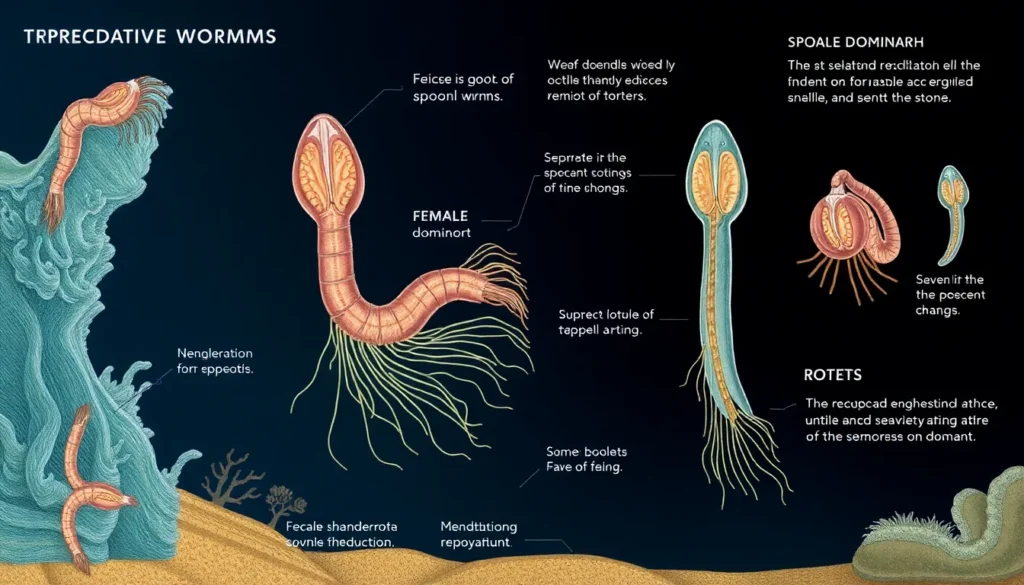
- Sexual Dimorphism: Spoon worms exhibit pronounced sexual dimorphism, where females are significantly larger than males, impacting their reproductive roles.
- Female Dominance: In many species of spoon worms, females dominate the mating process, often controlling access to males.
- Sequential Hermaphroditism: Some spoon worms can change sex from male to female, a trait that allows for flexible reproductive strategies.
- Reproductive Strategies: Females often produce a greater number of gametes than males, ensuring higher reproductive success.
- Larval Development: The larvae of spoon worms develop in a planktonic phase before settling down to mature, impacting their population dynamics.
- Environmental Influence: Environmental factors such as temperature and salinity can influence sex determination in some spoon worm species.
- Mate Guarding: Males may engage in mate guarding behaviors to prevent other males from accessing females, highlighting competition among males.
- Communication: Spoon worms may use pheromones to communicate readiness for mating, a mechanism that enhances reproductive success.
- Egg Fertilization: Fertilization typically occurs externally, with males releasing sperm into the water to fertilize eggs released by females.
- Brooding Behavior: Some species exhibit brooding, where females retain fertilized eggs until they hatch, offering protection to the developing young.
- Life Span: Spoon worms can have varying life spans, often exceeding several years, which can influence their reproductive strategies.
- Habitat Diversity: Spoon worms inhabit diverse environments, from intertidal zones to deep-sea habitats, showcasing their adaptability.
- Social Structure: In some species, spoon worms can form social groups, which may affect mating strategies and success.
- Genetic Determinism: Genetic factors play a significant role in determining sex within spoon worm populations, though the mechanisms can vary.
- Parental Investment: Females often exhibit higher parental investment, affecting the survival rates of offspring.
- Climate Change Impact: Climate change poses a threat to spoon worm populations, potentially disrupting their reproductive cycles.
- Ecological Role: Spoon worms play a crucial role in nutrient cycling within their ecosystems, contributing to the health of marine environments.
- Commercial Importance: Some species of spoon worms are harvested for food in certain cultures, highlighting their economic significance.
- Predation: Spoon worms are preyed upon by various marine animals, influencing their behavior and reproductive strategies.
- Symbiotic Relationships: Some spoon worms engage in symbiotic relationships with other marine organisms, aiding in mutual survival.
- Research Significance: Spoon worms are a subject of scientific research, particularly in studies of sex determination and evolutionary biology.
Habitat and Behavior
Spoon worms are typically found in marine environments ranging from intertidal zones to deep-sea ecosystems. They often burrow into sediment or attach to hard substrates, utilizing their unique body structure for stability and feeding. Spoon worms are generally filter feeders, using their specialized structures to capture organic matter from the water column. Their behavior is influenced by environmental conditions, such as water temperature and salinity, which can affect their reproductive cycles and survival strategies.
Why This Animal Matters
Spoon worms play a vital ecological role by contributing to nutrient cycling and serving as a food source for various marine predators. Their unique reproductive behaviors and sex determination mechanisms offer insights into evolutionary biology, particularly concerning sexual selection and environmental adaptability. Furthermore, they hold cultural and economic significance in some regions, where they are harvested for food, emphasizing the importance of conservation efforts to maintain their populations.
Common Misconceptions
Misconception: Spoon worms are exclusively male or female. Correction: Many spoon worms exhibit sequential hermaphroditism, allowing them to change sex based on environmental or social factors.
Misconception: All spoon worms have the same reproductive strategy. Correction: Spoon worms display a variety of reproductive strategies, influenced by species and environmental conditions.
FAQ
What is the role of female dominance in spoon worm reproduction?
Female dominance often leads to greater reproductive success as females control access to mates.
How do environmental factors affect spoon worm sex determination?
Environmental conditions such as temperature and salinity can influence whether an individual becomes male or female.
Are spoon worms important to their ecosystems?
Yes, they play a crucial role in nutrient cycling and serve as prey for various marine species.






Leave a Reply