
Short Answer
21 Facts About Mantis Shrimp Raptorial Appendages
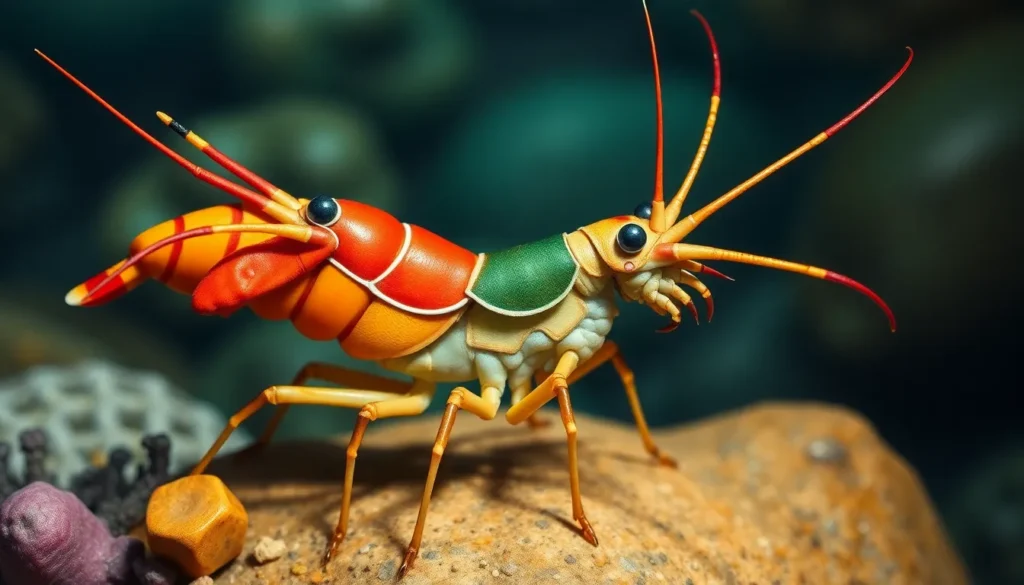
- Mantis shrimp possess specialized raptorial appendages.
These appendages are highly adapted for predation, allowing mantis shrimp to capture and subdue their prey effectively.
- There are two main types of raptorial appendages: smashers and spearers.
Smashers have club-like appendages designed for delivering powerful blows, while spearers have elongated appendages equipped with sharp spines for impaling prey.
- Smashers generate a rapid strike.
They can strike at speeds of up to 80 km/h (50 mph), creating a cavitation bubble that enhances the force of the attack.
- Spearers utilize a different hunting strategy.
They rely on precision and speed to impale soft-bodied prey, such as fish or mollusks, rather than relying on brute force.
- Both types exhibit remarkable visual capabilities.
Mantis shrimp have trinocular vision, allowing them to perceive depth and detect polarized light, which aids in hunting.
- Raptorial appendages are a key evolutionary adaptation.
They enhance the mantis shrimp’s ability to exploit diverse food sources, leading to their success in various marine environments.
- Smashers can break through hard shells.
The impact force generated by their strikes is sufficient to crack open the shells of prey like mollusks.
- Some species prefer specific prey types.
While smashers often target shelled organisms, spearers tend to hunt faster, more agile prey, showcasing their adaptability.
- Raptorial appendages are not just for hunting.
They also play a role in territorial displays and mating rituals, showcasing the importance of these structures in social interactions.
- Smashers may face trade-offs in energy expenditure.
The energy required to execute high-speed strikes can limit the frequency of attacks, influencing their hunting strategies.
- Spearers have a more energy-efficient hunting method.
By using calculated strikes to impale prey, spearers can conserve energy while still effectively capturing food.
- Raptorial appendages show significant morphological diversity.
Different species exhibit unique adaptations in their appendages based on their ecological niches and prey types.
- Both types can exhibit complex behaviors.
Research indicates that mantis shrimp may use learned behaviors to improve their hunting efficiency over time.
- Raptorial appendages are of interest to biomimetic research.
The mechanics of these appendages inspire designs in robotics and materials science due to their efficiency and strength.
- Behavioral studies reveal social interactions.
Mantis shrimp communicate through body language and color changes, often using their appendages in these displays.
- Some mantis shrimp can regenerate lost appendages.
After losing a raptorial appendage, certain species are capable of regrowing it, demonstrating resilience and adaptability.
- Raptorial appendages are influenced by environmental factors.
Factors such as habitat type and prey availability can shape the evolution and morphology of these appendages.
- Research on mantis shrimp contributes to marine biology.
Understanding their hunting mechanisms provides insights into predator-prey dynamics in marine ecosystems.
- Some mantis shrimp species are threatened.
Habitat loss and pollution pose risks to certain species, emphasizing the need for conservation efforts.
- Raptorial appendages are a focal point in evolutionary studies.
Their diverse forms highlight the evolutionary pressures that shape morphology and behavior in marine organisms.
- Mantis shrimp are a subject of curiosity in popular culture.
Due to their vibrant colors and unique behaviors, they have garnered attention in documentaries and marine research discussions.
Habitat and Behavior
Mantis shrimp are predominantly found in warm, shallow marine environments, including coral reefs and sandy or rocky substrates. They are known for their burrowing behavior, often creating intricate tunnels that serve as both homes and ambush sites for prey. Their hunting strategies vary widely, with smashers relying on powerful strikes to capture prey, while spearers utilize precision and speed. Both types exhibit territorial behavior and engage in complex social interactions.
Why This Animal Matters
Mantis shrimp play a significant role in marine ecosystems as both predators and prey. Their unique hunting adaptations contribute to the balance of marine food webs, and they serve as indicators of environmental health. Additionally, their vibrant colors and behaviors have cultural significance, drawing interest from both scientists and the public alike. Conservation efforts aimed at protecting their habitats are critical due to the threats posed by pollution and climate change.
Common Misconceptions
Misconception: All mantis shrimp are the same and use the same hunting techniques.
Correction: Mantis shrimp exhibit significant diversity, with two primary types (smashers and spearers) that use different strategies for hunting and capturing prey.
Misconception: Mantis shrimp are not important to their ecosystems.
Correction: Mantis shrimp play a crucial role in marine food webs, impacting prey populations and serving as indicators of ecological health.
FAQ
What are the main differences between smashers and spearers?
Smashers have club-like appendages designed for powerful strikes, while spearers possess elongated appendages used for impaling prey.
How fast can mantis shrimp strike?
Mantis shrimp can strike at speeds of up to 80 km/h (50 mph), creating a cavitation bubble that enhances their attack.
Why are mantis shrimp important to marine ecosystems?
Mantis shrimp play a vital role in predator-prey dynamics and can serve as indicators of ecological health.




Leave a Reply