
Short Answer
21 Facts About Ibises
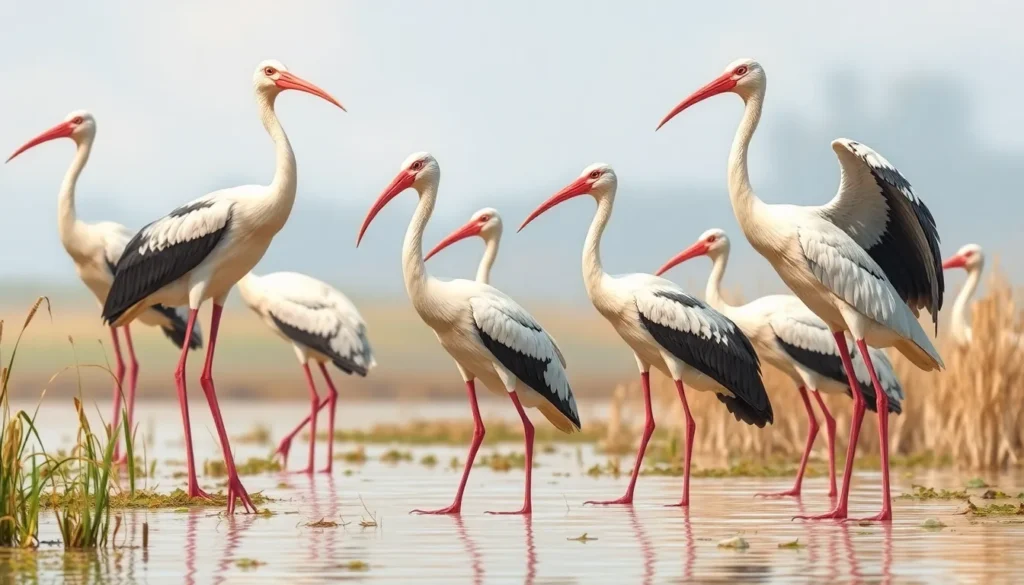
- Ibises belong to the family Threskiornithidae. They are closely related to spoonbills and are characterized by their long, down-curved bills used for probing mud and shallow water.
- There are about 29 species of ibises. These species vary widely in size, color, and habitat, ranging from tropical to temperate regions worldwide.
- Ibises have long legs adapted for wading. Their legs enable them to walk through wetlands, marshes, and shallow waters while searching for food.
- They primarily feed on aquatic invertebrates. Their diet includes crustaceans, insects, mollusks, small fish, and amphibians, which they locate by probing in mud or sand.
- Ibises have a distinctive curved bill shape. This adaptation allows them to efficiently forage in soft substrates where their prey is found.
- Many ibis species display striking plumage colors. For example, the scarlet ibis is known for its bright red coloration, while the glossy ibis has iridescent dark feathers.
- They often nest colonially. Ibises build nests in trees, shrubs, or reed beds, sometimes sharing breeding colonies with other waterbirds.
- Ibises have long been associated with human cultures. In ancient Egypt, the sacred ibis was revered and linked to the god Thoth, symbolizing wisdom and knowledge.
- Some ibis species migrate seasonally. Migration patterns depend on species and geographic location, with some traveling long distances to find suitable breeding or feeding grounds.
- They use tactile foraging techniques. Ibises rely largely on touch, using their sensitive bills to detect prey hidden in substrate.
- Their vocalizations vary widely. Ibises produce a range of calls from grunts and croaks to more elaborate sounds, often used in social communication.
- Ibises are distributed worldwide except Antarctica. They inhabit regions in Africa, Asia, Europe, Australia, and the Americas.
- Some ibis species are threatened by habitat loss. Wetland degradation and pollution have impacted populations, leading to conservation concerns for certain species.
- Ibises play an important ecological role. By controlling aquatic invertebrate populations, they help maintain wetland ecosystem balance.
- They often forage in groups. Group foraging can increase feeding efficiency and provide protection from predators.
- Ibises have relatively long lifespans for birds. In the wild, some species can live up to 20 years or more under suitable conditions.
- Juvenile ibises often have duller plumage. This camouflages young birds, protecting them from predators until they mature.
- They are capable of swimming and flying long distances. Ibises can move between water bodies by flight and sometimes swim short distances when necessary.
- Ibises sometimes hybridize. In overlapping ranges, some species can interbreed, producing hybrid offspring.
- They are indicators of wetland health. The presence and abundance of ibises often reflect the quality of aquatic habitats.
- Ibises have been subjects of scientific and artistic interest. Their unique appearance and behaviors have inspired studies in ornithology and depictions in art and folklore.
Habitat and Behavior
Ibises inhabit a variety of wetland environments such as marshes, swamps, riverbanks, lakeshores, and coastal estuaries. Their long legs and curved bills are perfectly adapted for wading in shallow waters to forage. They are generally social birds, often forming large flocks especially outside the breeding season. Nesting typically occurs in colonies, sometimes with other waterbird species, in trees or reed beds. Their feeding behavior relies heavily on tactile sensation, probing mud and sediment for small aquatic animals. Seasonal migration is common among some species, moving to warmer or more productive areas during colder months. Ibises are diurnal and often roost communally at night.
Why This Animal Matters
Ibises serve an important ecological role in wetland ecosystems by controlling populations of invertebrates and small aquatic animals. This predation helps maintain the balance of wetland food webs and contributes to nutrient cycling. Culturally, ibises have held symbolic significance in various societies, notably in ancient Egypt where the sacred ibis was linked to the deity Thoth. Conservation-wise, ibises are indicators of wetland health, with their populations reflecting the status of aquatic habitats. Protecting ibis habitats can benefit broader biodiversity and water quality. Some species face threats from habitat destruction, pollution, and hunting, emphasizing the need for wetland conservation efforts worldwide.
Common Misconceptions
Misconception: Ibises are the same as flamingos.
Correction: Although ibises and flamingos are both wading birds, they belong to different families and have distinct physical and behavioral traits. Flamingos are known for their pink coloration and filter-feeding, while ibises have curved bills and probe for prey.
Misconception: All ibises are brightly colored.
Correction: While some species like the scarlet ibis are vividly colored, many others have more muted, brown or black plumage that provides camouflage in their environments.
Misconception: Ibises only live in tropical areas.
Correction: Ibises inhabit a range of climates including temperate zones and are found on most continents except Antarctica.
Misconception: Ibises do not migrate.
Correction: Some ibis species undertake seasonal migrations to optimize feeding and breeding conditions.
Misconception: Ibises are solitary birds.
Correction: Ibises are generally social, often forming large flocks and nesting colonies.
FAQ
What do ibises eat?
Ibises primarily feed on aquatic invertebrates such as crustaceans, insects, mollusks, as well as small fish and amphibians. They use their long, curved bills to probe mud and shallow water to find food.
Where do ibises live?
Ibises are found worldwide in wetland habitats including marshes, swamps, riverbanks, lakeshores, and coastal estuaries. They inhabit regions in Africa, Asia, Europe, Australia, and the Americas.
Are ibises endangered?
While many ibis species have stable populations, some face threats from habitat loss, pollution, and hunting. Conservation efforts focus on protecting wetland habitats to support these birds.



Leave a Reply