
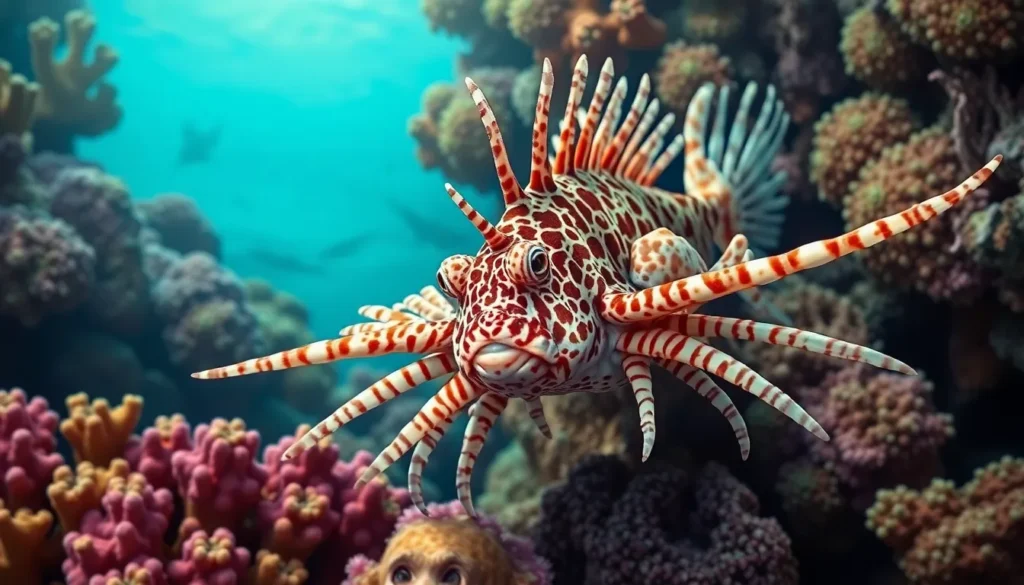
Short Answer
21 Facts About Scorpionfish Spines
- Spine Structure: Scorpionfish possess venomous spines located on their dorsal fins, which serve as a defense mechanism against predators.
- Venom Composition: The venom of scorpionfish contains a mixture of proteins that can affect the nervous system.
- Camo Adaptation: Scorpionfish are masters of camouflage, often resembling their surroundings to avoid detection.
- Feeding Habits: Scorpionfish are carnivorous, primarily feeding on small fish and invertebrates.
- Habitat Diversity: Scorpionfish inhabit various marine environments, including coral reefs, rocky substrates, and sandy bottoms.
- Reproductive Behavior: Scorpionfish engage in external fertilization, with males often displaying territorial behavior during mating seasons.
- Size Variation: Scorpionfish species vary in size, with some growing to over 1.5 feet in length.
- Defense Mechanism: When threatened, scorpionfish can remain motionless to avoid detection or quickly swim away.
- Interaction with Other Species: Scorpionfish can be found living alongside various marine species, sometimes forming commensal relationships.
- Conservation Status: Some scorpionfish species are threatened due to habitat destruction and overfishing.
- Behavioral Plasticity: Scorpionfish exhibit behavioral plasticity, adapting their hunting strategies based on prey availability.
- Color Variation: The color of scorpionfish can range from bright reds and oranges to browns and greens, aiding in their camouflage.
- Life Span: Scorpionfish can live for several years, with some species reaching up to 10 years in the wild.
- Habitat Preferences: Some scorpionfish prefer deeper waters, while others are found in shallow coastal areas.
- Social Behavior: While typically solitary, some scorpionfish may tolerate the presence of others in their territory.
- Spine Regeneration: Scorpionfish have the ability to regenerate their spines if damaged.
- Threats from Humans: Scorpionfish are sometimes targeted in the aquarium trade, leading to population declines.
- Research Interest: Scorpionfish venom has garnered interest in scientific research for potential medical applications.
- Ecological Role: As predators, scorpionfish play a vital role in maintaining the balance of marine ecosystems.
- Unique Locomotion: Scorpionfish can use their pectoral fins for delicate movements, allowing for precise positioning.
- Distribution: Scorpionfish are distributed across tropical and subtropical waters, with some species found in temperate regions.
These spines are typically long and sharp, capable of delivering venom that can cause pain and swelling in potential threats.
This composition varies among species and can lead to different symptoms in humans, from mild pain to severe reactions.
This adaptation helps them ambush prey and evade predators in their natural habitats.
They use their camouflaging ability to blend in with the environment and surprise their prey.
They are found in warm, tropical waters around the world, particularly in the Indo-Pacific region.
This behavior can include aggressive displays to ward off other males competing for females.
Size can influence their predatory techniques and habitat preferences.
This ability to remain still, combined with their coloration, enhances their survival chances.
This dynamic can be beneficial for both the scorpionfish and the other species involved.
Conservation efforts are critical to ensure their survival and the health of marine ecosystems.
This adaptability is essential for their survival in changing environments.
These variations help them blend in with different environments and avoid predation.
Their lifespan can be influenced by environmental factors and predation rates.
This preference can affect their interactions with other marine life and their feeding habits.
This tolerance can lead to interesting social dynamics within their habitats.
This regenerative ability is crucial for their defense and survival against predators.
Responsible fishing and trade practices are necessary to protect their populations.
Studies focus on its unique properties and potential therapeutic uses.
They help control populations of smaller fish and invertebrates, contributing to biodiversity.
This fin movement aids in their hunting strategy and evasion from predators.
This wide distribution highlights their adaptability to various marine environments.
Habitat and Behavior
Scorpionfish primarily inhabit warm, tropical seas, often residing in coral reefs, rocky areas, and sandy bottoms. They display a sedentary behavior, often remaining motionless for extended periods, which aids in their camouflage and hunting strategy. Their diet mainly consists of small fish and invertebrates, which they ambush using their exceptional camouflage. Scorpionfish are solitary creatures, although some species may tolerate others within their territory during breeding seasons.
Why This Animal Matters
Scorpionfish play a crucial role in marine ecosystems by controlling populations of smaller fish and invertebrates, thereby maintaining ecological balance. They are also of cultural and economic significance in various regions, where they are sometimes sought after for culinary purposes. However, due to habitat degradation and overfishing, some species are facing threats, making conservation efforts vital for their survival.
Common Misconceptions
Misconception: Scorpionfish are aggressive and attack humans.
Correction: Scorpionfish are generally not aggressive towards humans and prefer to remain hidden. Their primary defense is to use their venomous spines if threatened.
Misconception: All scorpionfish have the same level of venom potency.
Correction: The potency of venom varies among different species of scorpionfish, with some being more dangerous than others.
FAQ
Are scorpionfish dangerous to humans?
While scorpionfish can deliver a painful sting, they are generally not aggressive and prefer to avoid human interaction.
How do scorpionfish hunt?
Scorpionfish use their camouflage to blend into their surroundings and ambush unsuspecting prey.
What is the habitat of scorpionfish?
Scorpionfish are typically found in warm, tropical waters, often in coral reefs or rocky substrates.





Leave a Reply