
Short Answer
21 Facts About Torpor in Hummingbirds
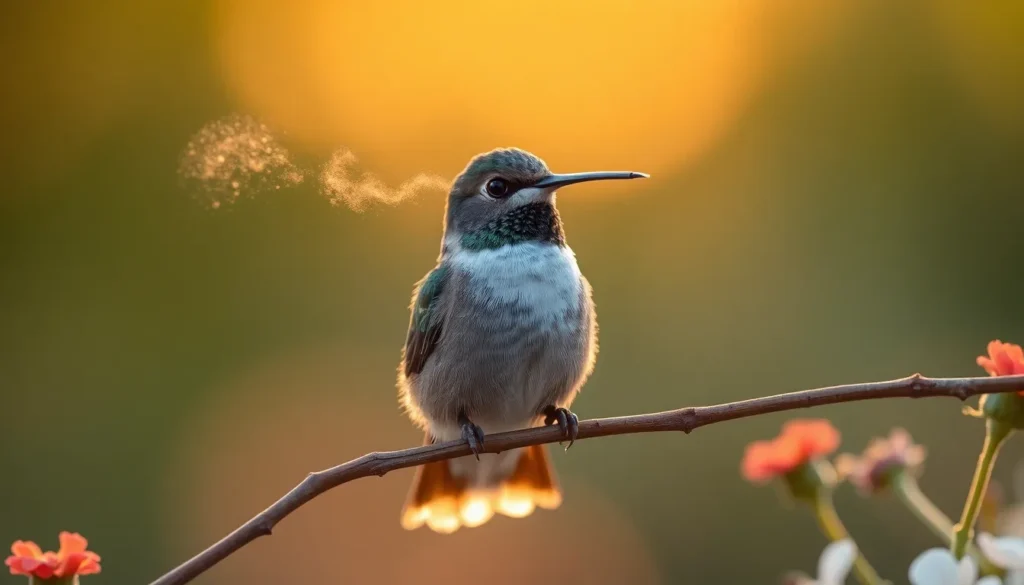
- Torpor is a state of decreased physiological activity. Hummingbirds enter torpor to reduce their metabolic rate and body temperature, conserving energy during periods of inactivity.
- It typically occurs at night. Most hummingbirds use torpor during nighttime hours when they are not feeding and temperatures drop.
- Body temperature can drop dramatically. During torpor, a hummingbird’s body temperature can decrease from around 40°C (104°F) to as low as 10°C (50°F) or even lower in some species.
- Metabolic rate decreases significantly. The metabolic rate can fall to as little as 1/15th of the normal resting rate, greatly reducing energy consumption.
- Torpor duration varies. Some hummingbirds remain in torpor for only a few hours, while others can stay in this state for up to 20 hours.
- It is reversible. Hummingbirds can rapidly rewarm their bodies and return to full activity usually within minutes after sunrise or disturbance.
- Torpor helps survive food scarcity. When nectar sources are limited, torpor allows hummingbirds to conserve energy until food becomes available again.
- Cold temperatures trigger torpor. Lower ambient temperatures often induce hummingbirds to enter torpor as a survival mechanism.
- Not all hummingbirds use torpor equally. Species in temperate regions use torpor more frequently than those in tropical areas with stable climates.
- Torpor is different from hibernation. Torpor is a short-term and daily energy-saving state, whereas hibernation is a prolonged seasonal dormancy.
- Muscle activity is minimized. During torpor, hummingbirds reduce muscle activity to conserve energy, though some minimal shivering may occur to generate heat.
- Heart rate slows dramatically. The heart rate can drop from over 1,200 beats per minute to as low as 50 beats per minute in torpor.
- Respiration rate decreases. Breathing slows to match the reduced metabolic demands during torpor.
- Torpor is crucial for survival in cold environments. This adaptation allows hummingbirds to endure harsh conditions that would otherwise be energetically prohibitive.
- Energy savings are essential for small body size. Due to their high surface area to volume ratio, hummingbirds lose heat quickly; torpor helps offset this challenge.
- Rewarming requires significant energy. Although torpor conserves energy overall, the process of arousing from torpor demands a large energy input.
- Some hummingbirds use environmental cues. Light levels, temperature, and food availability influence when hummingbirds enter or exit torpor.
- Torpor can reduce predation risk. By minimizing activity during vulnerable periods, hummingbirds decrease exposure to predators.
- Scientists study torpor to understand metabolism. Research into hummingbird torpor provides insights into energy regulation and potential biomedical applications.
- Climate change may impact torpor use. Changes in temperature and food sources could alter hummingbird torpor patterns, with unknown ecological consequences.
- Torpor is an example of physiological flexibility. It demonstrates how animals can adapt their metabolism dynamically in response to environmental challenges.
Habitat and Behavior
Hummingbirds primarily inhabit the Americas, ranging from Alaska to Tierra del Fuego, with the greatest species diversity found in tropical and subtropical regions of Central and South America. They are known for their rapid wing beats and ability to hover, feeding mainly on nectar from flowers and occasionally small insects. To survive cold nights or periods of low food availability, hummingbirds enter torpor, a state that allows them to conserve energy by significantly lowering their body temperature and metabolic rate. This behavior is especially common among species living in temperate climates or at high altitudes where temperatures can drop sharply. During the day, hummingbirds are highly active and territorial, but at night or during bad weather, they rely on torpor to maintain energy balance.
Why This Animal Matters
Hummingbirds play a vital ecological role as pollinators for many flowering plants, helping maintain biodiversity in their ecosystems. Their unique ability to enter torpor showcases an important physiological adaptation for energy management in small endotherms. Studying torpor in hummingbirds helps scientists better understand metabolic regulation, thermoregulation, and survival strategies in extreme environments. Additionally, hummingbirds hold cultural significance in many indigenous American cultures, symbolizing endurance, agility, and beauty. Conservation of hummingbird species and their habitats is crucial, as environmental changes could disrupt their delicate balance of energy conservation and feeding, with broader impacts on pollination networks.
Common Misconceptions
Misconception: Hummingbirds hibernate for the winter.
Correction: Hummingbirds do not hibernate; instead, they enter torpor, a short-term, daily state of reduced metabolic activity that differs from the prolonged dormancy of hibernation.

Misconception: Torpor means a hummingbird is sick or dying.
Correction: Torpor is a natural and healthy physiological state that hummingbirds use to conserve energy and survive unfavorable conditions.
Misconception: All hummingbirds use torpor equally.
Correction: The frequency and duration of torpor vary among species, with temperate and high-altitude hummingbirds more likely to use this strategy than tropical species.
FAQ
What triggers torpor in hummingbirds?
Torpor in hummingbirds is typically triggered by low ambient temperatures, reduced food availability, and the onset of night when the birds are inactive.
How do hummingbirds rewarm after torpor?
Hummingbirds can rapidly rewarm by shivering their flight muscles, generating heat to raise their body temperature back to normal levels, often within minutes.
Is torpor harmful to hummingbirds?
No, torpor is a natural and beneficial physiological adaptation that helps hummingbirds conserve energy and survive periods of environmental stress.


Leave a Reply