
Short Answer
21 Facts About Antivenom Production
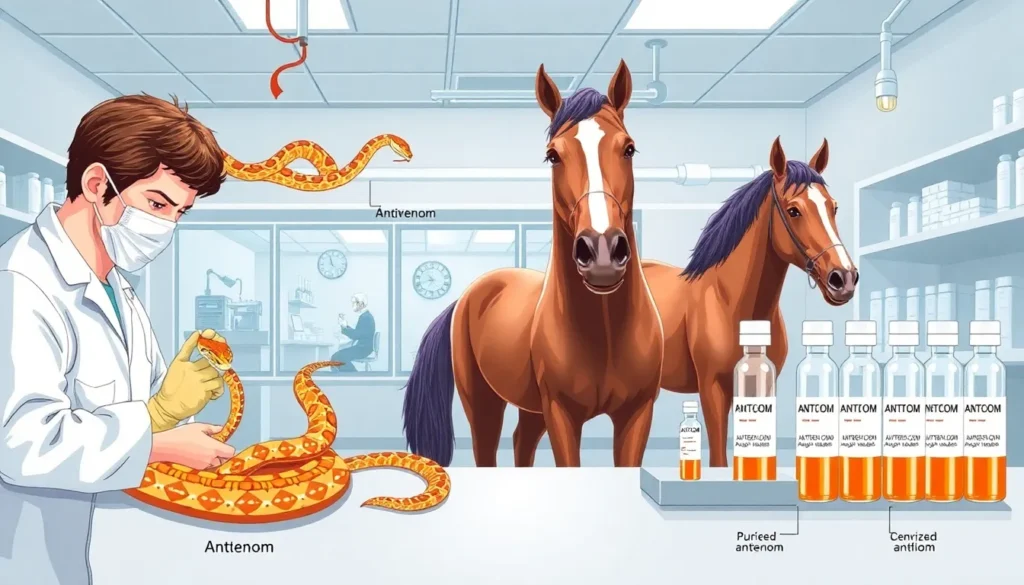
- Antivenom is produced using venom from target animals. The venom is carefully extracted, or “milked,” from snakes, spiders, scorpions, or other venomous animals to stimulate an immune response in host animals.
- Host animals commonly used include horses, sheep, and goats. These animals are injected with small, non-lethal doses of venom to produce antibodies that neutralize the toxins.
- The production process can take several months to years. Repeated venom injections and blood plasma collection are conducted to generate sufficient antibodies for purification.
- Antivenom is a type of immunotherapy. It works by binding to venom components, neutralizing their harmful effects in the human body.
- Purification of antibodies is essential for safety and efficacy. The plasma containing antibodies undergoes purification steps to remove impurities and reduce adverse reactions.
- There are different types of antivenoms. These include monovalent (targeting one species) and polyvalent (effective against multiple species) antivenoms.
- Antivenom production requires specialized facilities and trained personnel. Extraction, immunization, and purification must comply with strict quality control and biosafety standards.
- The first successful antivenom was developed in the late 19th century. French scientist Albert Calmette pioneered antivenom production against cobra venom in 1895.
- Venom composition varies widely among species. This variability complicates antivenom formulation and may require region-specific products.
- Antivenoms are typically administered intravenously. Rapid administration is critical in severe envenomation cases to prevent systemic damage.
- Storage conditions affect antivenom stability. Many antivenoms require refrigeration and have limited shelf lives, complicating distribution, especially in tropical regions.
- Production costs are relatively high. The need for animal care, venom extraction, and purification contributes to the expense, limiting availability in low-resource settings.
- Adverse reactions to antivenom can occur. These may include allergic responses or serum sickness, so careful monitoring during treatment is necessary.
- Efforts are ongoing to develop synthetic and recombinant antivenoms. These aim to reduce reliance on animals and improve safety and specificity.
- Antivenom demand is highest in tropical and subtropical regions. This correlates with the distribution of venomous species and incidence of bites.
- Venom extraction, or “milking,” requires skill to avoid harming animals or handlers. It is a delicate process that must balance animal welfare and safety.
- International collaboration supports antivenom access. Organizations such as the World Health Organization help coordinate production standards and distribution efforts.
- Research continues to improve antivenom efficacy. This includes studying venom properties, antibody responses, and delivery methods.
- Antivenoms are specific to venom types and cannot treat all venomous bites. Correct identification of the biting species improves treatment outcomes.
- Education about antivenom use is crucial in endemic areas. Proper administration protocols and awareness reduce fatalities from envenomation.
- Antivenom production remains a critical component of global public health. Despite challenges, it saves thousands of lives annually by mitigating the effects of venomous bites and stings.
Habitat and Behavior
Antivenom production is intimately linked to the habitats and behaviors of venomous animals such as snakes, spiders, and scorpions. These animals are typically found in diverse environments ranging from tropical rainforests and deserts to grasslands and urban areas worldwide. Their venom serves primarily as a defense mechanism and a means to immobilize prey. The behavior of venomous species varies significantly; some are aggressive when threatened, while others tend to avoid human contact. Understanding the ecology and behavior of these animals aids in the safe collection of venom and informs antivenom development tailored to regional venomous species.
Why This Animal Matters
Venomous animals, through their ecological roles, help maintain balanced ecosystems by controlling prey populations and serving as prey for other species. The venoms they produce have significant medical importance beyond envenomation treatment; they are studied for potential pharmaceutical applications such as painkillers and blood clotting agents. Antivenom production is essential in mitigating the public health burden posed by venomous bites, particularly in rural and tropical regions where access to healthcare may be limited. Conserving venomous species and their habitats is also important to sustain biodiversity and ongoing biomedical research.
Common Misconceptions
Misconception: Antivenoms cure all snakebite victims instantly.
Correction: Antivenoms neutralize venom toxins but may require time to take effect, and supportive medical care is often necessary for recovery.

Misconception: Antivenom can be used for bites from any venomous animal.
Correction: Antivenoms are species-specific or polyvalent for certain groups; using the wrong antivenom may be ineffective or harmful.
Misconception: Antivenom production does not harm the animals involved.
Correction: While ethical protocols aim to minimize harm, venom extraction and immunization can stress animals, necessitating careful welfare practices.
Misconception: Antivenom is widely available and affordable everywhere.
Correction: Production costs, storage challenges, and distribution limitations mean antivenom is often scarce or expensive in many high-risk areas.
Misconception: Antivenoms are synthetic drugs.
Correction: Most antivenoms are biological products derived from antibodies produced in animals, though synthetic alternatives are under development.
FAQ
How is venom collected for antivenom production?
Venom is collected through a process called "milking," where trained handlers stimulate venomous animals to release venom into sterile containers under controlled conditions, ensuring safety for both the animal and handler.
Why are animals like horses used to produce antivenom?
Horses have a robust immune system capable of producing large quantities of antibodies when injected with small, controlled amounts of venom, making them suitable for scalable antivenom production.
Can antivenom cause allergic reactions?
Yes, because antivenoms are derived from animal antibodies, some patients may experience allergic reactions ranging from mild hypersensitivity to severe anaphylaxis, necessitating medical supervision during administration.



Leave a Reply