
Short Answer
21 Facts About Hermit Crab Shell Selection
- Shell Choice Is Critical
Hermit crabs rely on shells for protection from predators and environmental hazards. The right shell provides both safety and comfort. - Variety of Shells
Hermit crabs use various types of shells, including those of marine snails, which they select based on size, shape, and condition. - Size Matters
The size of the shell is crucial; it must be large enough to accommodate the crab’s body but not too big, as this can hinder mobility. - Shell Condition
Crabs prefer shells that are clean and intact. Damaged or dirty shells are less appealing due to potential health risks. - Shell Exchange Behavior
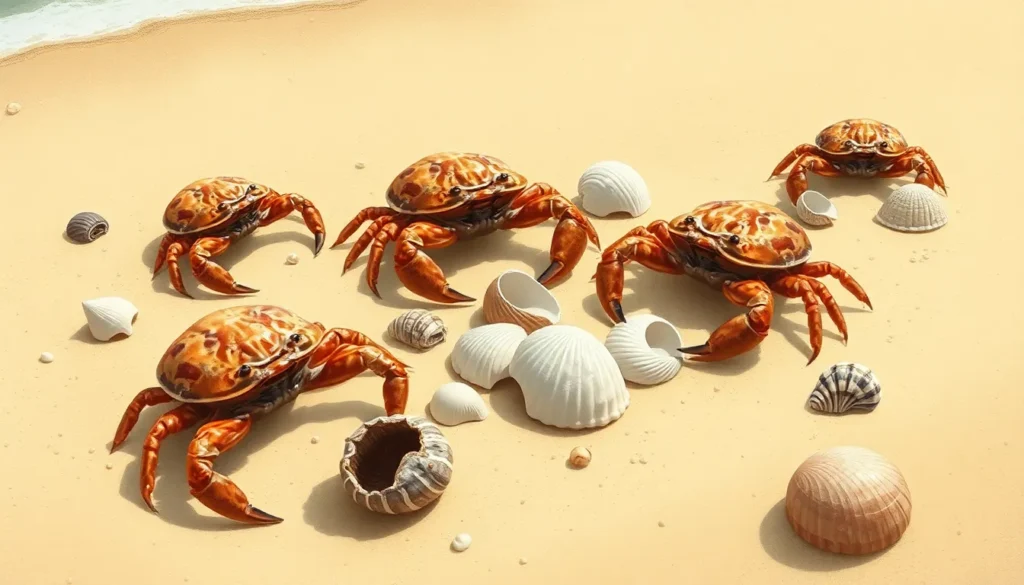
Hermit crabs often engage in shell exchanges, where multiple crabs may swap shells in a communal setting, optimizing their choices. - Shell Acquisition Methods
Some hermit crabs actively seek shells while others may wait for a shell to become available in their vicinity. - Social Influences
The presence of other crabs can influence shell selection. Crabs may follow others to desirable shells, demonstrating social behavior. - Seasonal Changes
Seasonal factors, such as temperature and humidity, can affect shell availability and selection, as certain shells may be more abundant during different times of the year. - Predator Awareness
Hermit crabs are aware of predators and may change shells quickly if they sense danger, demonstrating adaptive behavior for survival. - Shell Color Preferences
Some studies suggest that crabs may have preferences for certain shell colors, which could relate to camouflage in their natural habitat. - Shell Size and Growth
As hermit crabs grow, they must find larger shells, which may lead to competition among individuals for suitable options. - Environmental Impact
The availability of shells can be affected by environmental conditions, including pollution and habitat destruction, impacting hermit crab populations. - Shell Ownership
Hermit crabs can be very territorial about their shells and may defend them against other crabs, leading to aggressive behavior. - Behavioral Adaptations
Hermit crabs exhibit various behavioral adaptations when selecting shells, including tactile exploration and olfactory cues to assess potential shells. - Shell-Related Diseases
Some hermit crabs may suffer from shell-related diseases if they remain in poorly suited or damaged shells for prolonged periods. - Natural Selection
Over time, hermit crabs have evolved behaviors and preferences that allow them to select shells that enhance their survival and reproductive success. - Human Impact
Collecting shells for ornamental purposes can reduce the availability of shells for hermit crabs in the wild, affecting their populations. - Shell Abandonment
If a hermit crab outgrows its shell, it will abandon it in search of a larger one, which can lead to temporary vulnerability. - Shell Adoption
Some crabs may adopt shells that are not traditionally used by their species, showcasing their ability to adapt to available resources. - Cultural Significance
In some cultures, hermit crabs and their shells are used as symbols, reflecting themes of adaptability and change. - Research Implications
Studies on hermit crab shell selection provide insights into behavioral ecology and can inform conservation strategies for marine ecosystems.
Habitat and Behavior
Hermit crabs primarily inhabit coastal areas, including sandy beaches and rocky shorelines. They are often found in tropical and subtropical regions. Hermit crabs are scavengers, feeding on detritus and decaying organic matter. They exhibit social behaviors, often living in groups, which can enhance their foraging efficiency and protection against predators. The selection of shells is a critical aspect of their survival, influencing their mobility and safety from threats.
Why This Animal Matters
Hermit crabs play a vital role in their ecosystems as scavengers. They help recycle nutrients and maintain the health of their habitats. Additionally, their shell selection behaviors can serve as indicators of environmental health. Understanding hermit crabs is essential in highlighting the impacts of habitat degradation and the importance of marine conservation efforts.
Common Misconceptions
Hermit crabs can live in any shell.
Hermit crabs require shells that fit their size and provide adequate protection; unsuitable shells can lead to stress or injury.
All hermit crabs are terrestrial.
While many hermit crabs live on land, some species are fully marine and require oceanic environments.
FAQ
What do hermit crabs eat?
Hermit crabs are scavengers and primarily feed on detritus, algae, and decaying organic matter.
How do hermit crabs choose their shells?
They assess shell size, condition, and sometimes follow social cues from other crabs.
Can hermit crabs live without a shell?
No, hermit crabs require shells for protection; lacking one can lead to vulnerability.


Leave a Reply