
Short Answer
21 Facts About Hairy Yeti Crab (Kiwa hirsuta)
- Scientific Classification: The hairy yeti crab belongs to the family Kiwaidae and was first described in 2005.
- Habitat: Kiwa hirsuta is primarily found in the South Pacific Ocean, particularly near hydrothermal vents.
- Chemosynthesis: The hairy yeti crab relies on chemosynthetic bacteria for food, which thrive in the nutrient-rich waters of hydrothermal vents.
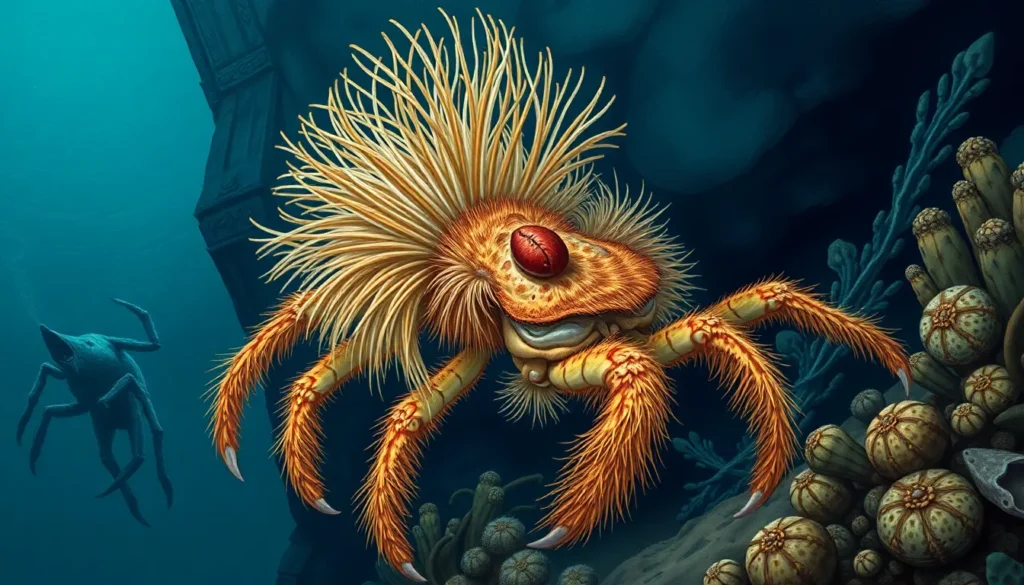
- Physical Appearance: The crab features long, hairy pincers that are covered in bacteria, giving it a unique appearance.
- Size: Adult hairy yeti crabs can grow up to 15 centimeters (approximately 6 inches) in carapace width.
- Reproductive Behavior: Little is known about the reproductive habits of Kiwa hirsuta, but they are believed to have a larval stage.
- Symbiotic Relationships: The hairy yeti crab has a symbiotic relationship with the bacteria that grow on its claws.
- Discovery: The hairy yeti crab was discovered during a deep-sea expedition in 2005.
- Behavior: Kiwa hirsuta is known to exhibit scavenging behavior, often foraging around the hydrothermal vents.
- Coloration: The crab’s coloration varies from pale yellow to brown, helping it blend into its environment.
- Longevity: The lifespan of hairy yeti crabs remains largely unknown due to limited research.
- Conservation Status: The conservation status of Kiwa hirsuta has not been officially assessed.
- Ecological Role: As a consumer in the chemosynthetic ecosystem, the hairy yeti crab plays a role in nutrient cycling.
- Unique Adaptations: The crab has evolved specialized adaptations to thrive in high-pressure, low-light environments.
- Diet: The diet of Kiwa hirsuta primarily consists of organic material and bacteria from the surroundings.
- Temperature Range: The hairy yeti crab is adapted to live in temperatures ranging from 2°C to 30°C (36°F to 86°F).
- Research Significance: Studies of Kiwa hirsuta contribute to our understanding of deep-sea ecosystems and extremophiles.
- Related Species: The hairy yeti crab is related to other species within the Kiwaidae family, each adapted to similar environments.
- Geological Significance: Hydrothermal vents, the crab’s habitat, are crucial for studying geological processes in the ocean.
- Scientific Interest: The unique traits of Kiwa hirsuta make it a subject of interest for marine biologists.
- Future Research: Ongoing studies may reveal more about the life cycle and behavior of the hairy yeti crab.
This crab species is notable for its distinct hairy claws, which play a crucial role in its survival.
These vents provide the unique environment that supports the crab’s diet based on chemosynthesis.
This process allows the crab to utilize the chemicals released by the vents as an energy source.
The hair-like structures are thought to enhance the crab’s ability to capture food particles.
This relatively small size allows them to navigate effectively in their environment.
Understanding their reproductive cycle is essential for conservation efforts.
This relationship allows the crab to derive nutrients from the bacteria, showcasing a unique adaptation.
It was initially noted for its unusual features that set it apart from other crab species.
This behavior is vital for its survival, as it helps the crab access a diverse food source.
Camouflage is a key survival strategy in the deep-sea habitat where it resides.
However, their deep-sea habitat suggests they may have a slower growth rate than shallow-water species.
However, habitat destruction from deep-sea mining poses a potential threat to their populations.
This role is crucial in maintaining the health of hydrothermal vent communities.
These adaptations include its unique feeding mechanisms and physical features.
This diet enables the crab to thrive where traditional food sources are scarce.
This range reflects the varied conditions found near hydrothermal vents.
This research is important for exploring biological diversity and adaptations in extreme environments.
This relation helps scientists understand evolutionary processes in extreme habitats.
These vents provide insights into the Earth’s geothermal activity and mineral deposits.
Its adaptations to extreme environments offer valuable information regarding evolutionary biology.
Such research could enhance our understanding of deep-sea biodiversity.
Habitat and Behavior
The hairy yeti crab inhabits the unique and extreme environment of hydrothermal vents found along the ocean floor, primarily in the South Pacific. These vents release mineral-rich water that creates a habitat abundant in nutrients, allowing various organisms, including Kiwa hirsuta, to thrive. The crab exhibits scavenging behavior, often foraging for organic materials and bacteria, which form an integral part of its diet. Its hairy pincers are adapted to capture food particles effectively, enhancing its ability to survive in a challenging environment.
Why This Animal Matters
The hairy yeti crab plays a significant role in its ecosystem, contributing to nutrient cycling within the chemosynthetic communities surrounding hydrothermal vents. This ecological role underscores the importance of preserving such unique habitats, as they host diverse life forms that are often highly specialized. Additionally, studying the hairy yeti crab can provide valuable insights into evolutionary processes and adaptations in extreme environments, highlighting the interconnectedness of life on Earth.
Common Misconceptions
Misconception: The hairy yeti crab is a mythological creature.
Correction: Kiwa hirsuta is a real species discovered in the ocean, known for its unique physical characteristics.
Misconception: All crabs have similar diets.
Correction: The hairy yeti crab has a specialized diet based on chemosynthesis, unlike many other crab species that feed on a variety of organic materials.
FAQ
What is the habitat of the hairy yeti crab?
The hairy yeti crab inhabits hydrothermal vents in the South Pacific Ocean.
How does the hairy yeti crab obtain its food?
It relies on chemosynthetic bacteria for nutrition.
Why is the hairy yeti crab significant in research?
It provides insights into deep-sea ecosystems and adaptations to extreme environments.


Leave a Reply