
Short Answer
21 Facts About Newts
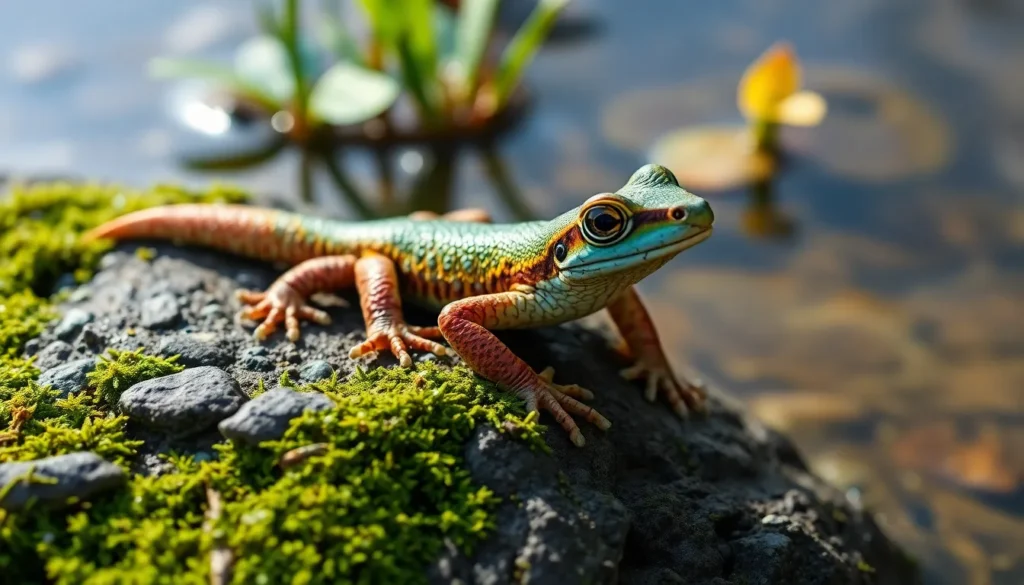
- Newts are amphibians. They belong to the family Salamandridae, which includes salamanders and newts.
- Most newts have a three-stage life cycle. They typically undergo an aquatic larval stage, a terrestrial juvenile stage called an eft, and an adult stage that can be either aquatic or terrestrial.
- Newts are found primarily in the Northern Hemisphere. Their range includes North America, Europe, and parts of Asia.
- Newts have skin glands that secrete toxins. These toxins serve as a defense mechanism against predators.
- Many newts exhibit bright coloration. Especially during the breeding season, colors can become vivid to attract mates or warn predators.
- Newts are capable of regenerating lost body parts. They can regrow limbs, tails, eyes, hearts, and even parts of their brains.
- Some species of newts are fully aquatic as adults. For example, the Alpine newt spends most of its life in water.
- Newts have a diet mainly consisting of invertebrates. They typically feed on insects, worms, and small aquatic animals.
- Newts use internal fertilization. Males deposit spermatophores, which females pick up to fertilize eggs internally.
- Newts lay eggs individually or in small clusters. Eggs are usually attached to aquatic plants or other submerged structures.
- Newts are mostly nocturnal. They are more active during the night or in dark, moist environments.
- Many newts hibernate during winter. They seek shelter underground or under logs and leaf litter to survive cold temperatures.
- Newts have a distinct rough or granular skin texture. This differs from the smooth skin of many frogs and helps with camouflage and moisture retention.
- The rough-skinned newt produces tetrodotoxin. This potent neurotoxin deters most predators and is one of the most toxic substances found in terrestrial vertebrates.
- Newts communicate using chemical signals. They use pheromones especially during mating to locate and attract partners.
- Some newt species exhibit paedomorphosis. This means they retain juvenile features like gills into adulthood, remaining aquatic.
- Newts play important roles in aquatic food webs. They act as both predators and prey, helping maintain ecological balance.
- Newt populations are affected by habitat loss and pollution. Many species are sensitive to environmental changes and water quality.
- Newts have been used as model organisms in scientific research. Their regenerative abilities are studied to understand tissue growth and repair.
- Some cultures historically viewed newts with superstition. They were sometimes associated with witchcraft or medicinal properties.
- Newts can live for several years in the wild. Lifespan varies by species but can range from 6 to 14 years or more.
Habitat and Behavior
Newts typically inhabit moist environments near freshwater sources such as ponds, lakes, streams, and wetlands. During their aquatic stages, they live in water where they hunt for small invertebrates. In terrestrial stages, newts seek damp forests, grasslands, or under debris to avoid desiccation. Their behavior is often nocturnal, reducing exposure to predators and drying conditions. Newts exhibit seasonal migration between aquatic and terrestrial habitats, especially for breeding purposes. They are solitary animals outside of the breeding season and rely on chemical and visual cues for communication. Their ability to regenerate lost limbs and other body parts enables them to survive predation attempts and injuries.
Why This Animal Matters
Newts serve critical ecological functions by controlling insect populations and acting as prey for larger animals, contributing to food web stability. Their sensitivity to environmental pollutants makes them important bioindicators of ecosystem health. Scientifically, newts provide valuable insight into regenerative biology, which has implications for medicine and developmental biology. Culturally, newts have appeared in folklore and traditional medicine in various societies, reflecting human fascination with their unique biology. Conservation of newts is important due to ongoing threats from habitat destruction, pollution, and climate change, highlighting the need to preserve freshwater ecosystems.
Common Misconceptions
Misconception: Newts are the same as lizards.
Correction: Newts are amphibians, not reptiles like lizards. They have moist skin and life cycles involving aquatic larval stages, unlike lizards.
Misconception: Newts are poisonous to humans if touched.
Correction: While newts secrete toxins, the amount is generally not harmful through casual skin contact. However, handling should be minimized to avoid stressing the animal and to prevent toxin transfer to sensitive areas such as eyes.
Misconception: All newts remain aquatic throughout their lives.
Correction: Many newt species undergo terrestrial phases and only return to water for breeding, while some remain aquatic permanently.
FAQ
What distinguishes newts from other amphibians?
Newts belong to the salamander family Salamandridae and typically have a three-stage life cycle including aquatic larvae, terrestrial juveniles called efts, and adults which can be aquatic or terrestrial. They are also known for their rough skin and toxic secretions.
Can newts regenerate lost limbs?
Yes, newts have remarkable regenerative abilities and can regrow lost limbs, tails, eyes, and even parts of internal organs such as the heart and brain.
Are newts dangerous to humans?
While some newts secrete toxins as a defense mechanism, they are generally not dangerous to humans through casual contact. It is advisable to handle them with care to avoid stress to the animal and prevent any toxins from contacting sensitive areas like eyes.

Leave a Reply