
Short Answer
21 Facts About Shortfin Mako Shark Speed
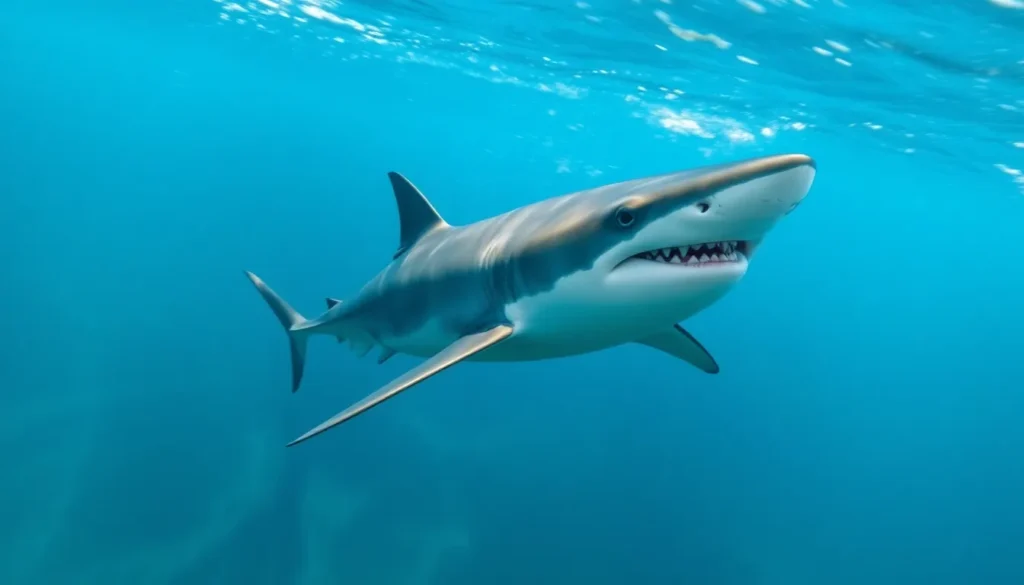
- Fastest Shark: The shortfin mako shark is recognized as the fastest shark species, reaching speeds up to 45 miles per hour (72 km/h).
- Streamlined Body: Its streamlined body shape reduces drag while swimming, enhancing its speed and agility.
- Tail Structure: The unique structure of the shortfin mako’s tail provides powerful thrust, contributing to its high-speed capabilities.
- Acceleration: The shortfin mako can accelerate quickly, allowing it to make rapid turns and changes in direction.
- Jumping Ability: These sharks are known for their incredible leaping ability, often jumping out of the water to escape threats or when hunting.
- Temperature Regulation: Shortfin makos can maintain a body temperature higher than the surrounding water, enhancing their muscle performance and speed.
- Hunting Strategy: They often rely on ambush tactics, using their speed to surprise prey.
- Social Behavior: Shortfin makos are generally solitary, but they may exhibit social behavior during feeding or mating.
- Geographical Range: These sharks are found in tropical and temperate waters worldwide, often in offshore environments.
- Growth Rate: Shortfin makos grow quickly, reaching sexual maturity at about 4-5 years of age.
- Reproduction: They are viviparous, giving birth to live young after a gestation period of 15-18 months.
- Diet: Their diet mainly consists of fish and cephalopods, which they catch using their impressive speed.
- Conservation Status: The shortfin mako is listed as vulnerable by the International Union for Conservation of Nature (IUCN) due to overfishing.
- Predators: Adult shortfin makos have few natural predators, although they may be preyed upon by larger sharks.
- Cultural Significance: In some cultures, shortfin mako sharks are revered and featured in folklore and marine culture.
- Research Interest: Their speed and behavior have made shortfin makos a subject of scientific research, particularly in studies on marine ecosystems.
- Fishing Pressure: Commercial and recreational fishing has significantly affected their populations.
- Life Span: Shortfin makos can live up to 28 years in the wild, although many do not reach this age due to fishing and environmental pressures.
- Symbiotic Relationships: Some shortfin makos may have relationships with cleaner fish that help remove parasites.
- Adaptability: They are known for their adaptability to different marine environments, which aids their survival.
- Impact on Ecosystems: As apex predators, shortfin makos play a crucial role in maintaining the balance of marine ecosystems.
This remarkable speed allows the shortfin mako to be a formidable predator, capable of swiftly chasing down prey such as smaller fish and squid.
The design of its body, combined with powerful muscles, enables the shark to maneuver effectively in the water.
The caudal fin, or tail fin, is particularly large and crescent-shaped, allowing for bursts of speed when needed.
This acrobatic ability aids in hunting and evading larger predators.
Such leaps can reach heights of up to 10 feet (3 meters), showcasing their strength and agility.
This adaptation allows them to be more active and efficient predators in colder waters.
By remaining stealthy and then launching a quick attack, they can capture fast-moving fish.
This behavior can include cooperative hunting, which enhances their success rate.
Their distribution is influenced by water temperature, as they prefer warmer waters.
This rapid growth contributes to their population dynamics in various marine ecosystems.
This reproductive strategy allows for a greater chance of survival for the young sharks.
This opportunistic feeding behavior makes them effective hunters.
Conservation efforts are underway to manage their populations sustainably.
Juveniles are more susceptible to predation from larger fish and marine mammals.
Their impressive speed and hunting prowess make them a subject of fascination.
Understanding their role helps in the conservation of marine biodiversity.
Efforts are made to regulate fishing practices to protect this species.
Understanding their life span is crucial for effective conservation strategies.
Such interactions contribute to the overall health of the shark.
This flexibility allows them to thrive in various ecological niches.
They help regulate fish populations, which is vital for ecological health.
Habitat and Behavior
The shortfin mako shark inhabits a range of environments, primarily found in tropical and temperate waters. They tend to prefer offshore areas, often seen in the open ocean, but they can occasionally be found near coastal regions. Known for their highly migratory nature, shortfin makos can travel long distances in search of food and optimal living conditions. Their behavior is characterized by bursts of speed and agility, making them adept hunters. They utilize their keen eyesight and acute sense of smell to locate prey, employing ambush tactics for effective hunting.
Why This Animal Matters
The shortfin mako shark is an important species within marine ecosystems due to its role as an apex predator. By regulating the populations of smaller fish and cephalopods, they help maintain the balance of marine life. This species also holds cultural significance in various regions, symbolizing strength and speed in many marine traditions. Conservation efforts are vital for ensuring the longevity of the shortfin mako, as their populations face threats from overfishing and habitat degradation.
Common Misconceptions
Misconception: All sharks are dangerous to humans.
Correction: While some sharks can pose risks, shortfin makos are not known for aggressive behavior towards humans and typically avoid contact.
Misconception: Shortfin makos only live in warm waters.
Correction: They inhabit both tropical and temperate waters, adapting to a range of marine environments.
FAQ
What is the maximum speed of a shortfin mako shark?
The maximum speed of a shortfin mako shark can reach up to 45 miles per hour (72 km/h).
Where can shortfin mako sharks be found?
Shortfin mako sharks are found in tropical and temperate waters worldwide, often in offshore environments.
What do shortfin mako sharks eat?
Their diet mainly consists of fish and cephalopods, which they catch using their impressive speed.



Leave a Reply