
Short Answer
21 Facts About Seahorse Tail Prehensility
- Unique Structure
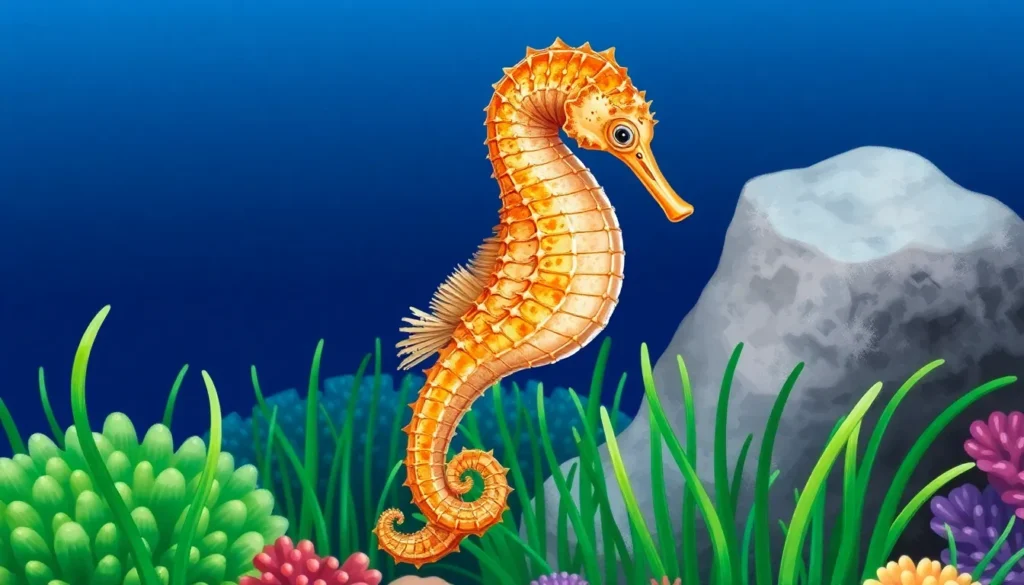
The tail of a seahorse is unlike that of most fish. It is composed of bony plates rather than traditional fin structures, allowing it to grasp objects effectively. - Prehensile Adaptation
Seahorse tails are prehensile, meaning they can grasp and hold onto various substrates, such as seagrass and coral, which aids in camouflage and stability. - Tail Length Variability
The length of a seahorse’s tail varies by species, with differences influencing their ability to anchor themselves in their environment. - Defense Mechanism
By anchoring themselves with their tails, seahorses can avoid predators and remain hidden among vegetation. - Breeding Role
Male seahorses use their tails to hold onto the female during mating rituals, ensuring a successful transfer of eggs to the male’s brood pouch. - Tail Movement
The tail can curl and uncurl, providing flexibility and dexterity when navigating through complex underwater environments. - Environmental Adaptation
Seahorses can adapt their tail grip strength based on the surrounding currents and substrate types, showcasing their evolutionary adaptability. - Habitat Preference
Seahorses are often found in shallow waters where they can easily anchor themselves using their tails, such as in coral reefs and seagrass beds. - Color Change
Seahorses can modify their color to match their surroundings better, enhancing their ability to camouflage while anchored. - Limited Swimming Ability
Seahorses are poor swimmers and rely on their tails for stability and to avoid being swept away by currents. - Social Behavior
Some species exhibit social behaviors that involve tail entwining, which may play a role in bonding and communication. - Impact of Pollution
Pollution and habitat destruction threaten seahorse habitats, impacting their ability to anchor and survive in their natural environments. - Species Diversity
There are over 70 recognized species of seahorses, each with unique tail adaptations suitable for their specific habitats. - Conservation Status
Many seahorse species are considered vulnerable or endangered due to overfishing and habitat loss, highlighting the need for conservation efforts. - Research Importance
Studies on seahorse tail prehensility can offer insights into evolutionary biology and the biomechanics of grasping mechanisms in aquatic animals. - Unique Reproductive Behavior
Seahorses are one of the few animal species where males experience pregnancy, with their tails playing a critical role during this process. - Tail Regeneration
Unlike some other species, seahorses do not have the ability to regenerate their tails if they are damaged, making their tails particularly vulnerable. - Impact of Climate Change
Rising ocean temperatures and acidification can affect seahorse populations and their habitats, leading to further ecological challenges. - Cultural Significance
Seahorses have been featured in various cultures as symbols of love and fidelity, partly due to their unique reproductive behaviors. - Use in Traditional Medicine
In some cultures, seahorses are harvested for traditional medicine, which has raised concerns about overexploitation and conservation. - Future Research Directions
Ongoing research into seahorse biology and ecology is vital for developing effective conservation strategies to protect these unique creatures.
Habitat and Behavior
Seahorses inhabit shallow coastal waters, including estuaries, mangroves, and coral reefs. They prefer areas with abundant vegetation where they can anchor themselves using their prehensile tails. Their behavior is characterized by a slow, deliberate swimming style, often utilizing their dorsal fins for propulsion while their tails secure them to stationary objects. This behavior aids in their camouflage, allowing them to ambush prey and evade predators effectively.
Why This Animal Matters
Seahorses play a crucial ecological role in marine ecosystems, serving as both predators and prey. They help maintain the balance of marine populations by controlling small crustacean numbers. Culturally, seahorses are significant in various societies, symbolizing love and fidelity due to their monogamous mating habits. Their conservation is vital, as they are sensitive indicators of marine health, reflecting broader environmental changes.
Common Misconceptions
Seahorses are fish in the traditional sense.
While seahorses are classified as fish, their unique anatomy, including their prehensile tails and upright swimming posture, distinguishes them from most other fish species.
Seahorses are abundant and not at risk of extinction.
Many seahorse species are threatened by habitat loss and overfishing, leading to a decline in their populations and raising conservation concerns.
FAQ
What is unique about seahorse tails?
Seahorse tails are prehensile, allowing them to grasp and hold onto objects for stability and camouflage.
How do seahorses reproduce?
Male seahorses carry eggs in a brood pouch after mating, showcasing a unique reproductive strategy.
What threats do seahorses face?
Seahorses are threatened by habitat loss, pollution, and overfishing, leading to declines in their populations.


Leave a Reply