
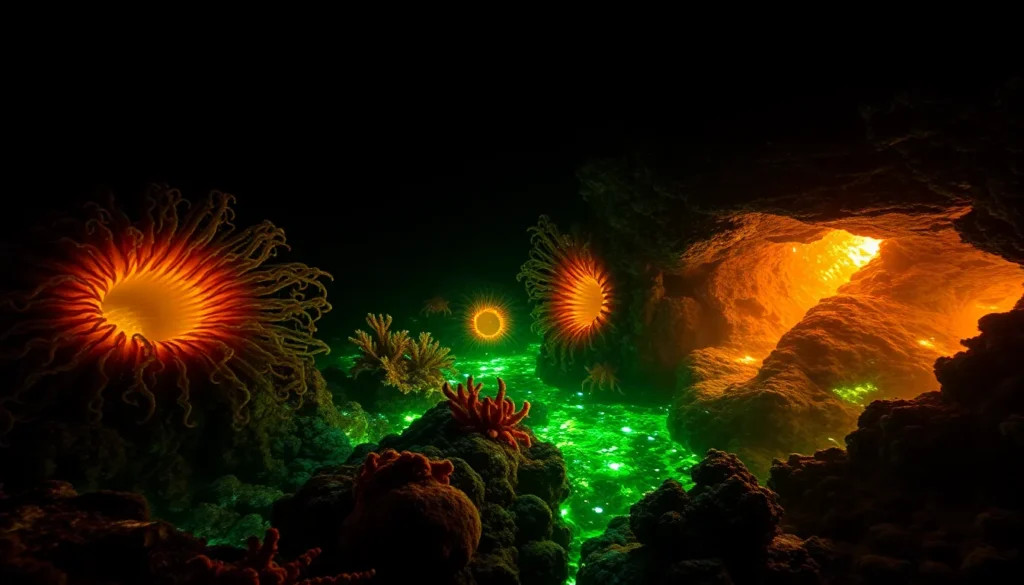
Short Answer
21 Facts About Deep Sea Hydrothermal Vent Animals
- Discovery: Deep sea hydrothermal vent communities were first discovered in 1977 near the Galápagos Rift, revealing ecosystems thriving without sunlight.
- Extreme Environment: These animals live in extreme conditions, including high pressure, temperatures up to 400°C (752°F) near vents, and toxic chemicals such as hydrogen sulfide.
- Chemosynthesis-Based Ecosystem: Unlike most ecosystems that rely on sunlight, vent animals depend on chemosynthetic bacteria that convert vent chemicals into energy.
- Unique Symbiosis: Many vent animals, such as tubeworms and clams, have symbiotic relationships with chemosynthetic bacteria living inside their bodies.
- Gigantism: Some vent animals, like the giant tube worm (Riftia pachyptila), exhibit gigantism compared to their shallow-water relatives.
- Tubeworms: Giant tube worms can grow up to 2 meters long and have no digestive system, relying entirely on their bacterial symbionts.
- Vent Crabs: Certain species of crabs have adapted to feed on bacteria mats and other vent animals, showing unique feeding behaviors.
- Vent Shrimp: The vent shrimp Rimicaris exoculata has specialized eyes adapted to detect faint light from the vents’ emissions.
- Adaptation to Toxic Chemicals: Vent animals tolerate high concentrations of toxic substances like hydrogen sulfide and heavy metals that would be lethal elsewhere.
- Rapid Colonization: Hydrothermal vents are ephemeral; vent communities can rapidly colonize new vents formed by volcanic activity.
- High Biodiversity: Despite the harsh conditions, vent ecosystems host a diverse range of species found nowhere else on Earth.
- Vent Mussels: These mussels host sulfur-oxidizing bacteria in their gills, providing them with nutrients.
- Endemic Species: Many vent animals are endemic, meaning they are native only to hydrothermal vent habitats.
- Vent Fish: Some fish species, such as the vent rattail, live near vents, preying on smaller vent organisms.
- Energy Transfer: Chemosynthesis by bacteria forms the base of the food web, supporting higher trophic levels.
- Adapted Reproduction: Many vent species have reproductive strategies adapted to isolated and dynamic vent environments.
- Longevity: Some vent animals, like certain mussels, can live for decades despite the unstable habitat.
- Research Importance: Studying vent animals helps scientists understand life’s adaptability and potential extraterrestrial life conditions.
- Carbon Cycling: Vent ecosystems contribute to global carbon cycling through chemosynthetic processes.
- Conservation Concerns: Deep-sea mining and human activities pose risks to vent ecosystems, which are sensitive and slow to recover.
- Evolutionary Insights: Vent animals provide insights into early life on Earth and evolutionary adaptations to extreme environments.
Habitat and Behavior
Deep sea hydrothermal vent animals inhabit regions on the ocean floor where volcanic activity emits mineral-rich, superheated water. These vents are typically located along tectonic plate boundaries such as mid-ocean ridges. The habitat is characterized by complete darkness, immense pressure from the overlying water, and chemically toxic conditions. Despite these challenges, vent animals thrive by forming symbiotic relationships with chemosynthetic bacteria that convert chemicals like hydrogen sulfide into organic matter, forming the base of the food chain.
Behaviorally, vent animals exhibit adaptations such as rapid growth, specialized feeding structures, and unique reproductive strategies to cope with the transient nature of vents, which can become inactive or shift locations. Many species colonize new vents quickly, relying on larvae that can disperse widely in ocean currents. Predation and competition shape these communities, with some animals like vent crabs and fish acting as predators, while others like tubeworms and mussels serve as primary consumers.
Why This Animal Matters
Deep sea hydrothermal vent animals play a crucial ecological role in sustaining one of the few ecosystems independent of sunlight. They demonstrate that life can exist in environments previously thought inhospitable, broadening our understanding of the limits of biology. Their unique metabolic pathways, particularly chemosynthesis, provide alternative models for energy flow and nutrient cycling in ecosystems.
These animals also hold cultural and scientific significance. The discovery of vent communities revolutionized marine biology and astrobiology by showing life’s resilience. Conservation of these ecosystems is important because they are vulnerable to disturbances such as deep-sea mining, which could irreversibly damage these unique communities. Protecting vent animals helps preserve biodiversity and the natural laboratory they provide for studying evolution and extreme life.
Common Misconceptions
Misconception: Hydrothermal vent animals rely on sunlight for energy.
Correction: These animals rely on chemosynthesis performed by symbiotic bacteria, not photosynthesis, as sunlight does not penetrate the deep ocean.
Misconception: Hydrothermal vents are permanent and stable environments.
Correction: Vents are transient geological features that can be short-lived, causing communities to be dynamic and require rapid colonization.
Misconception: All deep sea vent animals are microscopic.
Correction: Many vent animals are macroscopic, such as giant tube worms, crabs, and fish, some of which can reach substantial sizes.
Misconception: Hydrothermal vent ecosystems are similar to shallow-water coral reefs.
Correction: Vent ecosystems are chemically and biologically distinct, relying on chemosynthesis rather than photosynthesis and hosting unique species.
Misconception: Hydrothermal vent animals are found everywhere in the deep sea.
Correction: These animals are restricted to specific vent sites where the unique chemical and thermal conditions exist.
FAQ
What do deep sea hydrothermal vent animals eat?
Most deep sea hydrothermal vent animals rely on chemosynthetic bacteria that convert chemicals like hydrogen sulfide into organic matter, which serves as the base of their food web. Many animals host these bacteria symbiotically, while others feed on bacteria or other vent animals.
How do animals survive the extreme temperatures near hydrothermal vents?
Animals near hydrothermal vents have specialized adaptations such as heat-tolerant enzymes and protective tissues that allow them to endure high temperatures and toxic chemicals. They often live in temperature gradients, positioning themselves in areas that balance warmth and safety.
Are hydrothermal vent ecosystems permanent?
No, hydrothermal vents are geologically transient and can become inactive or shift over time. Vent animal communities are adapted to rapidly colonize new vents as old ones die out.
Leave a Reply