
Short Answer
21 Facts About Lacewings
- Lacewings belong to the order Neuroptera. This order is characterized by net-veined wings and includes other insects such as antlions.
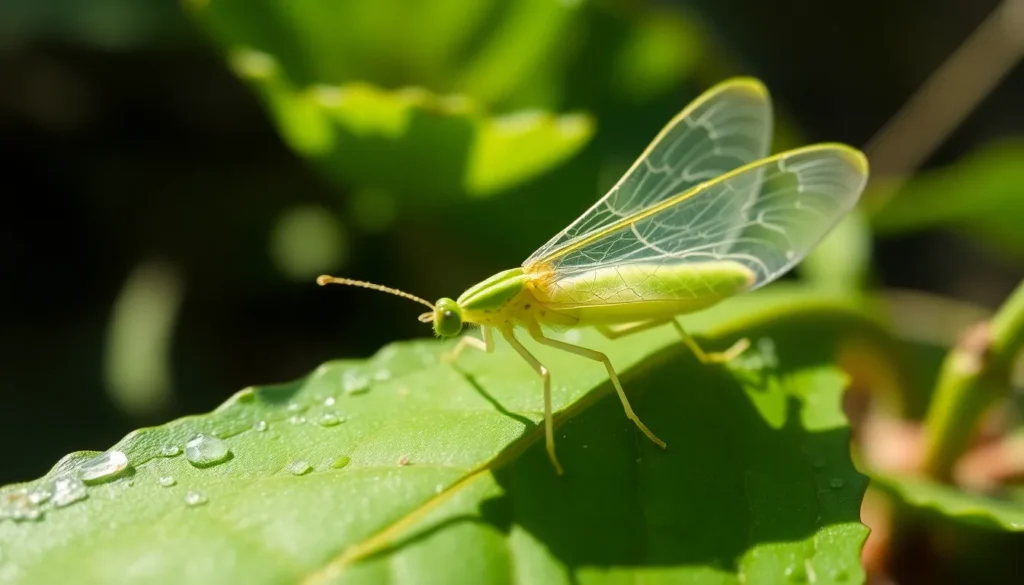
- They are known for their delicate, transparent wings with a lace-like pattern. The intricate veining gives them their common name and helps in identification.
- Lacewings undergo complete metamorphosis. Their life cycle consists of egg, larva, pupa, and adult stages.
- Lacewing larvae are voracious predators. They feed on aphids, mites, and other small soft-bodied arthropods, making them valuable for natural pest control.
- Adults of some species also feed on nectar, pollen, or honeydew. This diet supports their energy needs and may assist in pollination.
- Lacewing eggs are laid on stalks. Female lacewings deposit eggs on thin stalks to protect them from predators and cannibalistic larvae.
- Lacewings are distributed worldwide. They inhabit various environments, including forests, fields, and gardens.
- Some species of lacewings produce a distinctive green coloration. This helps camouflage them among leaves and vegetation.
- Lacewing larvae are sometimes called “aphid lions” due to their predatory habits. They are efficient hunters of aphids and other pests.
- Lacewings communicate using substrate vibrations. Certain species use vibrations to attract mates or signal danger.
- Some lacewing species exhibit maternal care. Females guard their eggs and young larvae to enhance survival rates.
- Lacewings have been used in biological pest control programs. They are introduced in agricultural settings to reduce the need for chemical pesticides.
- Lacewing adults have relatively short lifespans. Most live only a few weeks, focusing on reproduction and dispersal.
- Lacewing larvae have sickle-shaped jaws. These mandibles are adapted to pierce and suck fluids from prey insects.
- Lacewings are attracted to light at night. This behavior is common among many nocturnal insects.
- Some lacewings produce defensive chemicals. These substances can deter predators if the insect is threatened.
- Lacewing fossils date back to the Jurassic period. This indicates their long evolutionary history and ecological persistence.
- Lacewings play a role in food webs. Both larvae and adults serve as prey for birds, bats, and other insectivores.
- Lacewing wing patterns differ among species. These variations aid in species identification by entomologists.
- Adult lacewings are generally weak fliers. They tend to flutter slowly and may be seen resting on vegetation during the day.
- Lacewings contribute to biodiversity in many ecosystems. Their presence supports ecological balance by controlling pest populations naturally.
Habitat and Behavior
Lacewings are found worldwide in a variety of habitats, including forests, grasslands, agricultural fields, and gardens. They prefer areas with abundant vegetation that supports their prey, primarily soft-bodied insects such as aphids. Lacewings are often observed on leaves and flowers, where they hunt or feed on nectar. Larvae are active predators, using their curved mandibles to capture and consume prey. Adults are mostly nocturnal or crepuscular and are attracted to artificial lights. Some species exhibit maternal care by guarding their eggs or young larvae. Lacewings employ substrate-borne vibrations as a form of communication during mating. Their life cycle includes four stages: egg, larva, pupa, and adult, with complete metamorphosis. Eggs are typically laid on stalks to reduce predation risk. Many species have developed chemical defenses to deter predators. Overall, lacewings are adapted to survive in diverse environments where they can find sufficient prey and suitable microhabitats.
Why This Animal Matters
Lacewings play an important ecological role as natural pest controllers. Their larvae consume large numbers of aphids, mites, whiteflies, and other agricultural and garden pests, reducing the reliance on chemical pesticides. This biological control helps maintain healthier ecosystems and supports sustainable agriculture. Lacewings also contribute to biodiversity by serving as prey for various birds, bats, and other insectivores, thus integrating into complex food webs. In some cultures, lacewings have been appreciated for their delicate beauty and have inspired artistic representations. Conservation of lacewing habitats is essential to preserve their ecological functions, especially in areas affected by intensive farming and habitat loss. By understanding and protecting lacewings, humans can benefit from their natural pest control services and help maintain balanced ecosystems.
Common Misconceptions
Misconception: Lacewings are harmful to plants because they eat leaves.
Correction: Lacewing larvae are predators of other insects and do not feed on plant material. Adults primarily consume nectar, pollen, or honeydew, so they do not damage plants.
Misconception: All lacewings look the same.
Correction: There is considerable diversity among lacewing species in size, color, wing patterns, and behavior. Identification often requires careful examination.
Misconception: Lacewings are pests themselves.
Correction: Lacewings are beneficial insects that help control pest populations and are considered allies in integrated pest management.
Misconception: Lacewings can sting or bite humans.
Correction: Lacewings do not sting or bite humans and are harmless to people.
Misconception: Lacewings only live in tropical regions.
Correction: Lacewings inhabit a wide range of climates around the world, including temperate and even some colder regions.
FAQ
What do lacewings eat?
Lacewing larvae are predatory and feed on aphids, mites, and other soft-bodied insects. Adult lacewings typically consume nectar, pollen, or honeydew.
Are lacewings harmful to humans?
No, lacewings are harmless to humans. They do not sting or bite and are beneficial insects in gardens and agriculture.
How do lacewings help in pest control?
Lacewing larvae consume large numbers of pest insects such as aphids and mites, reducing pest populations naturally and decreasing the need for chemical pesticides.




Leave a Reply