
Short Answer
21 Facts About Butterflies
- Butterflies undergo complete metamorphosis. Their life cycle includes four stages: egg, larva (caterpillar), pupa (chrysalis), and adult butterfly.
- Butterflies use their proboscis to feed. This long, coiled tongue allows them to sip nectar from flowers.
- Butterflies have compound eyes. Their eyes are made up of thousands of tiny lenses, giving them a broad field of vision.
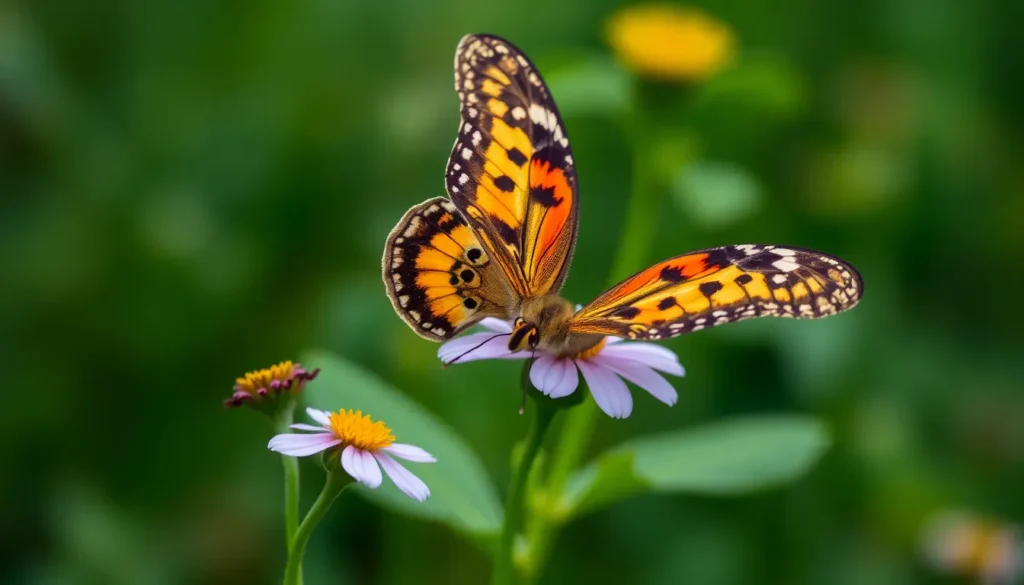
- Many butterfly species are brightly colored. Their wing patterns serve functions such as camouflage, mating, and warning predators.
- Butterflies can taste with their feet. Sensory receptors on their legs help them identify suitable plants for laying eggs.
- Some butterflies migrate thousands of miles. For example, the Monarch butterfly migrates between North America and Mexico annually.
- Butterflies are cold-blooded. They rely on external heat sources like sunlight to warm their bodies for activity.
- Wing scales give butterflies their colors. These tiny scales reflect light in specific ways to produce vivid colors.
- Butterflies communicate through chemical signals. Pheromones help attract mates and signal other individuals.
- Butterflies have a short adult lifespan. Most live only a few weeks, though some species can live several months.
- Butterflies play a vital role in pollination. While feeding on nectar, they transfer pollen between flowers.
- There are approximately 17,500 species of butterflies worldwide. They are found on every continent except Antarctica.
- Butterflies are important indicators of environmental health. Their presence and population trends reflect ecosystem conditions.
- The largest butterflies can have wingspans up to 12 inches. The Queen Alexandra’s birdwing is among the largest species.
- Some caterpillars have developed defenses against predators. These include toxic chemicals, spines, or mimicry of dangerous animals.
- Butterflies use their wings to regulate temperature. They bask in sunlight to warm up and seek shade to cool down.
- Butterflies have been featured in art and symbolism for centuries. They often represent transformation and beauty in various cultures.
- Some butterfly species exhibit sexual dimorphism. Males and females can differ significantly in size, color, and pattern.
- Butterflies rely on specific host plants. Caterpillars feed on particular plant species necessary for their development.
- Butterflies can detect ultraviolet light. This ability helps them find flowers and mates.
- Conservation efforts are important for preserving butterfly populations. Habitat loss and climate change threaten many species globally.
Habitat and Behavior
Butterflies inhabit diverse environments ranging from tropical rainforests and meadows to temperate woodlands and deserts. They tend to prefer areas rich in flowering plants, which provide nectar for adult butterflies and suitable host plants for their larvae. Butterflies exhibit diurnal behavior, being most active during daylight hours when temperatures are warm enough to support flight. Their behavior includes feeding, mating, territorial displays, and migration in some species. To survive, butterflies depend on their ability to thermoregulate by basking in the sun, avoiding predators through camouflage or warning coloration, and reproducing successfully by finding appropriate habitats and host plants.
Why This Animal Matters
Butterflies are important ecological agents, primarily through their role as pollinators that facilitate plant reproduction. Their presence supports biodiversity and the health of ecosystems. Additionally, butterflies serve as bioindicators, with changes in their populations signaling shifts in environmental quality and habitat integrity. Culturally, butterflies have inspired art, literature, and symbolism worldwide, often representing themes of transformation and renewal. Conservation of butterflies is critical due to their sensitivity to environmental changes, making them valuable subjects for monitoring the impacts of habitat destruction, pollution, and climate change.
Common Misconceptions
Misconception: Butterflies live only a few days.
Correction: While some adult butterflies live only a few days, many species live several weeks or even months, especially if they overwinter as adults.
Misconception: Butterflies drink blood or tears.
Correction: While certain butterfly species have been observed sipping fluids from animal tears or sweat, this behavior supplements their diet with salts and minerals; they do not consume blood.
Misconception: All butterflies migrate.
Correction: Migration is characteristic of only a few species, such as the Monarch; most butterflies remain within localized habitats throughout their lives.
FAQ
How long do butterflies live?
The lifespan of adult butterflies varies by species. Most live for a few weeks, but some can survive several months, especially if they enter a dormant state during cold seasons.
Why do butterflies have colorful wings?
Butterflies' colorful wings serve multiple purposes, including attracting mates, camouflage, and warning predators. The colors are produced by pigments and microscopic wing scales that reflect light.
Do all butterflies migrate?
No, migration is not common to all butterflies. Only certain species, such as the Monarch butterfly, undertake long-distance migrations, while most butterflies remain in their local habitats.

Leave a Reply