
Short Answer
21 Facts About Rhinoceros Beetles
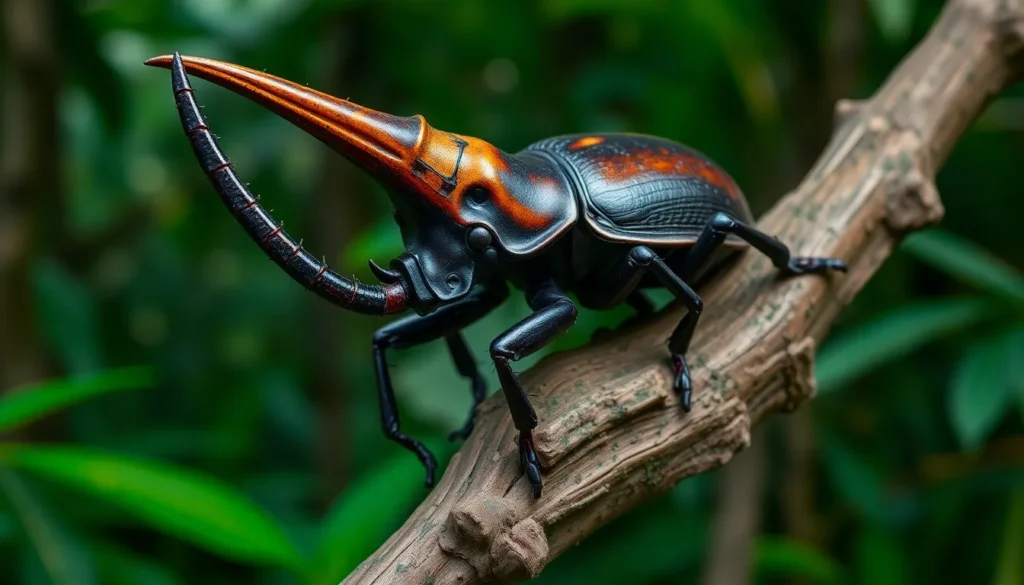
- Rhinoceros beetles belong to the family Scarabaeidae. They are part of the subfamily Dynastinae, commonly known as the rhinoceros beetles due to the horn-like projections on males.
- They are among the largest beetles in the world. Some species can reach lengths of over 15 centimeters (6 inches), making them notable for their size.
- Their horns are used primarily for mating competition. Male rhinoceros beetles use their horns to fight rivals and win access to females.
- Rhinoceros beetle horns are not used as weapons against predators. Instead, they mainly serve in intraspecific combat.
- These beetles are strong for their size. They can lift objects up to 850 times their own weight, a notable example of insect strength.
- The adult beetles are nocturnal. They are primarily active at night and are attracted to lights.
- Rhinoceros beetle larvae feed on decaying wood and organic matter. This diet helps recycle nutrients in forest ecosystems.
- Adult rhinoceros beetles mainly feed on plant sap, nectar, and fruit. Their diet varies somewhat depending on the species.
- They undergo complete metamorphosis. Their life cycle includes egg, larva, pupa, and adult stages.
- Rhinoceros beetles have a global distribution in tropical and subtropical regions. They are found in Asia, Africa, the Americas, and some Pacific islands.
- Some species exhibit sexual dimorphism. Males have larger and more elaborate horns than females, which may have none or much smaller horns.
- The horns of rhinoceros beetles are made of chitin. This is the same tough, flexible material that forms their exoskeleton.
- Rhinoceros beetles are generally harmless to humans. They do not bite or sting and are not considered pests.
- These beetles are popular in some cultures. In parts of Asia, they are kept as pets and used in beetle-fighting contests.
- Rhinoceros beetles can produce sounds. Some species create chirping or hissing noises by rubbing their body parts together, a process called stridulation.
- They play a role in nutrient cycling. By breaking down decaying plant matter, larvae contribute to soil health.
- Rhinoceros beetles have a relatively long lifespan for insects. Some can live up to two or three years in their adult form.
- The horns of rhinoceros beetles can regenerate. If damaged during a molt or fight, new horns can grow during subsequent molts until adulthood.
- Rhinoceros beetles have relatively poor eyesight. They rely more on smell and touch to navigate their environment.
- They have inspired biomimetic research. Their strength and horn structure have been studied for applications in engineering and robotics.
- Climate change and habitat loss threaten some rhinoceros beetle species. Conservation efforts are ongoing to protect vulnerable populations.
Habitat and Behavior
Rhinoceros beetles are primarily found in tropical and subtropical forests where decaying wood and rich leaf litter provide suitable environments for their larvae. They prefer warm, humid climates and are often encountered in rainforests, woodlands, and agricultural areas with abundant organic matter. Adults are mostly nocturnal, emerging at night to feed on sap flows, fruit, or nectar. Males use their large horns in combat to establish dominance and mating rights, often engaging in pushing or lifting contests. The larvae develop underground or within rotting logs, feeding on decomposing plant material which aids in nutrient recycling within their ecosystems. Their lifecycle can span several months to years depending on species and environmental conditions.
Why This Animal Matters
Rhinoceros beetles contribute significantly to forest ecology by breaking down dead wood and organic debris, thus facilitating nutrient cycling and soil enrichment. Their larvae help decompose materials that would otherwise accumulate, playing a key role in maintaining ecosystem health. Culturally, rhinoceros beetles hold importance in various societies; for example, in parts of Southeast Asia and Japan, they are kept as pets or used in beetle-fighting competitions, reflecting traditional practices. Scientifically, their remarkable strength and structural biology have made them subjects of biomimicry research, influencing technological innovations. Additionally, some species face threats from habitat loss and environmental changes, highlighting the need for conservation efforts to preserve biodiversity.
Common Misconceptions
Misconception: Rhinoceros beetles can harm humans with their horns.
Correction: Despite their intimidating appearance, rhinoceros beetles are harmless to humans. Their horns are used only for combat with other beetles and do not pose any danger to people.

Misconception: All rhinoceros beetles have large, prominent horns.
Correction: While males typically have large horns, females often lack horns or have much smaller ones. Horn size and shape also vary significantly between species.
FAQ
Are rhinoceros beetles dangerous to humans?
No, rhinoceros beetles are not dangerous to humans. They do not bite or sting and use their horns only in fights with other beetles.
Why do male rhinoceros beetles have horns?
Male rhinoceros beetles use their horns primarily for fighting other males to gain mating rights with females.
Where can rhinoceros beetles be found?
They inhabit tropical and subtropical regions around the world, including parts of Asia, Africa, the Americas, and Pacific islands.




Leave a Reply