
Short Answer
21 Facts About Pistol Shrimp and Gobies
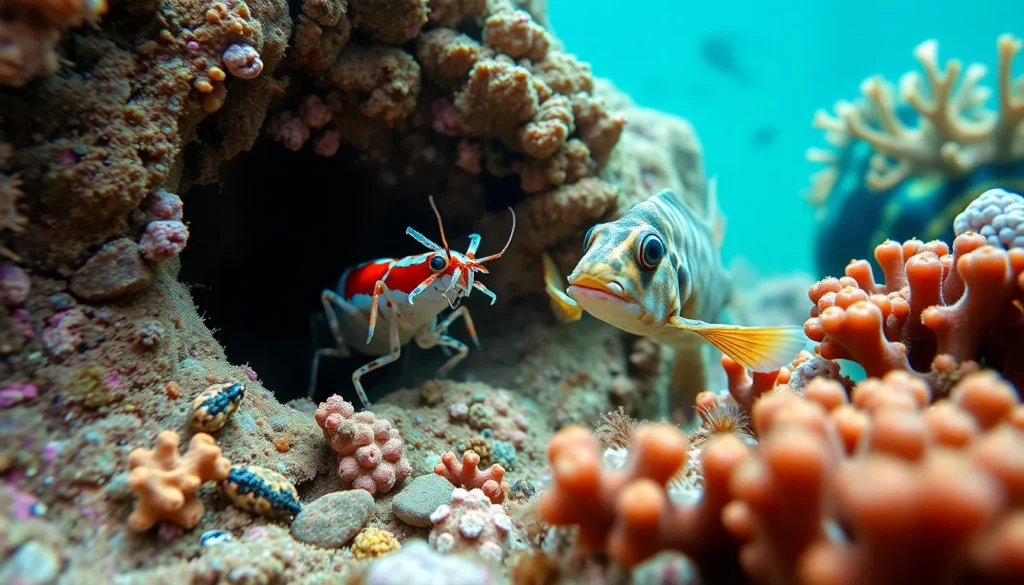
- Symbiotic Relationship: Pistol shrimp and gobies live together in a mutualistic relationship where the shrimp digs and maintains a burrow that both animals share, while the goby keeps watch for predators.
- Pistol Shrimp’s Claw Snap: Pistol shrimp can snap their enlarged claw to create a powerful cavitation bubble that produces a loud noise and a shockwave capable of stunning prey.
- Communication: Gobies use their eyes and body movements to signal danger to the shrimp, which has poor eyesight.
- Shared Burrow Construction: The shrimp uses its claws to excavate sand and mud, creating a safe home for both itself and the goby.
- Different Species Partnerships: Various species of pistol shrimp and gobies form these partnerships, indicating a broad and evolved symbiosis.
- Protective Behavior: Gobies exhibit vigilant behavior, often flicking their tails or making subtle movements to alert the shrimp of nearby threats.
- Size Differences: Pistol shrimp are generally larger than their goby partners, which helps them in digging and defending the burrow.
- Snap Speed: The claw snap of a pistol shrimp can reach speeds of up to 100 kilometers per hour, creating one of the fastest movements in the animal kingdom.
- Bubble Light Emission: The cavitation bubble generated by the snapping claw emits a brief flash of light, a phenomenon known as sonoluminescence.
- Communication Beyond Sight: The shrimp often maintains physical contact with the goby through its antennae to sense the goby’s movements.
- Lifespan: Both pistol shrimp and gobies typically have lifespans ranging from 1 to 5 years, depending on species and environmental conditions.
- Diet: Pistol shrimp are omnivores, feeding on small invertebrates and detritus, while gobies mainly consume small crustaceans and plankton.
- Burrow Maintenance: The shrimp continuously maintains and expands the burrow, which provides shelter against predators and strong currents.
- Reproductive Behavior: Both species reproduce separately but remain faithful to their shared burrow during breeding seasons.
- Sensory Adaptations: Gobies have excellent vision adapted to spotting predators, whereas pistol shrimp rely more on tactile senses.
- Global Distribution: These animals are found in warm shallow waters around coral reefs in the Indo-Pacific and Atlantic Oceans.
- Predator Avoidance: The shared burrow offers a refuge from predators such as larger fish, octopuses, and crabs.
- Ecological Role: By burrowing and aerating the sediment, pistol shrimp contribute to the health of benthic ecosystems.
- Scientific Interest: The snapping mechanism of pistol shrimp has been studied for its biomechanical and acoustic properties.
- Indicator Species: The presence of pistol shrimp and gobies can indicate the health of coral reef environments.
- Cooperative Survival: Their partnership exemplifies a rare form of interspecies cooperation in marine life, enhancing survival for both species.
Habitat and Behavior
Pistol shrimp and gobies inhabit warm, shallow marine environments, particularly around coral reefs and sandy or muddy substrates. The shrimp constructs and maintains an intricate burrow system that serves as a shared home and refuge. While the shrimp focuses on excavation and burrow upkeep, the goby acts as a lookout due to its superior eyesight. This cooperative behavior enhances their chances of survival against predators. The goby signals any threats through subtle movements or tail flicks, alerting the shrimp, which otherwise has poor vision. Both species venture outside the burrow for feeding but remain close to their shelter. This interspecies relationship is an example of mutualism, where both partners benefit through cooperation.
Why This Animal Matters
Pistol shrimp and gobies play important roles in their ecosystems. The shrimp contribute to sediment turnover and aeration through their burrowing activities, which benefits benthic habitats and promotes nutrient cycling. Their burrows also provide shelter for other small marine organisms. The gobies’ vigilance helps maintain the survival of both species, showcasing a unique evolutionary adaptation for predator avoidance. Additionally, their partnership is of scientific interest for studies on symbiosis and biomechanics, especially regarding the shrimp’s claw snap. Understanding these animals aids in coral reef conservation efforts, as their presence can indicate reef health and biodiversity. Protecting their habitats contributes to maintaining the balance of marine ecosystems.
Common Misconceptions
Misconception: Pistol shrimp can kill with their claw snap.
Correction: While the claw snap produces a powerful shockwave capable of stunning prey or small animals, it is not lethal to larger animals or humans.
Misconception: Gobies and pistol shrimp are a predator-prey pair.
Correction: They actually share a mutualistic relationship where both species benefit from cooperation rather than predation.
Misconception: The snapping sound is produced by the shrimp’s vocal cords.
Correction: The sound results from a cavitation bubble created by the rapid closing of the shrimp’s specialized claw, not from any vocalization.
Misconception: Only one species of goby partners with pistol shrimp.
Correction: Numerous species of gobies engage in symbiosis with various pistol shrimp species across different regions.
Misconception: The goby’s role is passive in the relationship.
Correction: The goby actively monitors the environment and signals danger, playing a crucial role in the partnership’s success.
FAQ
How do pistol shrimp produce their snapping sound?
Pistol shrimp produce the snapping sound by rapidly closing one of their enlarged claws, creating a cavitation bubble that collapses and generates a loud noise and shockwave.
Why do gobies and pistol shrimp live together?
They live together in a mutualistic relationship where the pistol shrimp provides a safe burrow and the goby acts as a lookout for predators, benefiting both species.
Are pistol shrimp dangerous to humans?
Pistol shrimp are not dangerous to humans. Their claw snap can stun small prey but is not powerful enough to cause harm to people.




Leave a Reply