
Short Answer
21 Facts About Crickets
- Crickets produce sound by stridulation. Male crickets create their characteristic chirping by rubbing their forewings together to attract females or mark territory.
- There are over 900 species of crickets. These species vary widely in size, color, and habitat preferences across the world.
- Crickets belong to the family Gryllidae. They are part of the order Orthoptera, which also includes grasshoppers and katydids.
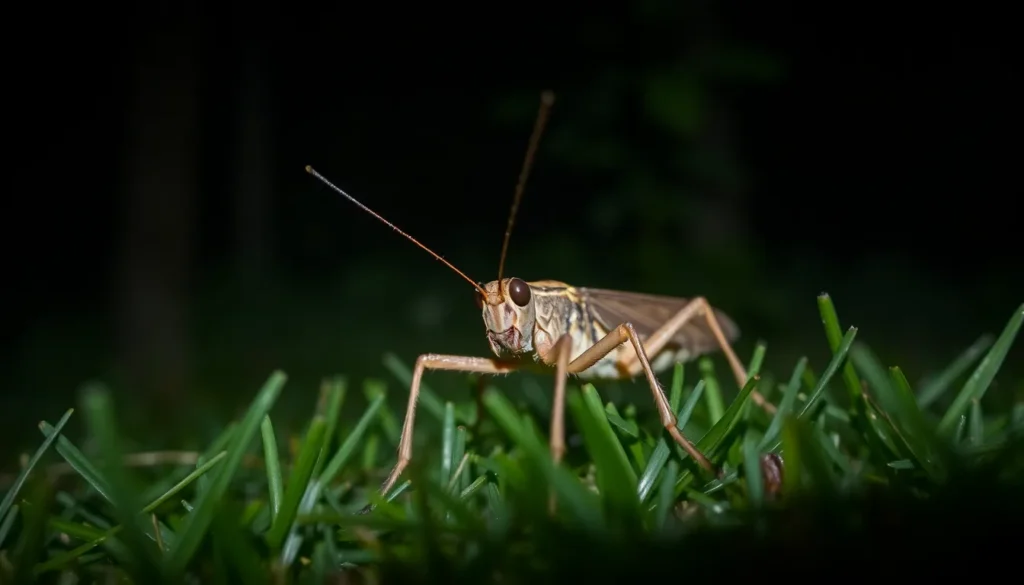
- Crickets use their antennae as sensory organs. These long, thin structures help them detect environmental cues such as sound, touch, and chemicals.
- The chirping rate of crickets is temperature-dependent. Generally, warmer temperatures increase the frequency of chirps.
- Crickets have been used in scientific research. Their simple nervous systems make them useful models in studies of neurobiology and behavior.
- Some cricket species are nocturnal. They are most active at night when their chirping is more noticeable.
- Crickets can jump long distances relative to their body size. Their powerful hind legs enable effective escape from predators.
- Female crickets can produce pheromones to attract mates. Chemical signals play an important role in reproduction.
- Crickets are omnivorous. They feed on plants, fungi, and smaller insects depending on availability.
- Crickets communicate using different chirping patterns. These patterns can indicate aggression, mating readiness, or warnings.
- Crickets have tympanal organs for hearing. Located on their front legs, these organs detect sound vibrations.
- Crickets have been part of human culture and folklore. In some cultures, cricket chirping is considered a sign of good luck.
- Cricket farming is practiced for food and pet feed. They are a sustainable protein source in various parts of the world.
- Crickets are prey for many animals. Birds, reptiles, and mammals rely on them as a food source.
- Some crickets can change color. This adaptation may help with camouflage or temperature regulation.
- Crickets have a lifespan typically ranging from a few weeks to a few months. This depends on species and environmental conditions.
- Crickets undergo incomplete metamorphosis. They develop through egg, nymph, and adult stages without a pupal phase.
- Crickets can detect vibrations through their legs. This helps them sense approaching predators or environmental changes.
- Crickets’ chirping can be used to estimate ambient temperature. The relationship is known as Dolbear’s Law, which correlates chirp rate to temperature.
- Crickets are sensitive to habitat changes. Urbanization and pesticide use can impact their populations negatively.
Habitat and Behavior
Crickets are found worldwide except in extremely cold regions. They inhabit a variety of environments including grasslands, forests, caves, and even urban areas. Many species prefer moist, warm climates. Behaviorally, crickets are mostly nocturnal and use sound to communicate, especially during mating. They rely on their powerful hind legs to jump and escape predators. Crickets are mostly ground-dwelling, hiding under rocks, logs, or leaf litter during the day. Feeding habits vary but generally include plant material, fungi, and small insects, making them omnivorous. Their life cycle involves incomplete metamorphosis, and they are sensitive to environmental factors such as temperature and humidity.
Why This Animal Matters
Crickets play important ecological roles as both prey and consumers. They contribute to nutrient cycling by feeding on decaying plant material and fungi, aiding soil health. As prey, they support diverse food webs including birds, reptiles, and small mammals. Crickets also have cultural significance; in some societies, their songs symbolize good luck or are used in traditional music. Additionally, they are increasingly recognized for their potential in sustainable food production, as a high-protein alternative for human consumption and animal feed. Conservation of cricket populations is important to maintain biodiversity and ecosystem balance.
Common Misconceptions
Misconception: All crickets chirp loudly.
Correction: Not all species produce loud chirping sounds; some are silent or produce faint noises, especially females and certain species.
Misconception: Crickets are harmful pests.
Correction: While some species may damage crops, most crickets are harmless and beneficial in ecosystems.
Misconception: Crickets only eat plants.
Correction: Crickets are omnivorous and can consume both plant material and small insects.
Misconception: Crickets die immediately after mating.
Correction: Crickets do not die right after mating; they continue to live and reproduce multiple times throughout their lifespan.
FAQ
Why do crickets chirp?
Male crickets chirp primarily to attract females for mating and to establish territory among other males. The sound is produced by rubbing their forewings together, a process called stridulation.
Can crickets survive in cold climates?
Crickets generally prefer warm and moist environments. While some species can tolerate cooler temperatures, they are rarely found in very cold regions and typically become inactive or die off during winter.
Are crickets harmful to humans or crops?
Most crickets are harmless to humans and do not cause significant crop damage. Some species may feed on plants but generally do not reach pest levels that threaten agriculture.

Leave a Reply