
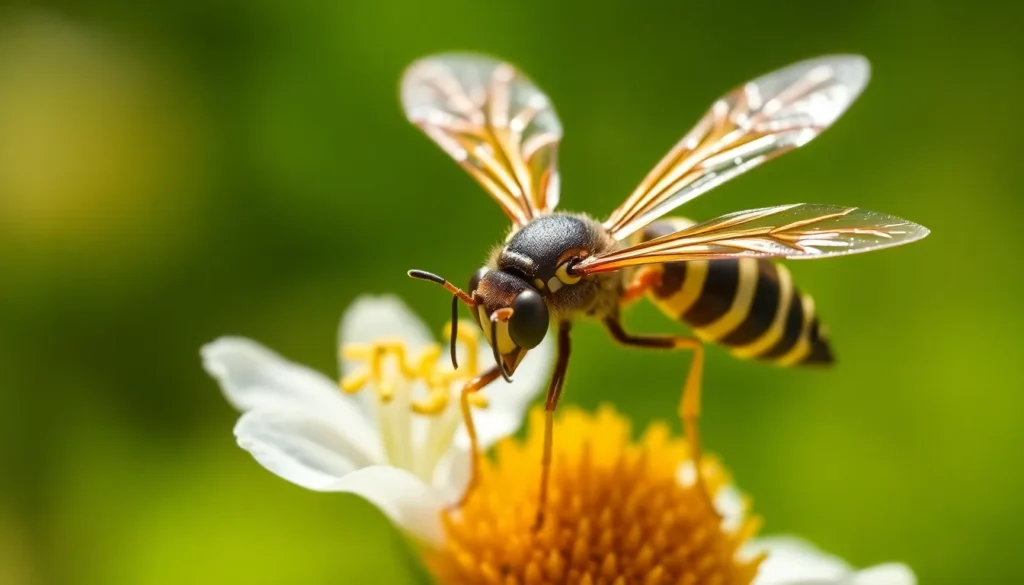
Short Answer
21 Facts About Wasps
- Wasps Belong to the Hymenoptera Order. Along with ants and bees, wasps are part of this large insect order characterized by two pairs of wings and a narrow waist.
- There Are Over 30,000 Known Species of Wasps. They vary greatly in size, color, and behavior depending on the species.
- Wasps Can Be Social or Solitary. Some species live in large colonies with complex social structures, while others lead solitary lives.
- Most Wasps Are Predators or Parasitoids. They play a role in controlling populations of other insects by feeding on or parasitizing them.
- Only Female Wasps Have Stingers. The stinger is a modified ovipositor used for defense or hunting.
- Wasps Use Venom to Subdue Prey. Their venom can paralyze or kill insects, making it easier to transport back to the nest.
- Some Wasps Are Important Pollinators. While less efficient than bees, certain species contribute to pollination.
- Wasps Build Nests From Paper-Like Material. They create nests by chewing wood fibers mixed with saliva.
- Social Wasps Have a Caste System. Colonies include queens, males, and workers, each with specific roles.
- Wasps Can Communicate Through Chemical Signals. Pheromones help coordinate colony activities and defense.
- Many Wasps Are Seasonal. Colonies typically form in spring and decline in late fall.
- Wasps Are Found on Every Continent Except Antarctica. They adapt to a wide range of environments worldwide.
- Some Wasps Are Parasitoids of Pest Insects. They lay eggs inside or on other insects, which their larvae consume, aiding in natural pest control.
- Wasps Can Recognize Faces. Certain species demonstrate the ability to distinguish individual faces of their own kind.
- Not All Wasps Sting Humans. Many species are harmless and avoid human contact.
- Wasps Play a Role in Ecosystem Balance. By preying on various insects, they help regulate populations and maintain biodiversity.
- Wasps Have Complex Flight Capabilities. They can hover, fly backward, and maneuver with agility to capture prey.
- Some Wasps Mimic Other Insects. Mimicry helps protect them from predators by resembling more dangerous species.
- Wasps Can Be Aggressive When Threatened. Defensive behavior increases near nests or when disturbed.
- Wasps Have a Short Lifespan. Most workers live only a few weeks, while queens may survive several months.
- Wasps Contribute to Scientific Research. Their social behaviors and venom components are studied for various applications.
Habitat and Behavior
Wasps inhabit a wide range of environments, from forests and grasslands to urban areas. They build nests in sheltered locations such as trees, underground burrows, or man-made structures. Social wasps establish colonies with cooperative brood care, division of labor, and overlapping generations. Solitary wasps typically live and hunt alone, focusing on securing food and nesting sites for their offspring. Wasps survive by feeding on nectar, other insects, or hosts for their larvae, depending on the species. Their behavior includes complex hunting strategies, nest defense, and communication through chemical signals.
Why This Animal Matters
Wasps are vital components of many ecosystems. As predators and parasitoids, they naturally control populations of pest insects, reducing the need for chemical pesticides. Some species contribute to pollination, enhancing plant reproduction. Culturally, wasps have appeared in folklore and symbolism across various societies. From a conservation perspective, understanding wasp diversity and behavior helps maintain ecological balance and informs biodiversity preservation efforts. Additionally, wasp venom and social structures have biomedical and ethological research significance.
Common Misconceptions
Misconception: Wasps are just aggressive pests with no beneficial purpose.
Correction: While some wasps can be defensive, many provide essential ecological services such as pest control and pollination.
Misconception: All wasps sting humans.
Correction: Only female wasps can sting, and many species do not sting humans unless provoked.
Misconception: Wasps and bees are the same.
Correction: Wasps and bees are different insects with distinct behaviors, appearances, and ecological roles, although they are related.
FAQ
Do all wasps sting?
Only female wasps have stingers, which they use primarily for hunting or defense. Many wasp species do not sting humans unless provoked.
Are wasps harmful or beneficial?
Wasps can be beneficial by controlling pest insect populations and pollinating plants, though they may be considered pests when aggressive near humans.
How do wasps build their nests?
Wasps create nests by chewing wood fibers mixed with saliva, forming a paper-like material used to construct their shelters.


Leave a Reply