
Short Answer
21 Facts About Blue Whales
- Largest Animal on Earth: Blue whales can reach lengths of up to 100 feet (30 meters) and weigh as much as 200 tons, making them the largest animals known to have ever existed.
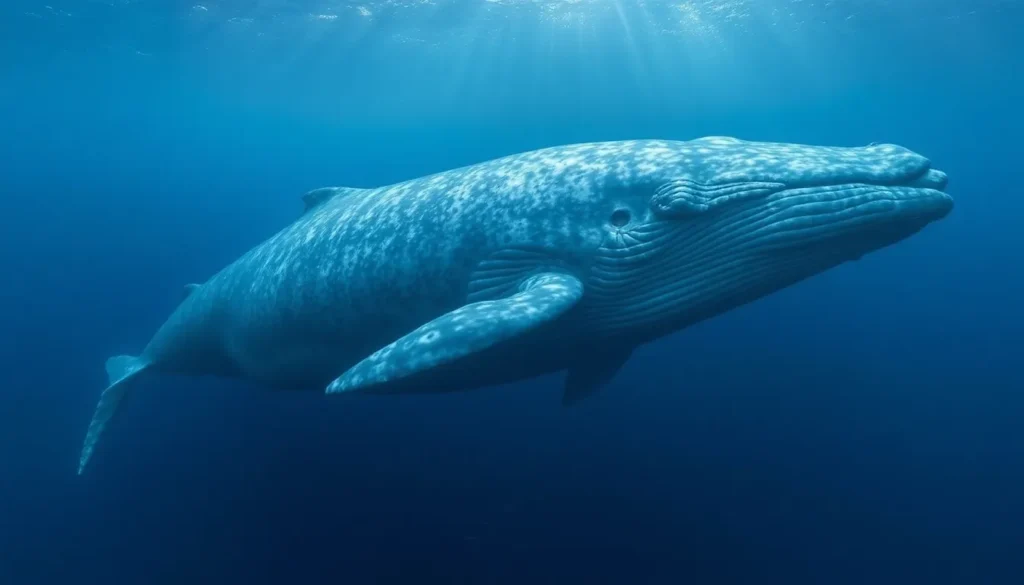
- Distinctive Blue-Gray Coloration: Their skin appears blue underwater but is more of a mottled blue-gray when seen at the surface.
- Heart Size: The heart of a blue whale is the largest of any animal, weighing approximately 400 pounds (180 kilograms).
- Vocalizations: Blue whales produce some of the loudest sounds in the animal kingdom, with calls that can travel for hundreds of miles underwater.
- Diet Primarily Krill: Despite their size, blue whales feed almost exclusively on tiny shrimp-like animals called krill.
- Filter Feeding: They use baleen plates in their mouths to filter their food from large volumes of seawater.
- Longevity: Blue whales can live for 70 to 90 years, although some individuals may live over 100 years.
- Migration Patterns: Many blue whale populations undertake long migrations from cold feeding grounds to warmer breeding areas.
- Speed: They can swim at speeds up to 20 miles per hour (32 kilometers per hour) in short bursts but typically cruise at around 5 miles per hour (8 kilometers per hour).
- Reproduction: Female blue whales give birth to a single calf after an 11-month gestation period.
- Calf Size: Newborn calves are about 20 to 25 feet (6 to 7.5 meters) long and weigh approximately 2 to 3 tons.
- Blowhole: Their blowhole is large and can expel a spout of water up to 30 feet (9 meters) into the air.
- Skin Shedding: Blue whales regularly shed patches of skin, which helps keep their skin healthy.
- Population Decline: Blue whales were heavily hunted during the 20th century, causing a significant decline in their numbers.
- Conservation Status: They are currently classified as endangered by the International Union for Conservation of Nature (IUCN).
- Role in Ecosystem: Blue whales contribute to nutrient cycling in the ocean through their fecal plumes, which support plankton growth.
- Breathing Patterns: They can hold their breath for about 10 to 20 minutes while diving for food.
- Social Behavior: Blue whales are generally solitary or found in small groups rather than large pods.
- Distinctive Dorsal Fin: Their small, curved dorsal fin is located near the tail and varies in shape among individuals.
- Scientific Name: The scientific name for the blue whale is Balaenoptera musculus.
- Historical Significance: Blue whales have fascinated humans for centuries and are featured in various cultural references and scientific studies.
Habitat and Behavior
Blue whales are found in all the world’s oceans, from polar to tropical waters. They prefer deep offshore waters but may come closer to shore during migration or feeding. Their behavior is characterized by long-distance migrations between high-latitude feeding grounds in the summer and low-latitude breeding grounds in the winter. Blue whales are filter feeders that consume large quantities of krill by taking in massive gulps of water and then expelling it through baleen plates. They are generally solitary animals or travel in small groups, communicating through low-frequency sounds that can be detected across vast ocean distances. Blue whales dive to considerable depths to forage but typically stay within the upper 100 meters of the water column during feeding.
Why This Animal Matters
Blue whales play a vital ecological role by maintaining the health and balance of marine ecosystems. Their feeding activity helps regulate krill populations, which in turn influences the broader food web. Additionally, their fecal matter provides essential nutrients that stimulate the growth of phytoplankton, the foundation of the oceanic food chain. Culturally, blue whales have inspired awe and curiosity, symbolizing the grandeur of the natural world. Conservation efforts to protect blue whales have helped raise awareness about the impacts of human activities such as whaling, ship strikes, and ocean pollution. Protecting blue whales also contributes to the preservation of marine biodiversity and the health of ocean environments globally.
Common Misconceptions
Misconception: Blue whales are aggressive and dangerous to humans.
Correction: Blue whales are gentle giants and pose no threat to humans. They are generally shy and avoid close contact with people.
Misconception: Blue whales eat large fish or sharks.
Correction: Blue whales feed almost exclusively on krill, tiny shrimp-like crustaceans, not large fish or sharks.
Misconception: Blue whales are commonly found in shallow coastal waters.
Correction: Blue whales prefer deep offshore waters, although they may occasionally come closer to shore during migration or feeding.
Misconception: Blue whales can live indefinitely.
Correction: While blue whales can live up to around 90 years or more, like all animals, they have a natural lifespan and face threats that can shorten it.
Misconception: Blue whales are solitary and never interact with other whales.
Correction: Although often solitary, blue whales sometimes form small groups, especially during feeding or migration.
FAQ
How large can blue whales grow?
Blue whales can grow up to 100 feet (30 meters) in length and weigh as much as 200 tons, making them the largest animals on Earth.
What do blue whales eat?
Blue whales primarily feed on krill, tiny shrimp-like crustaceans, using their baleen plates to filter large amounts of seawater.
Are blue whales endangered?
Yes, blue whales are classified as endangered due to past extensive whaling and ongoing threats such as ship strikes and habitat disturbance.






Leave a Reply