
Short Answer
21 Facts About Mason Bees
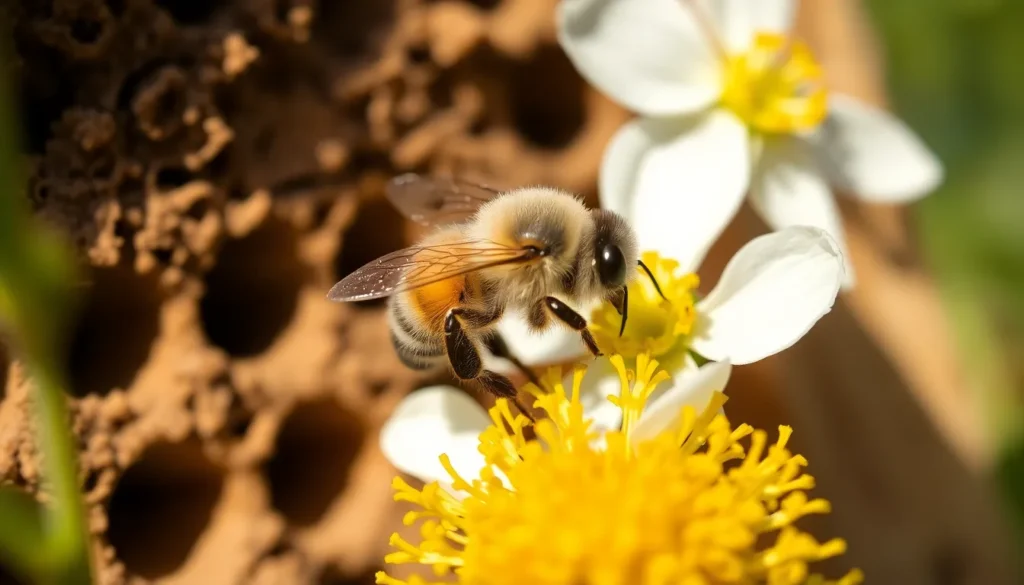
- Mason bees are solitary bees. Unlike honeybees, mason bees do not live in colonies; each female independently builds and provisions her own nest.
- They belong to the genus Osmia. Osmia is a large genus of bees commonly referred to as mason bees.
- Mason bees are named for their nesting behavior. They use mud or other materials like clay to construct or partition their nests, reminiscent of masonry work.
- They are excellent pollinators. Mason bees are highly efficient at pollinating many flowering plants, including fruit trees and wildflowers.
- Mason bees have a unique way of carrying pollen. Instead of pollen baskets on their legs, they carry pollen on the hairs of their abdomen.
- They are active primarily in spring. Most mason bee species emerge and forage in early spring, coinciding with the blooming of many fruit trees.
- Mason bees use pre-existing cavities for nesting. They commonly nest in hollow stems, wood holes, or man-made bee houses.
- The nesting cells are separated by mud walls. Females build partitions between brood cells using mud, providing protection and structure.
- Each brood cell contains a single egg. The female provisions each cell with pollen and nectar before laying an egg and sealing it.
- They have a short adult lifespan. Adult mason bees live for only a few weeks during their active season.
- Mason bees are native to temperate regions of the Northern Hemisphere. They are commonly found in North America, Europe, and parts of Asia.
- They do not produce honey. Unlike honeybees, mason bees do not create or store honey, focusing instead on pollination and reproduction.
- Mason bees are generally non-aggressive. They are solitary and less likely to sting compared to social bees like honeybees or bumblebees.
- Many species show sexual dimorphism. Males and females often differ in size, coloration, or antennae shape.
- Mason bees can be managed for agricultural pollination. Some farmers use mason bee houses to increase pollination efficiency for crops like apples and cherries.
- They contribute to biodiversity. By pollinating a wide variety of plant species, mason bees support healthy ecosystems.
- Parasites and predators affect mason bees. Certain wasps, beetles, and fungi can parasitize or prey on their nests.
- Climate and environmental changes impact their populations. Habitat loss and pesticide use can reduce mason bee numbers.
- Using appropriate nesting materials can encourage mason bee habitation. Providing hollow tubes or drilled blocks mimics natural nesting sites.
- They have been studied for their potential in sustainable agriculture. Their pollination efficiency and low maintenance make them interesting subjects for eco-friendly farming.
- Mason bees provide an important alternative to honeybees. Due to declining honeybee populations, mason bees offer valuable pollination services for crops and gardens.
Habitat and Behavior
Mason bees inhabit temperate regions, typically in environments where flowering plants are abundant during spring. They prefer nesting in pre-existing cavities such as hollow plant stems, wood holes, or artificial bee houses made of wood or paper tubes. Their solitary nature means that each female independently builds and provisions nests with pollen and nectar to sustain her offspring. The use of mud or clay to partition nest cells is a defining behavioral trait, providing protection from predators and environmental conditions. Active mainly in early spring, mason bees are important early-season pollinators, often emerging before many other bee species. Their foraging behavior is characterized by short flights and efficient pollen collection, where pollen is carried on the underside of the abdomen rather than the legs.
Why This Animal Matters
Mason bees play a critical ecological role as pollinators, contributing to the reproduction of numerous wild plants and cultivated crops. Their pollination efficiency often surpasses that of honeybees, making them valuable in agricultural contexts, especially for fruit tree pollination. They support biodiversity by aiding in seed production and plant health. Additionally, as solitary bees, they offer insights into alternative pollination strategies and resilience in changing environments. Conservation of mason bees is important due to threats such as habitat loss, pesticide exposure, and climate change, which can affect their populations and, by extension, the ecosystems and agricultural systems reliant on their pollination services.
Common Misconceptions
Misconception: Mason bees produce honey like honeybees.
Correction: Mason bees do not produce honey. They collect pollen and nectar solely to provision their brood cells for offspring development.
Misconception: Mason bees are aggressive and likely to sting.
Correction: Mason bees are generally non-aggressive and sting only if handled roughly or threatened.
FAQ
What is a mason bee?
A mason bee is a type of solitary bee belonging to the genus Osmia known for using mud to build or partition nests in natural cavities.
Are mason bees good pollinators?
Yes, mason bees are highly efficient pollinators, especially for early spring flowers and fruit trees, often outperforming honeybees in pollination rates.
Do mason bees sting humans?
Mason bees are generally non-aggressive and rarely sting, typically only doing so if handled roughly or threatened.


Leave a Reply