
Short Answer
21 Facts About Crayfish
- Crayfish are freshwater crustaceans. They primarily inhabit freshwater environments like rivers, streams, lakes, and ponds, although some species can tolerate brackish water.
- They are also known as crawfish or crawdads. These alternative names are commonly used in different regions, especially in North America.
- Crayfish belong to the order Decapoda. This order includes shrimp, crabs, and lobsters, characterized by having ten legs.
- There are over 600 species of crayfish worldwide. Most species are native to North America, Australia, and Europe.
- Crayfish have a hard exoskeleton. This protective outer shell is periodically shed during molting to allow growth.
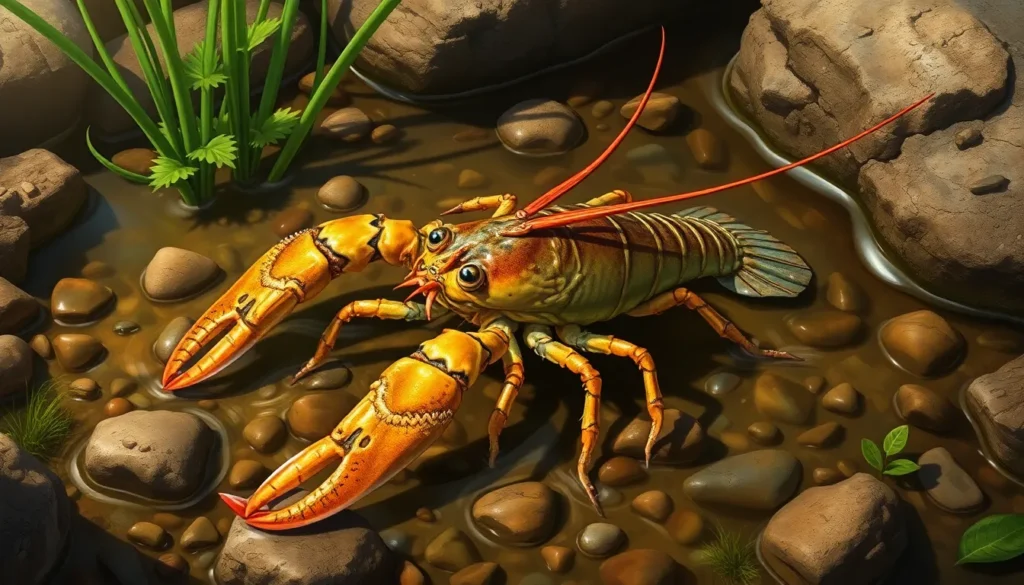
- They possess large front claws called chelae. These claws are used for defense, capturing food, and territorial disputes.
- Crayfish are omnivorous. Their diet includes plants, algae, small fish, insects, and decomposing organic matter.
- Many species are nocturnal. They are most active at night when they forage for food and avoid predators.
- Crayfish communicate using chemical signals. They release pheromones to convey information about territory and mating.
- They have complex reproductive behaviors. Mating often occurs after the female molts when her exoskeleton is soft.
- Crayfish can regenerate lost limbs. Over successive molts, they can regrow claws or legs damaged by predators or accidents.
- Some species burrow into the substrate. Burrowing provides protection from predators and harsh environmental conditions.
- Crayfish play an important role in aquatic ecosystems. They contribute to nutrient cycling by consuming detritus and controlling populations of other small aquatic animals.
- They are prey for numerous animals. Birds, fish, mammals, and amphibians commonly feed on crayfish.
- Crayfish are used as bioindicators. Their presence and health in water bodies can reflect environmental quality and pollution levels.
- Invasive crayfish species can disrupt ecosystems. Non-native crayfish introduced by humans sometimes outcompete local species and damage habitats.
- Crayfish have been part of human culture for centuries. They are featured in folklore, cuisine, and recreational fishing.
- They are harvested commercially in some regions. Crayfish farming and wild harvesting support local economies, particularly in parts of the southern United States.
- Crayfish can survive out of water for short periods. As long as their gills remain moist, they can tolerate brief terrestrial excursions.
- Some species exhibit sexual dimorphism. Males and females can differ in size, claw shape, and other physical characteristics.
- Crayfish have compound eyes. Their eyes provide a wide field of vision, aiding in predator detection and navigation.
Habitat and Behavior
Crayfish are primarily freshwater dwellers found in diverse habitats including streams, rivers, lakes, ponds, marshes, and swamps. They tend to prefer clean, well-oxygenated water and often seek shelter under rocks, logs, or vegetation. Many species are nocturnal, hiding during the day to avoid predators and emerging at night to forage. Crayfish exhibit territorial behavior, defending their shelters and food sources. They communicate through chemical signals and physical displays, especially during mating and competition. Some species dig burrows in soft substrates, which provide refuge during dry or cold periods. Their diet is varied and opportunistic, allowing them to adapt to different ecological niches.
Why This Animal Matters
Crayfish play a significant ecological role in freshwater ecosystems. As omnivores, they help control populations of algae, insects, and detritus, contributing to nutrient recycling. They serve as an essential food source for many aquatic and terrestrial predators, maintaining food web dynamics. Their sensitivity to water quality makes them useful bioindicators for environmental monitoring. Additionally, crayfish have cultural and economic importance in many regions. In some areas, they are harvested for food and used in recreational fishing. The introduction of invasive crayfish species has also brought attention to the need for conservation and management of native populations to preserve biodiversity.
Common Misconceptions
Misconception: Crayfish are simply small lobsters.
Correction: While crayfish and lobsters are related crustaceans within the order Decapoda, they belong to different families and live in distinct habitats; crayfish inhabit freshwater, whereas lobsters are marine species.
Misconception: Crayfish can live indefinitely out of water.
Correction: Crayfish require moist environments to keep their gills functional and can only survive out of water for limited periods, depending on humidity and temperature.
Misconception: All crayfish are native to North America.
Correction: Although North America has the greatest diversity, crayfish species are also native to Europe, Australia, and parts of Asia, with some species adapted to various freshwater habitats worldwide.
Misconception: Crayfish are harmful pests everywhere.
Correction: While some invasive crayfish species can disrupt local ecosystems, native crayfish are integral to healthy freshwater environments and generally beneficial.
Misconception: Crayfish are exclusively carnivorous.
Correction: Crayfish are omnivorous, feeding on a combination of plant matter, algae, small animals, and detritus.
FAQ
What do crayfish eat?
Crayfish are omnivorous and eat a variety of foods including plants, algae, small fish, insects, and decomposing organic material.
Can crayfish survive out of water?
Crayfish can survive out of water for short periods as long as their gills remain moist, but they require freshwater environments for long-term survival.
Are crayfish harmful to the environment?
Native crayfish are important for ecosystem health; however, invasive species can disrupt local habitats and outcompete native populations.



Leave a Reply