
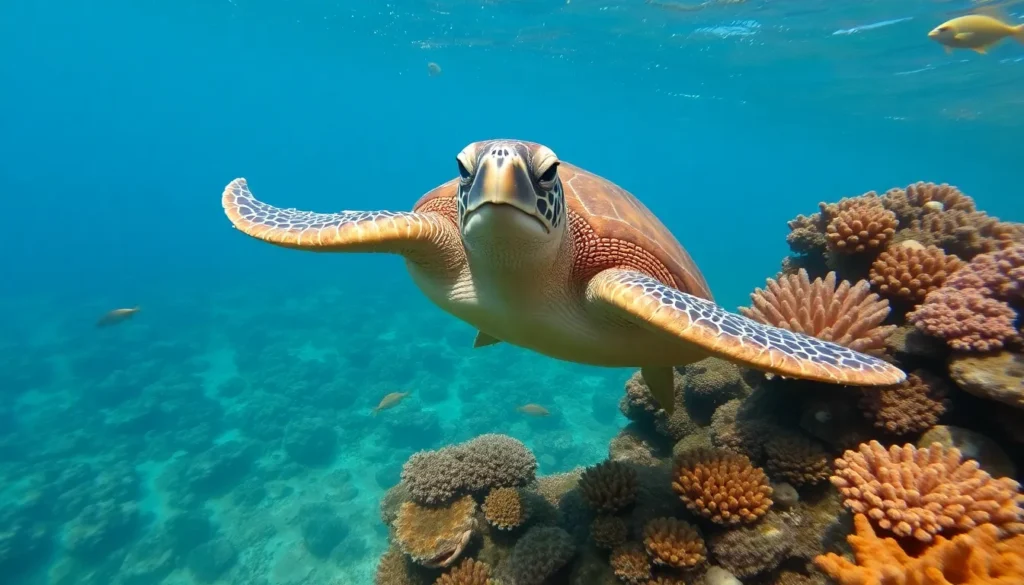
Short Answer
21 Facts About Loggerhead Turtles
- Scientific Classification: Loggerhead turtles are scientifically known as Caretta caretta, belonging to the family Cheloniidae.
- Large Head: They get their name from their relatively large heads, which house powerful jaws to crush prey.
- Size and Weight: Adult loggerheads typically measure about 90 cm (3 ft) in carapace length and weigh approximately 135 kg (300 lbs), though sizes vary.
- Global Distribution: Loggerheads inhabit subtropical and temperate ocean waters worldwide, especially in the Atlantic, Pacific, and Indian Oceans.
- Diet: Their diet primarily consists of hard-shelled prey like crabs, conchs, and mollusks, utilizing their strong jaws for crushing.
- Longevity: They can live for 50 years or more in the wild, although exact lifespan data remain uncertain.
- Migratory Behavior: Loggerheads undertake long-distance migrations between feeding grounds and nesting beaches.
- Nesting Habits: Females return to the beaches where they were born to lay eggs, a behavior known as natal homing.
- Clutch Size: A typical nesting event can produce 100 or more eggs per clutch.
- Incubation Period: Eggs incubate for about 60 days, with temperature influencing the sex of hatchlings.
- Sex Determination: Like many sea turtles, warmer nest temperatures generally produce females, cooler ones males.
- Hatchling Challenges: Only a small percentage of hatchlings survive to adulthood due to predation and environmental hazards.
- Threats: Loggerheads face threats from habitat loss, bycatch in fisheries, pollution, and climate change impacts.
- Conservation Status: They are classified as Vulnerable by the International Union for Conservation of Nature (IUCN).
- Shell Structure: Their carapace is reddish-brown with a hard, bony structure providing protection.
- Behavior: Loggerheads are generally solitary except during mating and nesting seasons.
- Sensory Abilities: They use magnetic fields for navigation during migrations.
- Breathing Adaptations: Although air-breathing reptiles, they can hold their breath underwater for several hours when resting.
- Role in Ecosystem: By preying on certain marine invertebrates, they help maintain healthy ocean habitats.
- Human Interaction: Loggerheads have cultural significance in some coastal communities and appear in folklore and conservation campaigns.
- Research Importance: They are a focal species in marine conservation research due to their migratory nature and sensitivity to environmental changes.
Habitat and Behavior
Loggerhead turtles primarily inhabit coastal bays, estuaries, and continental shelf waters, but they can also be found in open ocean environments. They prefer warm temperate and subtropical waters, where they forage along the seabed for prey. Loggerheads are known for their migratory behavior, traveling thousands of kilometers between feeding grounds and nesting beaches. They are mostly solitary animals and spend much of their time foraging or resting underwater. Nesting occurs on sandy beaches, where females dig nests and lay eggs, typically during the warmer months. Hatchlings emerge at night and instinctively move toward the ocean, facing numerous predators and environmental hazards.
Why This Animal Matters
Loggerhead turtles play an important ecological role by maintaining the balance of marine ecosystems, especially by controlling populations of their prey, such as crabs and mollusks. Their nesting activities contribute to nutrient cycling on beaches, benefiting coastal vegetation. Culturally, loggerheads have significance in various coastal communities and are often symbols in marine conservation efforts. Due to their Vulnerable status, they highlight the broader challenges faced by marine species from human activities like fishing, coastal development, and pollution. Protecting loggerhead turtles helps safeguard marine biodiversity and promotes healthier ocean ecosystems.
Common Misconceptions
Misconception: Loggerhead turtles can retract their heads fully into their shells.
Correction: Unlike some turtles, loggerhead turtles cannot pull their heads entirely into their shells due to the structure of their neck vertebrae.
Misconception: All sea turtles have the same diet.
Correction: Loggerheads have a diet specialized in hard-shelled prey, unlike some sea turtles that primarily eat seagrasses or jellyfish.
FAQ
What do loggerhead turtles eat?
Loggerhead turtles primarily feed on hard-shelled prey such as crabs, conchs, and mollusks, using their strong jaws to crush their food.
How long do loggerhead turtles live?
While exact lifespan data is limited, loggerhead turtles are believed to live 50 years or more in the wild.
Why are loggerhead turtles considered vulnerable?
Loggerhead turtles face threats including habitat loss, accidental capture in fishing gear, pollution, and climate change, leading to their Vulnerable status on the IUCN Red List.


Leave a Reply