
Short Answer
21 Facts About Nocturnal Adaptations
- Enhanced Night Vision: Many nocturnal animals have larger eyes relative to their body size, increasing the amount of light captured to see better in the dark.
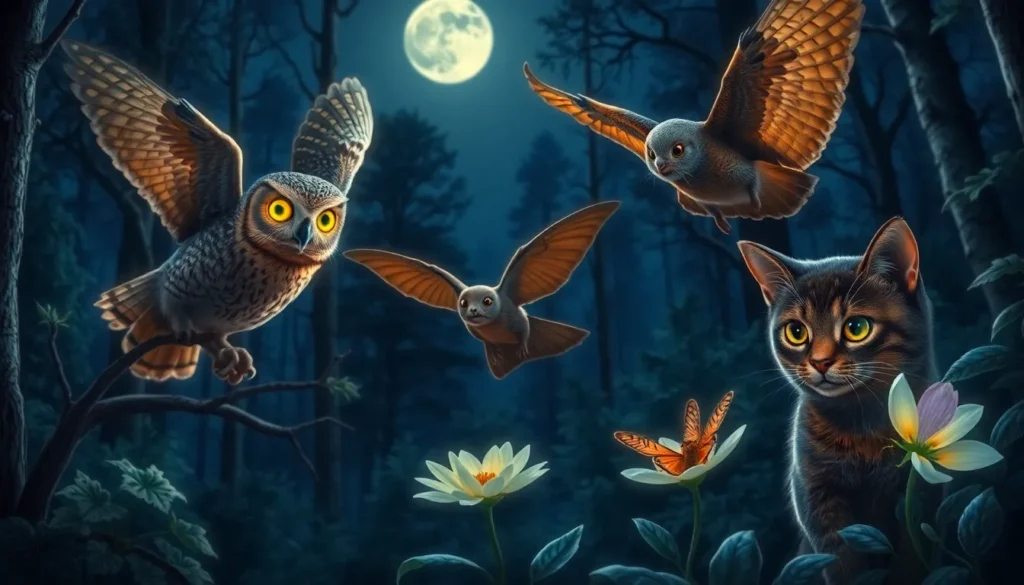
- Tapetum Lucidum: This reflective layer behind the retina improves night vision by reflecting light back through the retina, seen as eyeshine in animals like cats and owls.
- Increased Rod Cells: Nocturnal species often have a higher density of rod cells in their retinas, which are more sensitive to dim light than cone cells.
- Whisker Sensory Adaptations: Some mammals, such as bats and rodents, rely on whiskers to detect nearby objects in low visibility conditions.
- Enhanced Hearing: Many nocturnal animals have acute hearing to detect prey or predators when visibility is limited.
- Echolocation: Bats and some marine mammals use echolocation to navigate and hunt in complete darkness by emitting sounds and interpreting echoes.
- Specialized Olfactory Systems: The sense of smell is often heightened in nocturnal animals to locate food and mates.
- Reduced Color Vision: As color detection is less useful at night, many nocturnal animals have fewer cone cells and rely less on color vision.
- Slower Metabolism: Some nocturnal animals have slower metabolisms to conserve energy during cooler nighttime hours.
- Behavioral Adaptations: Nocturnal animals often have specific activity patterns, avoiding daylight to reduce predation and competition.
- Camouflage and Coloration: Some nocturnal species have muted or darker coloration to blend into nighttime environments.
- Specialized Limb Structures: Adaptations like padded feet or long claws help nocturnal animals move quietly or climb in darkness.
- Thermoregulation: Nocturnal animals may have adaptations to regulate body temperature during cooler nights.
- Social Communication at Night: Many species use vocalizations, pheromones, or bioluminescence for communication in the dark.
- Reduced Reliance on Vision: Some animals shift dependence from vision to other senses such as touch or smell.
- Eye Placement: Nocturnal predators often have forward-facing eyes for depth perception, while prey may have side-placed eyes for a wider field of view.
- Large Pupils: Enlarged pupils allow more light to enter the eye, enhancing vision in dim conditions.
- Flexible Circadian Rhythms: Some species can adjust their activity cycles based on environmental factors such as moonlight or human disturbance.
- Use of Shelter: Many nocturnal animals seek daytime shelters to avoid heat and predators, emerging only after dark.
- Nocturnal Pollination: Certain plants rely on nocturnal animals like moths and bats for pollination, creating ecological interdependence.
- Evolutionary Drivers: Nocturnal adaptations often evolve due to predation pressure, competition, and environmental conditions favoring night activity.
Habitat and Behavior
Nocturnal animals inhabit a wide range of ecosystems, including forests, deserts, wetlands, and urban areas. Their nocturnal behavior helps them avoid daytime predators and exploit resources less accessible during daylight. Many are solitary or form small groups, using the cover of darkness for hunting, foraging, or mating. Adaptations such as enhanced sensory organs and specialized locomotion aid survival in diverse nocturnal habitats. These animals often rest or hide in protected areas during the day and become active at dusk or nightfall.
Why This Animal Matters
Nocturnal animals play crucial roles in their ecosystems. They help control insect populations, pollinate night-blooming plants, and serve as prey or predators that maintain ecological balance. Their unique adaptations contribute to biodiversity and provide insights into evolutionary biology and sensory physiology. Additionally, nocturnal species can be indicators of environmental health and are often sensitive to habitat disturbance and light pollution, making them important for conservation efforts.
Common Misconceptions
Misconception: All nocturnal animals have poor vision.
Correction: Many nocturnal animals have highly specialized eyes with enhanced night vision capabilities, often superior to humans in low light.
Misconception: Nocturnal behavior is simply a result of animals being inactive during the day.
Correction: Nocturnality is an adaptive behavior evolved to reduce predation risk, avoid competition, and exploit unique ecological niches.
Misconception: Nocturnal animals are all mammals.
Correction: Nocturnality occurs in many animal groups, including birds, reptiles, insects, and amphibians, not just mammals.
Misconception: Nocturnal animals are blind during the day.
Correction: Most nocturnal animals have vision adapted to low light but can see well during the day, though they may avoid bright light for safety or comfort.
Misconception: All nocturnal animals are active throughout the entire night.
Correction: Many species have specific activity peaks during twilight or parts of the night, influenced by factors such as moon phases and temperature.
FAQ
What is the main advantage of nocturnal adaptations?
Nocturnal adaptations primarily allow animals to survive and thrive in low-light conditions by enhancing their sensory perception and behavior, which helps avoid predators and find food during the night.
Do all nocturnal animals have the same adaptations?
No, nocturnal animals have various adaptations depending on their ecological niche and evolutionary history, including differences in eye structure, hearing, smell, and behavior.
Can nocturnal animals see during the day?
Most nocturnal animals can see during the day, although their vision is optimized for low light. They may avoid bright light due to discomfort or vulnerability to predators.






Leave a Reply