
Short Answer
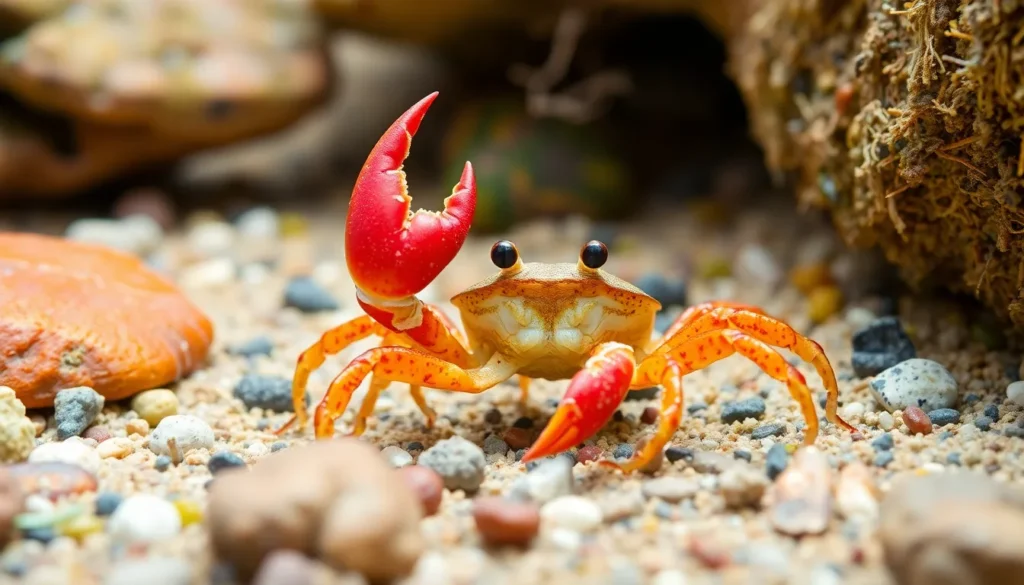
21 Facts About Fiddler Crab Claw Waving
- Unique Communication: Fiddler crabs use claw waving as a primary mode of communication, particularly during mating rituals.
- Asymmetrical Claws: Male fiddler crabs possess one significantly larger claw than the other, which they wave to demonstrate fitness.
- Species Variation: Different species of fiddler crabs exhibit distinct claw waving patterns and behaviors.
- Environmental Influence: The frequency and style of claw waving can be influenced by environmental factors such as temperature and humidity.
- Territorial Displays: Male fiddler crabs often wave their claws to establish and defend their territory from rival males.
- Claw Waving and Predation: The waving behavior can also be a risky endeavor, as it makes the crabs more visible to predators.
- Synchronization: In some species, multiple males will synchronize their claw waving, creating a visual spectacle.
- Learning and Mimicry: Young fiddler crabs can learn claw waving behaviors by observing older, more experienced individuals.
- Waving and Courtship Rituals: Claw waving is often accompanied by other courtship behaviors, such as body posturing.
- Duration of Waving: The duration of the claw wave can vary significantly depending on the context of the interaction.
- Seasonal Variation: Claw waving behavior can vary with the seasons, often peaking during the breeding season.
- Predominantly Coastal Dwellers: Fiddler crabs are primarily found in coastal habitats, such as mangroves and salt marshes.
- Coloration and Claw Size: The coloration of fiddler crabs can also play a role in mating, with brighter colors often indicating a healthier individual.
- Social Structure: Fiddler crabs can exhibit complex social structures, with hierarchies often determined by claw size and waving ability.
- Impact of Pollution: Habitat degradation and pollution can affect fiddler crab populations, impacting their mating behaviors.
- Research Interest: Fiddler crab claw waving has become a subject of study in behavioral ecology and evolutionary biology.
- Conservation Status: While not all species of fiddler crabs are endangered, habitat loss poses a significant threat to their populations.
- Genetic Studies: Genetic research on fiddler crabs has provided insights into their evolutionary history and adaptive traits.
- Behavioral Adaptations: Fiddler crabs have developed various adaptations for survival, including burrowing and camouflage.
- Human Interaction: Fiddler crabs are sometimes used as indicators of environmental health due to their sensitivity to habitat changes.
- Unique Feeding Habits: Fiddler crabs are detritivores, feeding primarily on decomposing organic material.
This behavior serves to attract potential mates and establish territory among males. The waving can vary in intensity and duration, which may signal different messages.
The size difference not only aids in communication but also plays a role in male competition, with larger claws often indicating a healthier male.
For example, the U. mjoebergi species displays a unique waving style that differs from that of U. mjoebergi, showcasing the diversity within the family.
Higher temperatures may lead to increased activity levels in fiddler crabs, resulting in more frequent claw waving.
Waving not only serves to attract females but also acts as a warning to other males, reducing physical confrontations.
Despite the risks, the benefits of attracting mates often outweigh the dangers posed by predators.
This group behavior can enhance the attractiveness of the males, increasing their chances of mating success.
This learning aspect indicates a level of social interaction and cognitive ability among these crustaceans.
The combination of these actions helps to reinforce the male’s attractiveness during mating season.
Longer waves are often associated with more intense competitive displays, while shorter waves may indicate a less aggressive approach.
During this time, males are more active in their displays to attract females.
These environments provide the necessary conditions for their survival and mating activities.
Females may prefer males with more vibrant colors, which can be a sign of good health and superior genetics.
This social organization can influence mating opportunities and territorial disputes among males.
Loss of habitat can lead to reduced population sizes and changes in social dynamics.
Researchers investigate the implications of this behavior on mating success and species survival.
Conservation efforts in coastal regions aim to protect their habitats and maintain biodiversity.
Understanding the genetic basis of claw waving behavior contributes to knowledge about natural selection.
These adaptations help them evade predators while still engaging in their characteristic behaviors.
Monitoring their populations can provide valuable information about the state of coastal ecosystems.
This feeding behavior plays a significant role in nutrient cycling within their ecosystems.
Habitat and Behavior
Fiddler crabs are primarily found in coastal habitats including mangroves, salt marshes, and tidal flats. These environments provide the necessary elements for their survival, such as food sources and shelter. Fiddler crabs are known for their burrowing behavior, which helps them avoid predators and creates a microhabitat that retains moisture. They are social animals, often found in large groups, and exhibit complex behaviors related to communication and territory defense, primarily through their characteristic claw waving.
Why This Animal Matters
Fiddler crabs play a crucial ecological role as detritivores, contributing to the decomposition of organic matter and nutrient cycling in coastal ecosystems. Their behaviors, such as claw waving, are not only essential for their mating success but also serve as indicators of environmental health. Understanding their roles helps in conservation efforts, particularly in the face of habitat destruction and climate change.
Common Misconceptions
Misconception: Fiddler crab waving is a sign of aggression.
Correction: While claw waving can be competitive, it is primarily a communication tool used for attracting mates and establishing territory.
Misconception: All fiddler crabs wave their claws in the same manner.
Correction: Different species exhibit distinct waving styles and frequencies, which can vary based on environmental conditions and social interactions.
FAQ
What is the purpose of claw waving in fiddler crabs?
Claw waving serves mainly as a communication method for attracting mates and establishing territory among males.
Do all fiddler crabs live in the same habitat?
No, different species of fiddler crabs inhabit various coastal environments, including mangroves and salt marshes.
How does environmental change affect fiddler crabs?
Fiddler crabs are sensitive to habitat changes, and environmental degradation can impact their populations and behaviors.



Leave a Reply