
Short Answer
21 Facts About Animal Parenting Behaviors
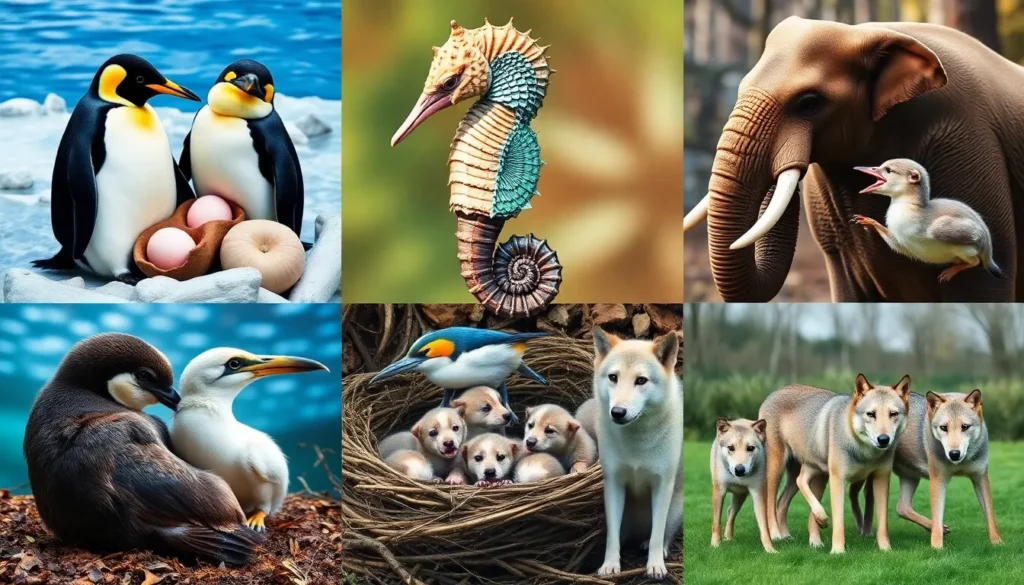
- Many bird species share parenting duties. In species like penguins and albatrosses, both parents take turns incubating eggs and feeding chicks to ensure survival.
- Elephants have strong maternal bonds. Female elephants care for calves for several years, often assisted by other females called allomothers.
- Seahorses exhibit male pregnancy. Male seahorses carry fertilized eggs in a specialized pouch until they hatch.
- Some amphibians transport their young. Certain frog species carry tadpoles on their backs or in their mouths to water sources.
- Primate infants rely heavily on parental care. In species like chimpanzees, mothers nurse and protect infants for years, teaching survival skills.
- Parental care can include teaching hunting techniques. Wolves and orcas teach their young to hunt cooperatively within the pack or pod.
- Social insects have specialized roles for raising young. In ants and bees, worker individuals care for the queen’s offspring through feeding and protection.
- Some fish guard their eggs aggressively. Species such as cichlids protect their nests from predators until fry are independent.
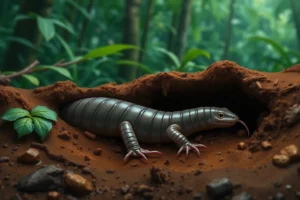
- Many reptiles exhibit limited parental care. Some crocodile species guard nests, but most reptiles leave eggs after laying.
- In some bird species, brood parasitism occurs. Birds like cuckoos lay eggs in others’ nests, leaving parenting to foster parents.
- Orangutans show extended maternal care. Orangutan mothers nurture offspring for up to eight years, teaching complex skills.
- Parental care is often linked to offspring survival rates. Species investing more time and resources generally have higher juvenile survival.
- Some animals use vocalizations to communicate with young. Many birds and mammals produce specific calls to guide or calm their offspring.
- Parental investment strategies vary widely. Species may produce many offspring with little care or few offspring with intensive care.
- Some animals adopt orphaned young. Instances of adoption have been documented in dolphins and elephants, enhancing survival chances.
- Parental care can include grooming to prevent disease. Many mammals groom their young to keep them clean and reduce parasites.
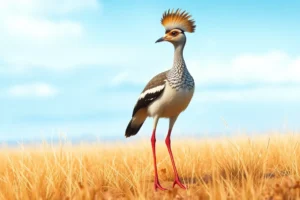
- In some species, males provide all parental care. Examples include jacanas and some fish where males incubate and care for eggs alone.
- Parenting behaviors can affect social structures. Cooperative breeding in species like meerkats involves multiple group members assisting with young.
- Environmental factors influence parenting styles. Animals in harsh environments may adjust care intensity to maximize offspring survival.
- Parental care is a key factor in evolutionary biology studies. Understanding these behaviors helps explain reproductive strategies and species adaptation.
- Human parenting behaviors are often compared to animal models. Research on animal care provides insights into the evolution of human social and nurturing behaviors.
Habitat and Behavior
Animal parenting behaviors are observed across diverse habitats worldwide, from tropical rainforests and savannas to oceans and arctic tundras. These behaviors are adapted to environmental conditions, influencing how animals care for their young. For example, aquatic species like seahorses and certain fish have evolved unique reproductive adaptations such as male pregnancy or nest guarding, while terrestrial mammals like elephants and primates invest heavily in prolonged parental care within social groups. Birds often establish nests in trees, cliffs, or ground sites, with parents alternating care duties. Survival strategies include protection from predators, feeding, teaching skills, and social integration.
Why This Animal Matters
Understanding animal parenting behaviors is important for ecological and conservation efforts, as parental care directly impacts offspring survival and population stability. These behaviors contribute to species’ reproductive success and genetic diversity. Furthermore, animal parenting studies inform evolutionary biology, shedding light on the development of complex social behaviors. In cultural contexts, animals with notable parenting behaviors, such as elephants and primates, often serve as symbols of family bonds and nurturing. Conservation programs frequently consider parenting behaviors to improve captive breeding and reintroduction success.
Common Misconceptions
Misconception: Only mammals provide parental care.
Correction: Parental care occurs in many animal groups, including birds, fish, amphibians, and insects, with diverse strategies beyond mammals.

Misconception: Male animals do not participate in parenting.
Correction: In multiple species, such as seahorses, jacanas, and some birds and fish, males take significant or sole roles in caring for offspring.
Misconception: Animals do not show emotions or bonds similar to human parenting.
Correction: Many animals exhibit strong social bonds and behaviors that suggest emotional components within parenting, such as protection, grooming, and teaching.
FAQ
Do all animals provide parental care?
No. Parental care varies widely among animals. Some species provide extensive care, while others, such as many fish and reptiles, may provide little to no care after egg-laying.
Why is parental care important for animals?
Parental care increases the chances of offspring survival by protecting them from predators, providing food, and teaching necessary skills, thereby ensuring continuation of the species.
Can male animals be the primary caregivers?
Yes. In certain species like seahorses, jacanas, and some birds and fish, males are the primary or sole caregivers, sometimes even carrying the offspring during development.
Leave a Reply